

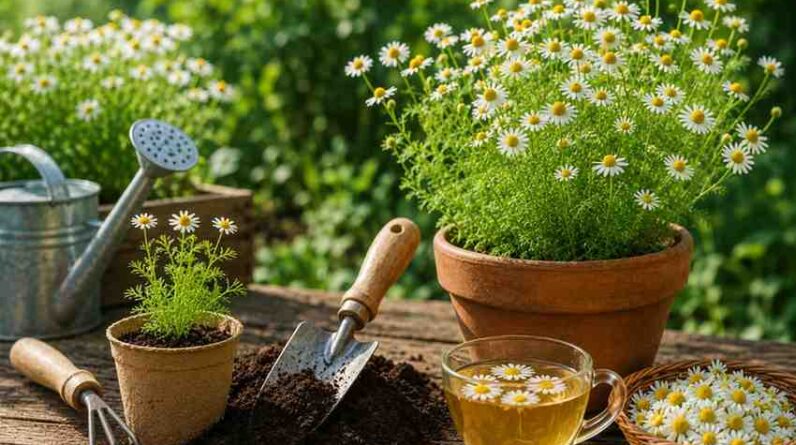
If you want to grow chamomile at home, you have picked one of the easiest herbs a beginner can start with. It is easy to grow, easy to start from seed, and needs very little care once established.
The small daisy-like flowers brighten up any garden. They also make a great cup of chamomile tea. You can grow it in containers, raised beds, or a backyard plot. Once it settles in, it often self-seeds and returns year after year.
This easy guide covers everything: planting, care, harvesting, drying, and brewing. Many gardeners start growing chamomile because of its reputation as a calming herbal tea. Before you plant it, take a look at the many benefits of chamomile, from sleep and stress support to digestive and skin wellness.
What Is Chamomile and Why Grow It?
Chamomile is a herb in the daisy family. It is a member of the daisy family that has been used for centuries. People use it mostly for tea and natural health remedies.
The flowers have a soft apple-like scent. That sweet, fruity smell is one of the easiest ways to tell it apart from other garden plants.
There are two main types of chamomile worth knowing about.
German Chamomile vs Roman Chamomile: Which Should You Grow?
German chamomile is an annual. It grows fast. It makes lots of flowers. It is the most common type used for tea and in herb gardens.
Common chamomile is another name for the German variety. You will find it sold under both names in most seed shops.
Roman chamomile is a low-growing perennial. It spreads across the ground like a ground cover. It is a low-growing plant with a very sweet smell. Home gardeners sometimes use it between stepping stones or along garden borders.
| Feature | German Chamomile | Roman Chamomile |
|---|---|---|
| Plant Type | Annual | Perennial |
| Height | 1–2 feet | 3–12 inches |
| Best Use | Herbal tea | Ground cover |
| Flower Production | Heavy | Moderate |
| Ease for Beginners | Very Easy | Easy |
| Fragrance | Sweet and fruity | Strong apple-like scent |
For beginners, the German variety is the better pick. It produces more blooms and is easier to manage in most gardens.
5 Reasons to Grow Chamomile in Your Garden
Growing it at home gives you more than just a pretty plant. Here is what you actually get.
1. A Fresh Cup of Chamomile Tea Any Time
Growing chamomile for tea is one of the most satisfying things a home gardener can do.
You can harvest the flowers, dry them, and brew a warm cup of chamomile tea whenever you want. You can also make iced tea with fresh flowers in summer. Both taste great.
2. A Low-Maintenance Herb for Any Space
This herb is easy to grow and easy to keep alive. It does not need much water or care once it is growing well. Even beginner gardeners do well with it.
3. Flowers That Attract Bees and Pollinators
The bright daisy-like flowers bring in bees and helpful insects. That is good for your whole garden, not just this one plant.
4. Grows Well in Containers
No yard? No problem. It grows well in containers. A pot on a balcony or patio works perfectly. It also does fine grown indoors near a sunny window.
5. Comes Back Every Year on Its Own
German chamomile drops seeds at the end of the season. New seedlings pop up the next spring without any help from you.
Best Time to Plant Chamomile Seeds
Timing matters. In most places, sow seeds in spring. Wait until the danger of frost is past before planting outdoors.
In mild climates, you can also plant in autumn. The herb grows best when temperatures stay between 60°F and 75°F (15°C to 24°C).
You can also start chamomile from seed indoors. Start seeds inside 4 to 6 weeks before your last frost date. Then move the seedlings outside once the weather warms up.
How to Choose the Right Growing Location
This plant does best in full sun. Give it at least 6 hours of direct sun each day. It can handle partial shade, but you will get fewer flowers.
Good air circulation also helps. It keeps the foliage dry and reduces the risk of disease.
Best Growing Conditions
- Full sun to partial shade
- Well-drained soil with a pH of 5.6 to 7.5
- Moderate moisture
- Good air circulation
- Warm temperatures between 60°F and 75°F
How to Grow Chamomile from Seeds: Step-by-Step
Growing from seed is simple and cheap. It is easy to grow from seed — the process takes just a few steps and no special tools. The key rule: seeds need light to germinate. Do not bury them.
What is the easiest way to grow chamomile from seed?
Scatter the seeds on the soil surface. Do not cover them. Press them gently so they touch the soil. Mist lightly. They germinate in 7 to 14 days. Thin seedlings to about 8 to 12 inches apart once they are a few inches tall.
Step 1: Prepare the Soil for Planting
Loosen the soil and pull out weeds. Mix in compost to help with drainage and nutrients. This herb likes light, well-drained soil. Heavy clay will cause problems.
Step 2: Sow Seeds the Right Way
Scatter seeds on the soil surface and press in gently. That is all. Seeds need light to germinate, so never cover them with soil.
Planting chamomile this way gives the best results. It is simple, and it works every time.
Step 3: Water Lightly After Sowing
Mist the area gently. Keep the soil moist but not wet. A spray bottle is better than a watering can at this stage. You do not want to wash the seeds away.
Step 4: What to Expect During Germination
Chamomile seedlings usually appear in 7 to 14 days. Once you see them, keep watering gently and watch for crowding.
How to Grow Chamomile Indoors
You can grow it indoors too. It needs a very sunny window or a grow light.
A south-facing window works best. Give it at least 6 hours of bright light each day. Growing chamomile indoors takes a bit more effort, but it is very doable in winter or in small apartments.
Use a container with good drainage. Water only when the top of the soil feels dry. Do not let the roots sit in water.
| Factor | Indoors | Outdoors |
|---|---|---|
| Sunlight | Needs a bright window or grow light | Full sun is usually enough |
| Watering | More frequent monitoring | Natural rainfall may help |
| Growth Rate | Slightly slower | Usually faster |
| Flower Production | Moderate | Higher |
| Space Needed | Small containers | Garden beds or containers |
| Difficulty | Moderate | Easy |
How to Grow Chamomile in Containers and Pots
This herb grows well in containers. It is one of the easiest plants to grow in pots.
Choosing the Right Container Size
Use a pot that is at least 8 to 12 inches deep. Make sure it has drainage holes. Standing water will rot the roots fast.
Best Potting Mix for Containers
Use a well-draining potting mix. Add some compost for extra nutrients. Avoid dense or heavy soils that hold too much water.
Where to Put Your Container
A sunny balcony or patio is perfect. More sun means more flowers. A south-facing spot is the best choice for most home gardeners.
Watering Container-Grown Plants
Pots dry out faster than garden beds. Check the soil every day or two. Water when the top inch feels dry.
What Soil Does Chamomile Need?
It is not picky. But it does like well-drained soil. The ideal pH is between 5.6 and 7.5. That covers slightly acidic to slightly alkaline ground.
Ideal Soil Conditions
- Loose and light
- Well-drained
- Moderate nutrients
- pH between 5.6 and 7.5
Avoid heavy clay. It holds too much water. Poor drainage causes root rot, which is one of the biggest problems with chamomile plants.
How Often to Water Chamomile
This plant likes moist soil, but not soggy soil. Young plants need more water. Older ones can handle dry spells.
Watering Tips
- Water deeply, but not too often.
- Let the soil surface dry out a little between waterings.
- Never let roots sit in standing water.
- Water in the morning. This keeps the foliage dry overnight.
Too much water is the most common mistake. When you are not sure, water less.
Fertilizing: Keep It Simple
This herb does not need much food. Too much fertilizer makes the foliage grow thick but cuts down on flowers.
Compost is usually enough. Mix it into the soil before planting. That is often all you need for the whole growing season.
Quick Fertilizer Tips
- Add compost before planting.
- Skip high-nitrogen fertilizers.
- Feed lightly only if the plant looks pale or weak.
How to Thin Chamomile Seedlings
When seedlings are a few inches tall, thin them out. Leave about 8 to 12 inches apart between plants. Some growers suggest at least 12 inches apart for full-grown plants in open garden beds.
Good spacing helps with airflow. It also reduces pest problems and makes each plant stronger.
Why Mulching Helps
A thin layer of mulch keeps moisture in and weeds out. Use straw, shredded leaves, grass clippings, or fine bark. Keep mulch away from the stems so they do not rot.
Common Growing Problems
Chamomile is tough. But a few issues can come up.
How to Spot and Fix Powdery Mildew
Powdery mildew looks like a white powder on the leaves. It happens when the foliage stays wet or the air does not move well. Space plants properly. Water at the base, not on the leaves. Remove badly affected foliage right away.
Preventing Root Rot
Root rot comes from too much water. If the soil stays wet for too long, the roots start to break down. Fix your drainage. Cut back on watering. The plant can recover if you catch it early.
Dealing with Aphids
Aphids are small insects that stick to young stems. A strong spray of water knocks them off. Ladybugs eat aphids naturally. They are a good pest control option that will not harm your plant.
Chamomile as a Companion Plant
This herb makes a great companion plant. Many home gardeners plant it near vegetables and herbs because of the pollinators it draws in.
It also has a long history as an ornamental plant in herb gardens. It looks good, smells good, and seems to help the plants growing around it.
Plants That Grow Well Alongside It
- Basil
- Mint
- Thyme
- Rosemary
- Cabbage
- Onions
- Cucumbers
How Long Does It Take to Bloom?
Most plants begin to bloom about 6 to 10 weeks after planting from seed. Once the flowers open, they keep coming for several weeks. The more you gather the flowers, the more the plant produces.
When and How to Harvest Chamomile Flowers
The flowers are why you are growing this herb. Pick them at the right time, and they will have the best smell and flavor.
A good chamomile harvest starts with knowing when the flowers are fully open. Many first-time growers pick too early or wait too long. Both reduce the quality of your tea.
Signs Your Flowers Are Ready to Harvest
- White petals are fully open and spread flat
- The yellow center is bright and round
- Flowers smell sweet and strong
Harvest in the morning after the dew dries. That is when the essential oil in the flowers is at its peak.
How to Pick the Flowers
Pinch or snip the flower heads from the stem. Use clean fingers or shears. Gather the flowers regularly throughout the growing season. The more you harvest, the more blooms you get.
Some gardeners use small shears to work faster without pulling the plant. Either way works fine.
How to Dry Chamomile Flowers
Drying your harvest lets you use it all year long.
Air-Drying Method
- Spread flowers in a single layer on a clean rack or tray.
- Keep them in a warm, dry spot away from direct sunlight.
- Let them sit for one to two weeks.
- They are ready when they feel crisp and dry.
Using a Dehydrator
Set it to the lowest heat setting. Dry until the flowers are fully crisp. This takes less time than air drying.
How to Store Dried Chamomile
Store dried flowers in a glass jar with a tight lid. Keep jars in a cool, dark place away from sunlight and heat. Stored this way, they stay fresh for up to one year. Write the harvest date on the label.
How to Make Chamomile Tea at Home
This is the best part of growing it.
Simple Recipe
Ingredients:
- 1 to 2 tablespoons dried chamomile flowers
- 1 cup hot water (around 200°F, just under boiling)
Instructions:
- Put dried flowers in a tea infuser or strainer.
- Pour hot water over them.
- Steep for 5 to 10 minutes.
- Strain and drink. Add honey if you like.
Steeping too long can make the tea taste bitter. Start with 5 minutes and adjust.
You can also make iced tea. Brew it strong, let it cool, then pour over ice. Fresh flowers work great for iced tea in summer, too.
Other Uses for This Herb
Many people do not know it has more uses than tea. It has been used as a hair rinse for lighter hair for centuries. A strong brew of dried flowers used as a hair rinse can add a soft natural shine. It is gentle and easy to make at home.
The essential oil from the flowers is also used in natural skincare and aromatherapy. Most of the essential oil comes from the German variety, which produces it in higher amounts than Roman chamomile.
Does It Reseed Itself?
Yes. German chamomile is an annual, but it reseeds well. Let some flowers stay on the plant at the end of the season. They will drop seeds. New seedlings will come up the next spring on their own.
Many gardeners love this habit. It means a steady supply with almost no work.
Pro Tips for a Healthy Chamomile Garden
- Plant in full sun.
- Use well-drained soil with a pH of 5.6 to 7.5.
- Do not overwater.
- Thin seedlings to 8 to 12 inches apart.
- Harvest flowers often during the growing season.
- Pull weeds before they spread.
- Use compost, not heavy fertilizers.
- Check occasionally for aphids and powdery mildew.
- Make sure plants have good air circulation.
Is Chamomile Easy for Beginners?
Chamomile is easy. Full stop. It is one of the most beginner-friendly plants in any herb garden.
It grows in most soil types. It handles a bit of shade. It bounces back from missed watering. Even 4 to 6 plants in a small container setup will give you more flowers than you expect.
According to the American Herbalists Guild, it has been one of the most widely grown medicinal herbs in the world for centuries. There is a reason it stays so popular. It rewards new growers without demanding much in return.
Growing chamomile at home is worth doing because the gap between seed and cup is smaller than almost any other herb — just six to ten weeks from planting to your first harvest. You do not need a big garden. You do not need special tools. You need well-drained soil, a sunny spot, and the patience not to overwater.
Chamomile is widely considered one of the best medicinal herbs for beginners because it is easy to grow, attractive in the garden, and useful for homemade herbal tea. If you’re planning a healing garden, explore our guide to the best medicinal herbs to grow for more beginner-friendly plants.
Grab a seed packet, plant it somewhere you walk past every day, and in two months, you will be drinking tea from flowers you grew yourself.
Disclaimer: This article is for educational purposes only and is not intended as medical advice. Always consult a qualified healthcare professional before using medicinal herbs, especially if you are pregnant, nursing, taking medications, or have a medical condition. Read our full Medical Disclaimer.
Researches medicinal plants, herbal wellness, and sustainable gardening practices. Through Herbal Daily Care, she helps readers discover the benefits of growing and using herbs at home.