

Yarrow is one of those plants that earns its keep twice: once in the garden, where it blooms for months on almost no care, and again in the home apothecary, once you know how to dry it properly. This guide covers when to harvest yarrow, the two most reliable ways to dry it, how to store it so it keeps its potency, and what to actually do with it once it’s dried, whether that’s tea, tincture, infused oil, or a simple poultice.
Quick Answer
To dry yarrow, harvest the flower heads and leaves once flowers are fully open, then either bundle the stems together and hang them upside down in a dark, well-ventilated space for one to two weeks, or dehydrate on low heat for faster results. Store the fully dried herb in an airtight jar, away from direct sunlight, for use in tea, tinctures, and salves.
What Is Yarrow, and Why Dry It?
Yarrow, botanically Achillea millefolium, is a perennial herb in the daisy family with finely divided, feathery leaves and flat clusters of small white flowers, though pink, yellow, and red cultivars exist too. People have cherished it for centuries as a first-aid herb, and its old folk name, soldier’s woundwort, comes directly from its traditional use for cuts and wounds on the battlefield. The genus name Achillea even traces back to the Greek hero Achilles, who legend says used the herb to treat his soldiers’ wounds.
Yarrow grows wild across most of North America, Europe, and Asia, which is part of why it shows up in so many different herbal traditions under so many different names, milfoil, thousandleaf, and nosebleed plant among them. That last nickname is a nod to one of its most cited traditional uses: packing a fresh or dried leaf into a nosebleed to help slow it.
Drying yarrow is what turns a garden plant into a shelf-stable herb you can reach for year-round. Fresh yarrow only keeps for a few days, but properly dried yarrow holds its incredible medicinal properties for a year or more, ready whenever you need it for tea, a tincture, or a homemade salve. If you’re growing your own, our guide to medicinal herbs to grow indoors covers other herbs worth stocking alongside it.
When and How to Harvest Yarrow
Timing matters more than most people expect. Harvest yarrow once the flower heads are fully open and you can see pollen on the blooms, typically from early summer through fall depending on your climate. Cut in the morning after the dew has dried but before the heat of the day, since this is when the plant’s aromatic oils are most concentrated.
Use clean kitchen shears to snip flower heads with a few inches of stem attached, and take the leaves separately if you want them for a different use. You can harvest the entire plant, flower, leaf, and stem, since all three parts are used medicinally, though the flower heads are generally considered the most potent for herbal tea and topical remedies.
If you’re using wild yarrow rather than yarrow you’ve grown yourself, forage carefully. Yarrow grows wild in meadows, along roadsides, and on the edges of fields nearly everywhere in temperate North America, but avoid harvesting near busy roads, treated lawns, or contaminated water, since the plant readily takes up whatever is in its environment. As with any wild plant, take no more than a third of what you find so the population can keep reseeding itself.
Correct identification matters before you harvest anything from the wild. Yarrow’s feathery, almost fern-like leaves are one of its most distinctive features, and its flower heads are flat-topped clusters of dozens of tiny individual florets, not a single large bloom. A few other white-flowered wild plants grow in similar habitats and can look similar at a glance, so if you’re not already confident identifying yarrow, cross-reference with a regional foraging guide or an experienced herbalist before harvesting from an unfamiliar patch. Growing your own removes that guesswork entirely, which is one of the better reasons to keep a dedicated patch in the garden rather than relying only on foraging.
Fresh or Dried Yarrow: Which Should You Use?
Both fresh and dried yarrow are usable, and which one makes sense depends on what you’re making. Using fresh yarrow straight from the garden works well for a quick poultice or compress, since you don’t need to plan and some herbalists feel fresh plant material carries slightly stronger volatile oils right at harvest. Dried yarrow, on the other hand, is what you want for anything meant to sit on a shelf: tea blends, tinctures, infused oils, and salves all call for dried herb, both because it’s more concentrated by weight and because fresh leaves and flowers carry moisture that can cause mold in long-term storage. If a recipe just says “yarrow” without specifying, dried is the safer assumption for anything that isn’t used the same day it’s harvested.
How to Dry Yarrow
Once you’ve got a harvest, drying is simple. Both methods below work well; which one you choose comes down to how much time you have and how much space.
Air-Drying (Bundle Method)
This is the traditional, no-equipment method, and it’s the one most homesteaders default to.
- Shake off any insects and remove damaged leaves or flowers.
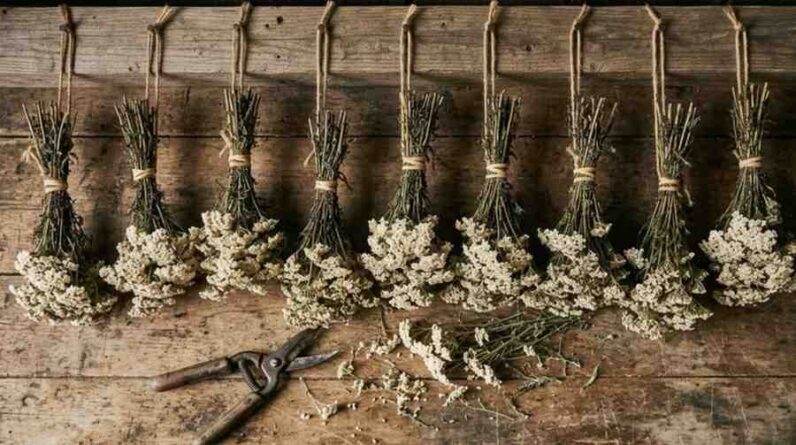
- Gather 8 to 10 stems into a small bundle, small enough that air can move freely through the middle.
- Secure the stem ends with a rubber band or twine, leaving a loop to hang from. A rubber band works better than twine here, since stems shrink as they dry and a rubber band will keep tension where plain twine can loosen.
- Hang the bundle upside down in a warm, dark place with good airflow, away from direct sunlight, which fades color and breaks down the plant’s medicinal compounds.
- Check after a week. Fully dried yarrow feels papery and crumbles easily; depending on humidity, this typically takes one to two weeks.
Dehydrator Method
If you want dried yarrow faster, or you’re processing a large harvest at once, a dehydrator gets the job done in hours instead of weeks.
- Remove the leaves and flower heads from the stems.
- Spread them in a single layer on the dehydrator trays, leaving space between pieces for airflow.
- Set the dehydrator to its lowest heat setting, around 95 to 100°F, and dry for 10 to 12 hours, checking periodically so nothing scorches.
- Once the flowers and leaves feel dry and brittle, they’re ready to store.
Low heat matters here. Yarrow’s medicinal compounds are volatile, so drying too hot cooks off the same aromatic oils that give the herb its healing qualities. If you don’t have a dedicated dehydrator, a low oven with the door propped open works in a pinch, though it takes more attention since ovens run hotter and less evenly than a dehydrator built for the job.
Storing Dried Yarrow
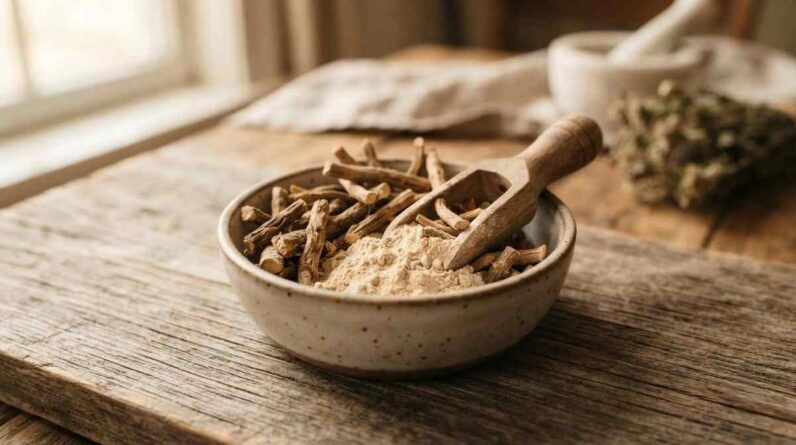
Once fully dry, store yarrow in an airtight glass jar, away from direct sunlight and heat, ideally in a cool, dark place like a pantry cupboard. Label the jar with the harvest date so you know how fresh it is. Properly dried and stored yarrow keeps its potency for about a year; after that, it doesn’t spoil exactly, but it does lose strength, so it’s worth replacing annually if you use it regularly. Keeping leaves and flowers in separate jars makes it easier to measure out exactly what a recipe calls for, whether that’s a tea blend or a salve.
A quick freshness check: crumble a small pinch between your fingers. Good dried yarrow should smell distinctly herbal and slightly medicinal, closer to sage than to hay. If a jar smells musty, faint, or dusty rather than aromatic, it’s past its prime and better used as compost than as medicine.
Using Yarrow Medicinally
Once you have a jar of dried yarrow on hand, here’s how home herbalists typically use it.
Yarrow Tea
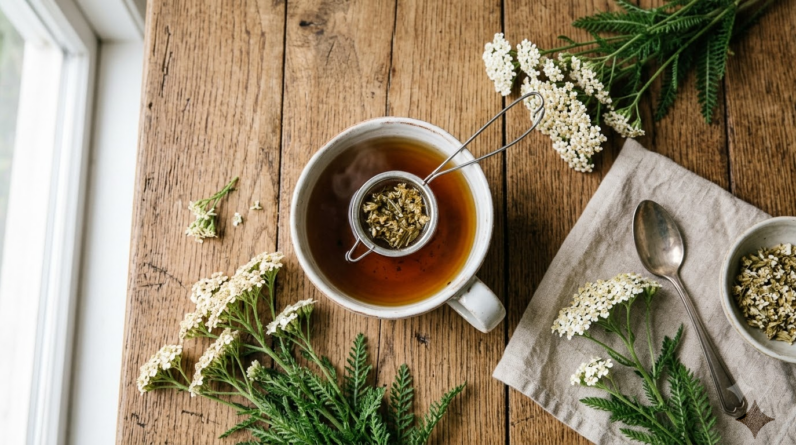
The easiest use for dried yarrow is a simple herbal tea. Steep one to two teaspoons of dried yarrow flowers and leaves in a cup of hot water for 10 to 15 minutes, then strain before drinking. Yarrow tea has a bitter, slightly aromatic flavor, often blended with mint or chamomile to soften it. Herbalists have traditionally used it for an upset stomach, mild fever, and general digestive support, often as part of a warming tea blend at the first sign of a cold. Because the flavor is fairly assertive on its own, many home herbalists keep it to a smaller proportion in a blend rather than brewing it as a standalone tea every time. For a full breakdown of the health benefits, real side effects, and a step-by-step recipe, see our complete yarrow tea guide.
Making a Yarrow Tincture
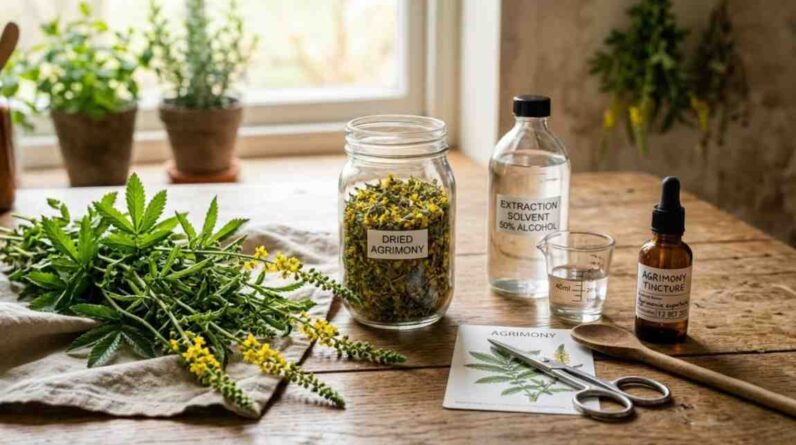
A tincture concentrates the herb into a liquid extract that keeps far longer than tea and is easier to dose in small amounts. Fill a clean glass jar about a third full with dried yarrow, then cover completely with a high-proof alcohol like vodka, keeping the plant material fully submerged. Seal, label with the date, and store in a dark place for four to six weeks, shaking the jar every few days to keep the herb from settling. Strain through cheesecloth into a clean bottle, pressing the spent plant matter to extract as much liquid as possible, and your yarrow tincture is ready to use. Stored in a dark glass bottle away from heat, a well-made tincture can keep its potency for several years, which is part of why tinctures are such a popular format for a home apothecary that doesn’t get restocked every season.
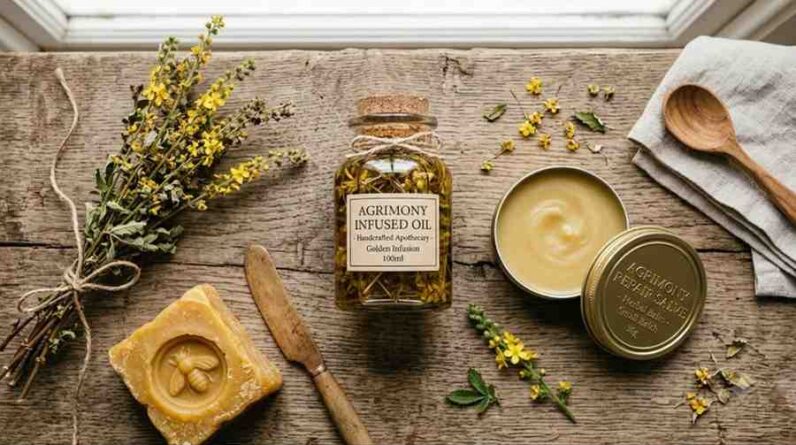
Yarrow Infused Oil and Salve
To make yarrow-infused oil, combine dried yarrow with a carrier oil in a jar, and let it infuse in a sunny window for two to three weeks, or use gentle heat for a faster batch, the same way you would with any other dried herb. Once strained, that infused oil becomes the base for a salve. Our herb-infused olive oil guide covers both infusion methods in more depth, and our comfrey poultice guide shows another way dried herbs get turned into a usable topical remedy.
Yarrow Poultice and Compress for Cuts
For a quick first-aid application, crush dried yarrow and mix it with a small amount of warm water to form a poultice, then apply directly to a minor cut or scrape and cover with a clean bandage. Alternatively, soak a cloth in strong yarrow tea and use it as a compress. This traditional use ties directly back to yarrow’s old nickname, soldier’s woundwort, and its reputed ability to stop bleeding and help prevent infection in minor wounds. This is a folk remedy for small, clean cuts only. Anything deep, spurting, or not closing on its own needs a medical professional, not a home remedy.
Dried Yarrow on the Homestead
Yarrow is a natural fit for anyone building out a more self-reliant approach to health and home. Because it grows wild, tolerates poor soil, and dries easily, it’s one of the lowest-cost herbs to keep stocked in any real quantity, whether you’re harvesting a small garden patch or a larger homestead planting. Many homesteaders keep a rotating stock: fresh-cut bundles drying in the kitchen or barn through the growing season, jars of finished dried herb in the pantry, and a batch of tincture or infused oil made once a year while the harvest is at its peak. Treated that way, a single well-managed yarrow patch can supply a household’s first-aid and tea needs without ever needing to buy the herb from a store.
Medicinal Benefits and Traditional Uses
Beyond first aid, yarrow has a long history of traditional use for a wide range of complaints: easing an upset stomach, calming skin irritation and rash, taking the edge off a mild fever, and supporting the body during a cold. Herbalists prize it for its astringent, drying quality, which is part of why it shows up so often in both wound care and digestive remedies. None of this is a substitute for evaluated medical treatment, but as a home remedy for minor, everyday complaints, it’s one of the more versatile herbs to keep dried and on hand.
Safety and Precautions
Yarrow is generally well tolerated, but a few precautions are worth taking seriously. It belongs to the Asteraceae (daisy) family, so anyone allergic to ragweed, chrysanthemums, daisies, or related plants should avoid it, since cross-reactivity is common; contact dermatitis is the most frequently reported reaction, so it’s worth doing a small skin patch test before using a yarrow-infused salve or oil more broadly, especially if your skin tends to react to new products. Yarrow may also slow blood clotting, so use caution if you have a bleeding disorder or take blood-thinning medication. It isn’t recommended during pregnancy, since it’s traditionally been used to stimulate menstrual flow, and there isn’t enough reliable safety data to recommend it while breastfeeding either. As with any herbal remedy, talk to a medical professional before using yarrow regularly, especially if you’re pregnant, nursing, or managing an existing health condition.
Frequently Asked Questions
Can I use fresh yarrow instead of dried? Yes, fresh or dried yarrow both work for most preparations, though dried yarrow is more concentrated and stores far longer. For tea, you’ll need roughly double the amount of fresh yarrow compared to dried to get a similar strength.
How long does dried yarrow last? Stored in an airtight container away from light and heat, dried yarrow keeps its potency for about a year. It won’t necessarily go bad after that, but it gradually loses strength.
Can I dry yarrow in the oven if I don’t have a dehydrator? Yes. Set your oven to its lowest setting, prop the door open slightly to let moisture escape, and check every 20 to 30 minutes. It’s harder to control than a dehydrator, so watch closely to avoid scorching.
Does dried yarrow still work for a poultice? Yes. Rehydrate dried yarrow with a small amount of warm water until it forms a paste, then use it the same way you would a fresh poultice.
What’s the difference between yarrow tea and a yarrow tincture? Tea is a quick, mild infusion best made fresh and used the same day. A tincture is a concentrated alcohol extract that keeps for years and is more potent by volume, making it convenient for long-term storage in a home apothecary.
Can I dry yarrow leaves and flowers together, or should I separate them? Either works, but separating them gives you more control later. Flowers are generally considered stronger for tea and topical use, while leaves are often used in poultices, so having them in separate jars makes it easier to reach for exactly what a recipe calls for.
Why did my dried yarrow lose its color or smell? This almost always comes down to light or heat exposure during drying or storage. Yarrow dried in direct sunlight, or stored somewhere warm and bright, fades and loses potency faster than an herb dried and kept in a cool, dark place.
Final Thoughts
Once you’ve got the harvesting and drying steps down, keeping dried yarrow on hand is one of the simplest ways to build a self-reliant home apothecary. A single well-timed harvest, bundled and hung to dry, can supply tea, tinctures, and salve ingredients for the better part of a year. If wound-care herbs are your focus, pairing dried yarrow with a comfrey poultice or an infused oil rounds out a solid, homegrown first-aid kit.
Disclaimer: This article is for educational purposes only and is not intended as medical advice. Always consult a qualified healthcare professional before using medicinal herbs, especially if you are pregnant, nursing, taking medications, or have a medical condition. Read our full Medical Disclaimer.
References
- How to Forage, Harvest And Dry Yarrow, Get Green Be Well
- How to Dry Yarrow Flowers and Leaves, Homely Hens
- How To Forage, Harvest and Dry Yarrow, Oak Hill Homestead
- Yarrow: Overview, Uses, Side Effects, Precautions, WebMD
- Yarrow Uses, Benefits & Dosage, Drugs.com

Written by cskoch, who researches medicinal plants and herbal wellness at Herbal Daily Care. This guide is research-based: we reviewed published trials, meta-analyses, and the manufacturer’s own sales page. We did not purchase or test the product, and we do not claim first-hand results.