

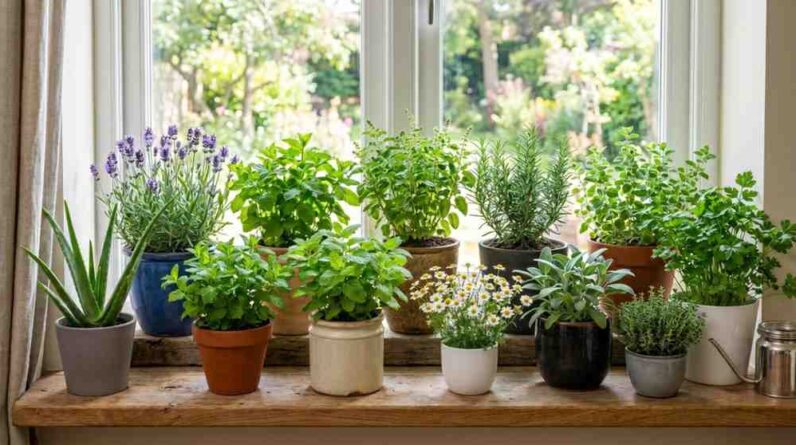
The best medicinal herbs to grow indoors are ones you’ll actually use and most of them are surprisingly easy to keep alive. Whether you live in an apartment, have no outdoor space, or just want fresh herbs within arm’s reach year-round, a small collection of plants on your windowsill can go a long way. With the right light, good drainage, and occasional pruning, you can be harvesting fresh leaves and flowers even through the winter months when every outdoor garden has shut down.
Growing herbs at home does more than save you a trip to the store. It cuts down on dried packets that have been sitting on a shelf for months, connects you to the plants you actually use, and keeps fresh flavor on hand whenever you need it. Every herb indoors means one less thing to buy and the herbs that are easy to grow indoors are the same ones you’ll reach for every day. Many culinary and medicinal plants that die back at the end of the growing season can thrive year-round when you bring them in and give them the right conditions. The key is choosing the right plants indoors from the start.
If you’re just getting started, keep it simple. A few well-chosen plants in individual pots can supply fresh ingredients for tea, cooking, and everyday wellness throughout the year. This complete guide to growing an indoor herb garden covers the best herbs for growing at home, why each one suits life inside, and exactly what you need to grow herbs successfully. If you’re completely new to herbal gardening, our guide to medicinal herbs for beginners covers the fundamentals of choosing, growing, and using herbs at home.
What Are the Best Medicinal Herbs to Grow Indoors?
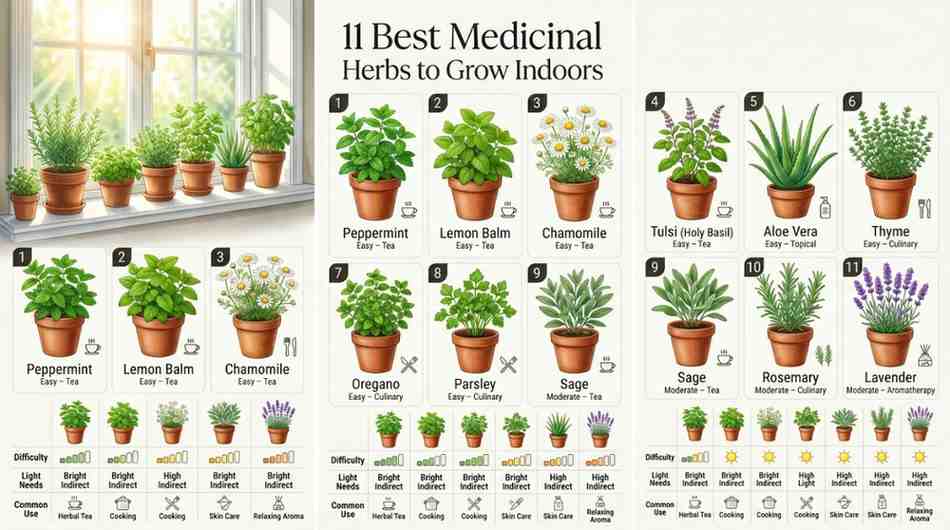
The best medicinal herbs to grow indoors include:
- Peppermint
- Lemon Balm
- Chamomile
- Tulsi (Holy Basil)
- Aloe Vera
- Thyme
- Oregano
- Parsley
- Sage
- Rosemary
- Lavender
These plants are easy to maintain in containers, useful in everyday life, and well suited to anyone starting out with indoor gardening.
Which medicinal herb is easiest to grow indoors? Peppermint is the top choice for beginners. It tolerates a wide range of light and moisture conditions, grows fast enough to harvest within weeks of planting, and thrives in a single container near a sunny window. Lemon balm and aloe vera are close runners-up, both forgiving, low-maintenance, and useful once harvested.
What Makes a Good Herb for Indoor Growing?
The best herbs to grow indoors share a few key traits that make them well suited to the conditions most houseplants face — limited light, dry air, and confined root space. Here is what you need to grow herbs successfully at home:
- They settle in well without needing a lot of space.
- They handle the drier air and lower light of most homes.
- They tolerate moderate sunlight — or a grow light when natural light falls short.
- They respond well to regular harvesting.
- They serve a real purpose: tea, cooking, or everyday wellness.
Choosing plants with these qualities makes the whole experience far more enjoyable and far less likely to end in a dead pot.
1. Peppermint: The Easiest Medicinal Herb to Grow Indoors
Herbs like peppermint are in a category of their own, they practically take care of themselves. Many gardeners spend more time keeping it under control outside than trying to keep it alive. Traditionally used to support digestive comfort and make refreshing herbal teas, its cool aroma and vigorous growth make it a natural fit for a kitchen garden or a sunny windowsill. Peppermint is also frequently included among the best herbs to start with for health because it is easy to grow, widely available, and simple to use.
How to Grow Peppermint Indoors — Growing Tips
- Place near a sunny window.
- Keep the soil evenly moist.
- Harvest regularly to encourage fresh growth.
- Give it its own pot — it will crowd out anything planted beside it.
Fresh leaves can be steeped in hot water, stirred into recipes, or dropped into cold drinks.
2. Lemon Balm: A Beginner-Friendly Herb for Herbal Tea
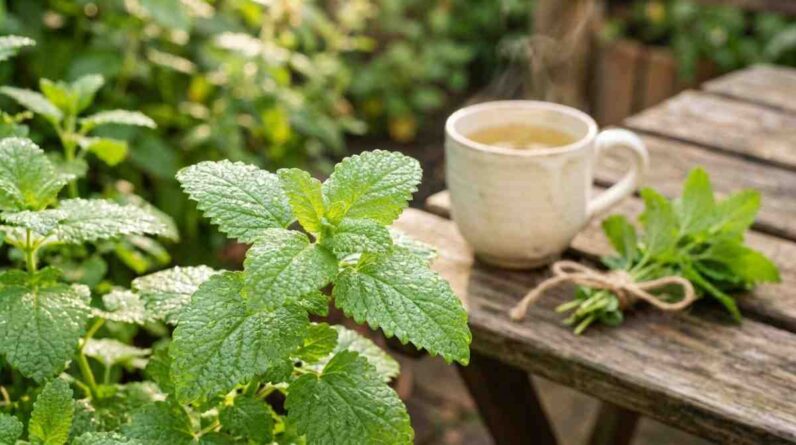
Lemon balm is among the easiest herbs you can grow. It belongs to the mint family, smells pleasantly of citrus, and stays productive through the winter months when most outdoor herbs have long since finished. If you’re new to herb gardening and want something forgiving, this is the one to start with.
How to Grow Lemon Balm Indoors
- Provide bright indirect light.
- Water when the top layer of soil feels dry.
- Pinch stems back often to keep growth bushy rather than tall.
- Harvest regularly — the more you pick, the more it grows.
The leaves make an excellent herbal tea on their own and blend beautifully with chamomile.
3. Chamomile: Grow Your Own Herbal Tea Flowers at Home
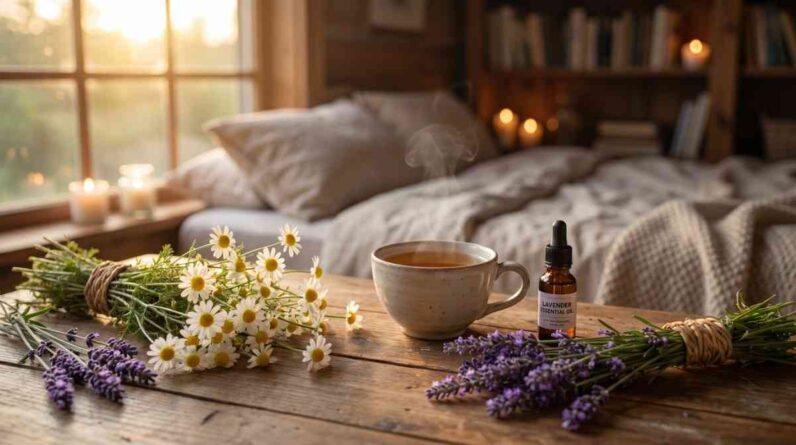
Chamomile is famous for its daisy-like flowers and its long history as a calming herbal tea. You can grow it from seed and have flowers ready to harvest in a single season. Most growers dry the blooms for tea, which makes it one of the more rewarding options for anyone tired of buying dried herbs in packets. If you’d like a more detailed guide, learn about growing chamomile at home from seed to harvest.
How to Grow Chamomile Indoors Successfully
- Use the sunniest spot available, a bright south-facing windowsill is ideal.
- Make sure air can circulate around the plant.
- Don’t overwater.
- Pick flowers as they open.
Once harvested, you can explore the many benefits of chamomile tea and different ways to enjoy it. Growing your own chamomile takes you all the way from seed to cup, something that never loses its appeal.
4. Tulsi (Holy Basil): The Best Ayurvedic Herb for a Home Garden
Tulsi, often called Holy Basil, is a deeply revered herb in Ayurvedic traditions. If you’ve tried keeping regular basil indoors and found it fussy, tulsi is a much easier alternative. It grows reliably under the same conditions and establishes quickly when given warmth and sun. Unlike culinary basil used on pasta, it’s grown primarily for its medicinal uses and aromatic leaves. Place it near a south-facing window, keep it away from cold drafts, and it will produce steady harvests even on the shortest winter days.
How to Grow Tulsi Indoors
- Position in a bright south-facing window.
- Keep soil slightly moist but never waterlogged.
- Protect from cold drafts.
- Pick leaves often — frequent harvesting keeps the plant vigorous.
The leaves can be steeped into herbal tea or used fresh as part of a daily wellness routine.
5. Aloe Vera: The Most Low-Maintenance Plant You Can Keep Indoors
Aloe vera is the first plant most people should own. Its thick leaves store water, which means missing a watering day or several days, won’t hurt it. You can grow aloe from a small offset rather than from seed, and it establishes quickly in a pot with well-draining soil. If neglect were a growing condition, aloe would thrive in it.
How to Grow Aloe Vera Indoors
- Use cactus or succulent potting mix.
- Give it as much bright light as possible.
- Water deeply, then leave it alone until the soil is fully dry.
It’s attractive, nearly indestructible, and practical, a combination that earns its place in any indoor herb garden.
6. Thyme: A Compact Culinary Herb Perfect for the Windowsill
Thyme stays compact, handles dry indoor air without complaint, and asks very little beyond bright light and a pot that drains properly. It’s one of those culinary herbs people like to grow precisely because the upkeep is so low. A few snips here and there, a careful hand with watering, and it keeps producing. Keeping herbs in pots doesn’t get more straightforward than this. It’s best known in the kitchen, but thyme has a long history of traditional medicinal use too. A single small pot on a sunny sill will keep you supplied for months.
How to Grow Thyme Indoors
- Place in the brightest spot you have.
- Use well-draining soil and a pot with holes.
- Water sparingly — thyme dislikes wet roots.
- Harvest stems regularly to keep the plant tidy.
Its small footprint makes it ideal when windowsill space is tight.
7. Oregano: A High-Yield Herb That Thrives in a Container Garden
Oregano is a high-yield plant in a container. Given enough sunlight, a single pot harvested regularly will produce more fresh herb than most home cooks can use in a week. It serves both culinary and traditional purposes, and takes very little effort to maintain.
How to Grow Oregano Indoors
- Aim for at least six hours of sunlight daily.
- Don’t overwater.
- Prune frequently to encourage dense, bushy growth.
- Use a container with drainage holes.
Fresh oregano is ready to harvest whenever you need it, hard to beat for an everyday cooking herb.
8. Parsley: An Underrated Herb That Produces Fresh Leaves All Year
Parsley is overlooked as a medicinal herb because it shows up in so many everyday recipes. But it has a real history of traditional use, is rich in vitamins C and K, and is easy to grow in a pot year-round. Unlike outdoor plants brought indoors at the end of the season, a pot of parsley started inside can stay productive all year long with consistent light and moisture.
How to Grow Parsley Indoors
- Keep the soil evenly moist — parsley dries out faster than it looks.
- Provide bright light, or supplement with a grow light if your windows are dim.
- Harvest outer stems first and work your way in.
- Rotate the pot occasionally for even growth.
It’s one of the few herbs useful in almost every meal you cook.
9. Sage: A Traditional Herb Worth the Patience It Requires
Sage grows more slowly than mint or lemon balm, but it’s one of the herbs that keeps producing through every season. When the conditions are right, particularly a bright window and soil that never stays soggy. A gardener willing to let it take its time will end up with a beautiful, long-lived plant with real culinary and medicinal value.
How to Grow Sage Indoors
- A south-facing window gives the best results.
- Let the soil dry out slightly between waterings.
- Avoid humid spots — good airflow matters.
- Prune regularly to maintain shape and encourage new growth.
Once established, sage earns its windowsill space for years.
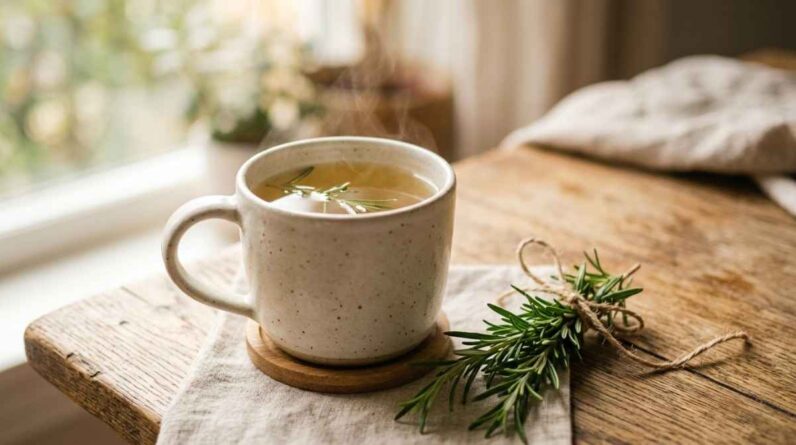
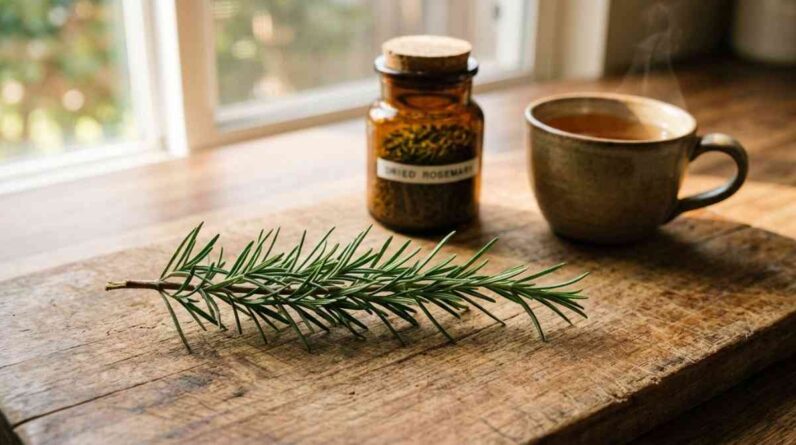
10. Rosemary: A Long-Lived Herb That Rewards Careful Attention
Herbs like rosemary take more attention than most plants on this list, but it’s worth every bit of it. Its woody stems and fragrant foliage make it both ornamental and useful, and a healthy plant in a pot can last for years. The most common mistake is overwatering, rosemary wants maximum light, excellent drainage, and good airflow. If you want to grow your herbs indoors long-term rather than replace them every season, rosemary is the plant to invest in.
How to Successfully Grow Rosemary Indoors
- Give it maximum sunlight — near a south facing window or under a grow light.
- Make sure the pot drains completely.
- Water less than you think you need to.
- Keep air moving around the plant.
Get those conditions right and it will reward you with harvests for a long time.
11. Lavender: A Fragrant Herb Worth Growing Even Without a Garden
Lavender is slightly trickier than mint or lemon balm, but not difficult once you know what it needs. The benefit of growing lavender at home is simple: the fragrance of a fresh plant is nothing like dried herbs from a bag, and even modest light and careful watering can keep it alive and blooming.
How to Grow Lavender Indoors
- Use the brightest window you have — south-facing is best.
- Let the soil dry between waterings.
- Keep humidity low.
- Make sure water drains freely at all times.
Even gardeners who keep it purely for the scent rarely regret it.
Quick Comparison: Best Medicinal Herbs to Grow Indoors
| Herb | Difficulty | Light Needs | Common Use |
|---|---|---|---|
| Peppermint | Easy | Moderate | Tea |
| Lemon Balm | Easy | Moderate | Tea |
| Chamomile | Easy | High | Tea |
| Tulsi | Easy | High | Tea |
| Aloe Vera | Easy | Bright | Topical |
| Thyme | Easy | Bright | Culinary |
| Oregano | Easy | Bright | Culinary |
| Parsley | Easy | Moderate | Culinary |
| Sage | Moderate | Bright | Tea |
| Rosemary | Moderate | Bright | Culinary |
| Lavender | Moderate | Bright | Aromatherapy |
How to Grow Herbs Indoors Successfully All Year
Once you plant herbs in the right spot with the right setup, most look after themselves. The goal is fresh herbs all year and with attention to light, watering, and drainage, that is well within reach.
Put Plants Near the Best Light Source You Have
All plants need sunlight to grow well inside. Most herbs need at least four to six hours daily. A south-facing window gives the best results, more direct light than any other orientation. Even on short winter days, a few hours of direct light makes a real difference.
Always Use Pots With Good Drainage
Waterlogged roots are the most common reason herb plants fail inside. Use individual pots with drainage holes and a well-draining potting mix every time.
Water by Feel, Not by Schedule
Many beginners kill herbs with too much water. Keep the soil evenly moist for thirsty plants like mint and parsley, but let it dry out between waterings for drought-tolerant ones like rosemary, thyme, and sage. Press a finger into the soil which will tell you more than any schedule.
Harvest Often to Encourage Bushy Growth
Regular cutting keeps plants compact and productive. The more you harvest, the more a healthy herb pushes out new growth.
Rotate Pots Weekly for Even Growth
Plants lean toward light over time. A quick quarter-turn once a week keeps everything growing evenly.
Add a Grow Light When Natural Light Is Limited
If your apartment gets little direct sun, an LED grow light changes everything. Full-spectrum models designed for herbs run $20–$40 and make a measurable difference in growth rate and leaf quality, especially during the darker winter months.
Common Mistakes That Kill Indoor Herbs
Taking On Too Many Plants at Once
Start with two or three rather than a dozen. Learn what each one needs before adding more.
Matching Plants to the Wrong Light Conditions
The herbs that thrive indoors most reliably mint, lemon balm, parsley, chives tolerate a bit less sun than Mediterranean varieties. If your best window only gets indirect light or you have little light to work with, skip rosemary and lavender for now and start with those. Cilantro is another option for lower-light spots, though it bolts quickly in warmth, so keep expectations realistic.
Using Containers That Are Too Big
Oversized pots hold more moisture than small root systems can use. Match container size to the plant, and only repot when it actually needs more space.
Harvesting Too Aggressively
Never take more than a third of a plant at one time. Strip too much and it will struggle to recover.
Skipping Air Circulation
Stagnant air encourages fungal problems. This is a particular risk for rosemary and sage kept in humid conditions — both are vulnerable to root rot when air movement around them is poor.
Frequently Asked Questions About Growing Medicinal Herbs Indoors
What is the easiest medicinal herb to grow indoors?
Peppermint. It handles a wide range of conditions, grows vigorously even with inconsistent care, and gives you harvestable leaves faster than most other plants on this list.
Can medicinal herbs grow indoors all year?
Yes. Most medicinal herbs grow indoors all year long given sufficient light and the right conditions. To grow herbs successfully all year round, the most important factor is light. Use natural sunlight whenever possible, and supplement with a grow light when needed. Once you can control the environment, there’s no real growing season, your herbs can keep thriving throughout the year
Which plant on this list needs the least attention?
Aloe vera. It tolerates drought, thrives in bright light, and rarely needs repotting. It is difficult to kill.
Can I use home-grown herbs to make herbal tea?
Absolutely. Peppermint, chamomile, lemon balm, and tulsi are all excellent for fresh tea, and they are among the easiest plants on this list to keep alive. Harvest a small handful of fresh leaves, steep for five minutes, and you have a cup that tastes nothing like what comes out of a tea bag. If you’re wondering which herbs are commonly considered suitable for regular use, see our guide to herbs safe for everyday use.
Do indoor herbs need grow lights?
Not always. Many medicinal herbs grow well near a bright south-facing window and receive enough natural sunlight to stay healthy. However, if your home receives limited sunlight, especially during winter, a full-spectrum LED grow light can help maintain healthy growth and improve leaf production throughout the year.
How much sunlight do these plants actually need?
Four to eight hours of bright light daily covers most of them. Near a sunny window is ideal; a grow light fills the gap when that isn’t possible.
Can herbs like rosemary and thyme be brought indoors at the end of summer?
Yes. Rosemary, thyme, sage, and oregano all transition well from garden to pot. Bring them in before the first frost, give them the brightest window you have, and they will keep producing through the colder months.
Pick two or three plants from this list, get them into individual pots on your sunniest windowsill, and you will have something worth harvesting within a few weeks. The learning curve is short. The payoff — fresh herbs all year for tea, cooking, and everyday use, without leaving your house — lasts as long as you keep at it. Start with peppermint or lemon balm if you want a guaranteed win your first time out. If you’re looking beyond indoor growing and want to choose herbs based on their traditional uses, explore our guide to best herbs to start with for health.

Researches medicinal plants, herbal wellness, and sustainable gardening practices. Through Herbal Daily Care, she helps readers discover the benefits of growing and using herbs at home.