

A bitter, feathery-leafed plant that grows along roadsides and in wildflower gardens has quietly been one of the most used medicinal herbs on the planet for thousands of years. That plant is yarrow, and the tea made from its leaves and flowers is having a real moment among people looking for gentler, plant-based support for digestion, colds, and cramping. This guide covers the real benefits of yarrow tea, backed by research rather than folklore, along with the side effects worth knowing before your first cup. It’s written for anyone curious about adding this herbal tea to their routine and wondering whether the bitterness is worth it. We’ll walk through what the herb does, who should skip it, and exactly how to brew a cup from fresh or dried yarrow.
Quick Answer: What Is Yarrow Tea Good For?
Yarrow tea is a bitter herbal infusion made from Achillea millefolium, used traditionally for digestion, colds, and menstrual cramps. Research points to anti-inflammatory, antispasmodic, and wound-healing effects. It’s not recommended during pregnancy or for people with daisy-family allergies. Steep 1 to 2 teaspoons of dried yarrow in hot water for 10 minutes for a standard cup.
What Is Yarrow?
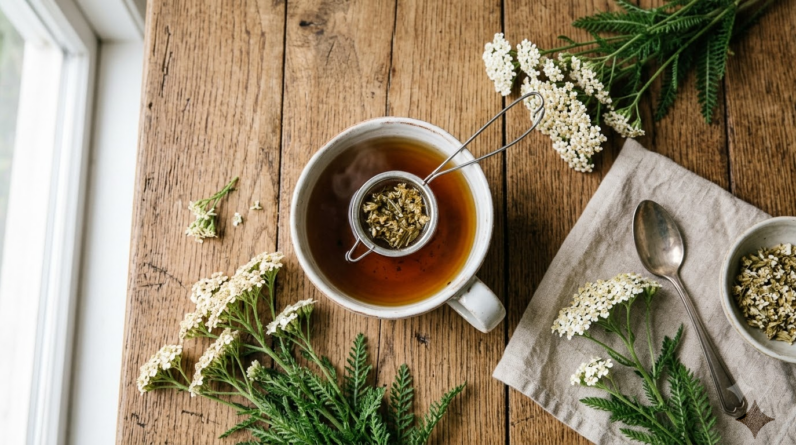
Yarrow (Achillea millefolium) is a hardy perennial herb in the daisy family, easy to spot by its feathery, fern-like leaves and flat clusters of small white or pale pink flowers. Common yarrow grows wild across North America, Europe, and Asia, and it’s just as happy in a home herb garden. Our yarrow grow guide covers how to start the yarrow plant from seed if you’d rather grow your own than buy dried yarrow at a store.
The plant has a long medicinal use, and its old nickname, “soldier’s woundwort,” comes from centuries of European herbalists using it on cuts and wounds. Indigenous communities in North America used the leaves for fevers and digestive complaints. Today, yarrow shows up as a dietary supplement in tea, tincture, and capsule form. The leaves, flowers, and stems all contain the plant’s active compounds, including flavonoids, tannins, and a volatile oil that carries small amounts of a compound called thujone. We’ll come back to thujone in the side effects section below.
Health Benefits of Yarrow
Most of the research behind yarrow’s health benefits comes from lab and animal studies, with a smaller set of human clinical trials. That doesn’t mean the effects aren’t real. It means the evidence is still developing, so treat any of the claims below as reasons to try yarrow, not guarantees.
Digestive Health and Irritable Bowel Syndrome
Digestion is yarrow’s best-documented use. Animal research has found that Achillea millefolium can inhibit contractions of smooth muscle and produce a relaxing effect on the gastrointestinal system, working through several mechanisms including changes to calcium channels and cholinergic receptors. That antispasmodic action is the reason this herb has traditionally been used for bloating, cramping, and irritable bowel syndrome.
A clinical trial involving 60 people with IBS found that an herbal blend containing yarrow, ginger, and boswellia, taken three times a day for one month, reduced stomach pain and bloating. Separately, a study on yarrow essential oil found it reduced ulcer surface area, lowered pro-inflammatory markers, and supported antioxidant enzyme activity in animals with ethanol-induced gastric lesions. That points to a gastroprotective effect worth further human study, and it lines up with the herb’s traditional use for dyspepsia and appetite loss.
If bloating specifically is your main concern, our guide to herbal remedies for bloating covers several other options that pair well with a cup of this tea.
Wound Healing and Skin Inflammation
Yarrow’s reputation as a wound herb isn’t just folklore. A review of yarrow’s pharmacology attributes its use in skin creams, shampoos, and anti-aging products to its anti-inflammatory, antimicrobial, antioxidant, and wound-healing properties, and notes it also helps with oily skin, uneven skin tone, and sensitive skin care. Aqueous and ethanolic yarrow extracts have shown antibacterial activity against organisms that cause skin infections, including Staphylococcus aureus and Staphylococcus epidermidis.
Applied to the skin as a cooled compress, the tea may help soothe irritated skin and minor cuts, which is part of why yarrow shows up so often in traditional first-aid kits. That said, applying it topically carries its own risk of skin irritation for sensitive individuals, which we’ll cover in more detail below.
Colds, Flu, and Immune Support
Yarrow has a centuries-old reputation as a fever herb, traditionally used to promote sweating and help the body cool down during a cold. It’s traditionally used as an astringent and antiseptic to manage gastrointestinal complaints, and has approval from Germany’s Commission E for appetite loss and dyspeptic disorders. Herbalists commonly combine this tea with other warming herbs for colds and flu. Recipes often add lemon for a boost of vitamin C, or combine yarrow with echinacea, elderflower, ginger, and peppermint for additional respiratory and digestive support. A hot mug at the first sign of a scratchy throat is one of the oldest uses of this plant.
Menstrual Cramps and Menstruation
Yarrow has traditionally been used to ease painful periods, and this is one of the more commonly cited reasons people reach for it today. Preliminary research on the menstrual cycle suggests yarrow’s antispasmodic and mild pain-relieving properties may help with cramping, though robust human trials are still limited. It’s worth noting the same effect that makes it useful for menstruation is also why it’s avoided in pregnancy. Yarrow can stimulate uterine contractions, which is helpful for easing cramps but risky for a developing pregnancy.
Brain Health and Multiple Sclerosis
The most striking clinical data on yarrow involves neurological health. In a year-long trial, 75 people with multiple sclerosis were split into a placebo group and two groups receiving 250 mg or 500 mg of yarrow flower extract daily. Neither treatment group had more than one relapse over the year, while the placebo group had patients with three to four relapses, and new brain lesions that appeared in the placebo group faded in both treatment groups, more strongly at the higher dose. That same extract, standardized to specific amounts of the flavonoids luteolin and apigenin, also improved cognitive performance scores compared to placebo.
It’s important to be clear about what this means. That trial used a concentrated flower extract at a measured dose, not a cup of tea, and multiple sclerosis is a serious condition that requires medical management on its own. Broader lab and animal research has also pointed to protective effects of Achillea and its flavonoids on epilepsy, Alzheimer’s disease, Parkinson’s disease, and stroke, but researchers are careful to note this is still early-stage evidence for supporting brain health. Anyone managing a neurological condition should talk to their neurologist before adding yarrow in any form, tea included.
How to Make Yarrow Tea?
Brewing this tea is simple, and you can use either dried or fresh yarrow leaves and flowers. Dried yarrow has a more concentrated, bitter flavor, while fresh yarrow tastes slightly milder and grassier. Here’s the basic method.
- Measure your yarrow. Use 1 to 2 teaspoons of dried yarrow, or about 2 tablespoons of fresh chopped leaves and flowers, per 8-ounce cup of water.
- Boil water. Bring fresh, filtered water just to a boil, then let it sit for 30 seconds off the heat.
- Steep. Pour the hot water over the yarrow and cover the cup to trap the volatile oils. Steep for 10 minutes.
- Strain. Strain out the plant material using a fine mesh strainer or tea infuser.
- Flavor if needed. The finished brew is naturally bitter. Add honey, lemon, or a mint leaf to soften the taste.
- Drink. For digestive support, herbalists often recommend drinking a cup 20 to 30 minutes before a meal.
If you’re growing your own yarrow, dry it properly before storing it. Our step-by-step guide on how to dry yarrow walks through air-drying and storage so dried yarrow keeps its potency for months. Most people limit themselves to two or three cups a day. Going beyond that starts to edge into the range where side effects become more likely, especially with regular, long-term use.
Side Effects of Yarrow
Yarrow is generally well tolerated in the small amounts used for tea, but it isn’t risk-free, and it’s worth reading this section fully before you start drinking it regularly.
Contact dermatitis and skin irritation. Contact dermatitis is the most commonly reported side effect of yarrow. In rare cases, a widespread skin rash has even been reported after drinking the tea, and people sensitive to daisy-family plants may see worsening skin reactions from topical yarrow products. If you notice a rash or worsening skin reaction after using yarrow in any form, stop and check in with a healthcare professional.
Allergic reactions. Because yarrow belongs to the Asteraceae, or daisy, family, it can cross-react in people who are allergic to plants like ragweed, chrysanthemums, marigolds, or chamomile. Yarrow may cause allergic reactions, especially in people allergic to plants in the daisy family, so this isn’t the right herbal tea for anyone with a known ragweed allergy.
Pregnancy and breastfeeding. This is the single biggest warning tied to yarrow. Yarrow is considered likely unsafe when taken by mouth during pregnancy, since it can affect the menstrual cycle and might cause miscarriage. Thujone, one of yarrow’s constituents, is classified as an abortifacient, even though it’s present in only small amounts in the whole herb. Safety data for people who breastfeed is also lacking, so most herbalists recommend avoiding yarrow if you’re pregnant or nursing.
Thujone and central nervous system effects. In large amounts or concentrated products, yarrow can affect the brain and central nervous system, an effect likely linked to thujone. This is one reason to stick to reasonable tea-strength doses rather than concentrated tinctures. Yarrow extracts are generally recognized as safe in beverages, but the finished product needs to be thujone-free. Yarrow essential oil should never be taken internally; it’s meant for diluted, topical use only.
Drowsiness and increased urination. When taken by mouth, yarrow can possibly cause drowsiness and increased urination. That gives it a mild sedative quality some people appreciate in the evening and others find inconvenient during the day.
Bleeding and drug interactions. Yarrow might slow blood clotting, which in theory could raise bleeding risk in people with a bleeding disorder, and it may interact with diuretic medications since the herb has a mild diuretic effect of its own. If you have kidney disease, or take blood thinners or diuretics, talk to a doctor before making yarrow a regular habit.
Serious side effects at tea strength are uncommon, but they’re not zero, especially with daily use over long stretches. One case report noted anticholinergic effects in someone who drank five cups a day for a week, which is a good reminder that “natural” doesn’t mean unlimited.
Frequently Asked Questions
Is it safe to drink yarrow tea every day? Occasional use, a few cups a week, is generally considered low-risk for most healthy adults. Daily, long-term use hasn’t been well studied, so it’s best to cycle on and off rather than drink it indefinitely, and to check with a healthcare professional if you have any underlying health conditions.
Does yarrow tea help with colds and flu? Traditionally, yes. Yarrow is a diaphoretic herb, meaning it’s believed to promote sweating, which herbalists have used for centuries to help the body work through a fever during colds and flu. Human clinical evidence specific to colds is limited, but the tradition is well documented across multiple cultures.
Can yarrow tea help with menstrual cramps? Many people use it for menstrual cramps because of its antispasmodic properties. It’s a common ingredient in traditional formulas for painful periods, though it should never be used during pregnancy, since the same effect that eases cramps can also stimulate the uterus.
Who should avoid yarrow tea? Anyone pregnant or breastfeeding, allergic to ragweed or other daisy-family plants, or taking blood thinners or diuretic medications should avoid it or check with a doctor first. People with kidney disease should also use caution given its diuretic effect.
What does yarrow tea taste like? It’s bitter and slightly peppery, with an herbal, almost sage-like aroma. Most people add honey or lemon, or blend it with a milder herb like peppermint, to make it more palatable day to day.
Our Take
The benefits of yarrow tea earn it a real place in a home apothecary. It’s a digestive and wound-healing herb with staying power, and the research on IBS, wound care, and even multiple sclerosis is genuinely more promising than a lot of trendy herbal teas can claim. Where it falls short is convenience. The taste is an acquired one, and the pregnancy warning rules it out for a meaningful share of people. For everyday digestive support with a gentler flavor, we’d point people toward peppermint tea first; for something aimed specifically at cramping and inflammation, yarrow tea is worth the bitterness.
If you already grow yarrow at home, pairing it with companion plants can help keep your patch healthy. See our guide to yarrow companion plants for what grows well alongside it. And if you’re building out a rotation of herbal teas, our agrimony tea guide covers a similarly bitter, digestion-focused tea worth trying next. Yarrow tea isn’t for everyone, but for the right person, it’s one of the more useful herbs to keep in the cupboard.
Disclaimer: This article is for educational purposes only and is not intended as medical advice. Always consult a qualified healthcare professional before using medicinal herbs, especially if you are pregnant, nursing, taking medications, or have a medical condition. Read our full Medical Disclaimer.
References
- WebMD, “Yarrow: Overview, Uses, Side Effects, Precautions, Interactions, Dosing and Reviews” → https://www.webmd.com/vitamins-supplements/yarrow
- Drugs.com, “Yarrow Uses, Benefits & Dosage” (professional monograph) → https://www.drugs.com/npp/yarrow.html
- Drugs.com, “Yarrow Uses, Benefits & Side Effects” (consumer monograph) → https://www.drugs.com/npc/yarrow.html
- NCBI/PMC, “Achillea millefolium Essential Oil Mitigates Peptic Ulcer in Rats through Nrf2/HO-1 Pathway” → https://www.ncbi.nlm.nih.gov/pmc/articles/PMC9692697/
- NCBI/PMC, “Antioxidant, Anti-Inflammatory, and Antibacterial Properties of an Achillea millefolium L. Extract” → https://www.ncbi.nlm.nih.gov/pmc/articles/PMC9598488/
- Examine.com, “What else might yarrow help with?” (multiple sclerosis trial summary) → https://examine.com/supplements/yarrow/faq/what-else-might-yarrow-help-with/
- ResearchGate, “Yarrow (Achillea millefolium Linn.) a herbal medicinal plant with broad therapeutic use — A review” → https://www.researchgate.net/publication/285763271

Researches medicinal plants, herbal wellness, and sustainable gardening practices. Through Herbal Daily Care, she helps readers discover the benefits of growing and using herbs at home.