

This infused oil is one of the easiest ways to get real garlic flavor into a dish without the sharp bite of raw cloves, and it’s also one of the few kitchen projects where the safety rules genuinely matter. This garlic infused olive oil recipe covers how to infuse garlic into oil at home the safe way, why the finished infused oil is a go-to for low FODMAP cooking, and how to store it so it stays good, not dangerous. Some people just call it garlic olive oil for short; either way, extracting real garlic flavour doesn’t require raw cloves every time you cook.
Quick Answer
Garlic-infused olive oil is made by gently heating peeled garlic cloves in oil, then straining and refrigerating the finished oil. Because garlic is low-acid, it must be refrigerated and used within about a week, or frozen, to avoid the risk of botulism from Clostridium botulinum.
Is Garlic-Infused Olive Oil Safe?
Let’s get this out of the way first. Oil creates a low-oxygen, anaerobic environment, and fresh garlic is low in acid and holds moisture. Put oil and garlic together at room temperature and you have exactly the conditions Clostridium botulinum needs to grow and produce a toxin with no smell or taste. When you heat the oil and combine it with olive oil with garlic sitting in it, that combination needs refrigeration from the moment it cools, not hours later. Leaving garlic in the oil on the counter, even for what feels like a short time, is the single most common way home cooks run into trouble. The CDC and the National Center for Home Food Preservation both recommend refrigerating homemade garlic or herb oils and using them within about four days if room-temperature storage isn’t an option, or up to roughly a week under proper refrigeration.
There is a way to make garlic that is safe at room temperature: acidify it first. Researchers at the University of Idaho developed a tested method that uses a citric acid solution to bring chopped garlic down to a pH of 4.2 or lower before it goes into the oil, a process detailed by Penn State Extension and the University of Georgia’s food safety publications. This isn’t something to eyeball. Skip the acid step and refrigeration becomes non-negotiable. The same risk applies no matter what base you use; swapping in a neutral vegetable oil instead of olive oil doesn’t change the chemistry at all.
The short version: refrigerate, use within about a week, and never leave a batch sitting on the counter unless it’s been through a tested acidification process.
Garlic-Infused Oil and the Low FODMAP Diet
One reason this style of infused oil shows up so often in gut-health cooking is that it solves a real problem for people avoiding FODMAPs. Garlic’s fructans, the compound that triggers symptoms for many people with IBS or SIBO, are water-soluble but not oil-soluble. According to Monash University’s FODMAP research, that means the fructans stay behind in the garlic solids while the flavor and aroma transfer into the oil, making the strained oil itself low FODMAP even though whole garlic isn’t. If you’re cooking for SIBO or a low FODMAP elimination phase, straining out every trace of garlic solid matters more than usual, since any leftover bits carry the fructans with them.
What You’ll Need
- Whole garlic cloves, fresh, with no soft spots or sprouting
- Extra virgin olive oil, or a neutral vegetable oil if you prefer a milder base
- A small saucepan
- A fine-mesh strainer
- A clean, sterilized glass jar or glass bottle with a tight lid
- An ice cube tray, if you plan to freeze portions for later
How to Make Garlic-Infused Olive Oil
This oil recipe scales easily if you want a bigger batch, just keep the ratio of oil to garlic roughly the same as you scale up.
- Peel and smash the garlic cloves. Use whole garlic cloves, lightly smashed rather than minced, so they’re easier to strain out completely later.
- Add garlic to a small saucepan. Cover the cloves with extra virgin olive oil, using enough to fully submerge them.
- Heat the olive oil gently. Warm everything over low heat and gently heat until you see small, occasional bubbles, not a hard simmer. Simmering the garlic too aggressively will scorch it and turn the flavor bitter.
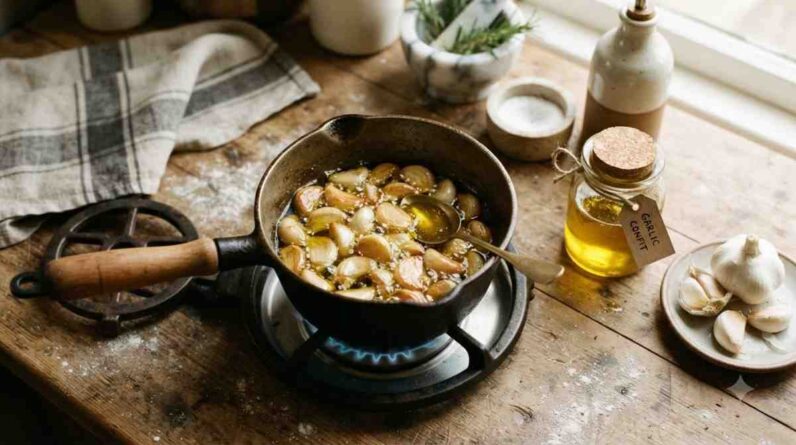
- Cook low and slow. Let it go for 20 to 30 minutes, stirring occasionally, until the cloves turn soft and lightly golden. This is different from oven-roasted garlic, which uses higher, drier heat and takes longer to soften.
- Remove from the heat. Let the garlic and oil cool to room temperature before doing anything else with it.
- Strain. Pour the oil through a fine-mesh strainer into a clean glass jar or glass bottle, removing every visible piece of garlic. This step is what actually determines both the food-safety profile and the low FODMAP status of the finished infused garlic oil.
- Refrigerate immediately. Store the bottle in the refrigerator, airtight, and use within about a week.
The Confit Method (An Alternative Worth Knowing)
What you’ve just made is close to a simplified garlic confit: a French technique for cooking something low and slow in fat until tender. A true confit keeps the garlic cloves in the finished oil as a spreadable, caramelized ingredient in their own right, rather than straining them out. If you want soft, spreadable cloves for toast or a cheese board and a bonus jar of infused oil, cook the cloves a little longer, closer to 30 to 45 minutes, until deeply golden, and keep both the garlic and the oil together in the fridge rather than straining.
Add a sprig of fresh rosemary, a little thyme or oregano, or a pinch of chili flakes or dried chili peppers to the oil while it cooks for extra depth; our post on rosemary’s health benefits has more on that herb specifically. Either way, confit-style garlic still carries the same botulism risk as strained garlic olive oil and needs the same refrigeration, no exceptions.
Storage and Shelf Life
- Refrigerate, always. This homemade infused oil, strained or confit-style, belongs in an airtight glass jar or bottle in the refrigerator, not a cupboard.
- Use within about a week. This applies whether the garlic is left in or strained out.
- Freeze for longer storage. Freeze individual portions in an ice cube tray, then pop the frozen cubes into a freezer bag. This keeps a big batch usable for up to 1 month without the risk that comes from lingering in the fridge too long.
- Never top off an old jar with fresh oil or garlic. Date each batch and treat it as its own timeline.
- When in doubt, throw it out. No amount of high-quality extra virgin olive oil changes the underlying chemistry, and the risk of botulism doesn’t announce itself through smell or taste.
Ways to Use It
This infused oil is genuinely versatile once you’ve got a safe batch on hand, and it’s a simple way of adding flavor to weeknight meals without chopping fresh cloves every time:
- Whisk it into a quick salad dressing in place of plain oil and raw garlic
- Drizzle it over roasted vegetables, pasta, or a finished soup
- Use it for cooking sautéed greens or eggs when you want garlic flavor without the raw bite
- Brush it over bread before toasting for an easy garlic bread substitute
- Spoon the confit-style cloves over crackers or a cheese board if you kept them whole
If you’re building a broader home herb and flavor rotation, the best herbs to start with for health is a good next read for pairing ideas beyond garlic.
Frequently Asked Questions
Yes, as long as it’s refrigerated and used within about a week, or frozen for longer storage. Fresh garlic is low-acid and holds moisture, which creates a real risk of botulism if left at room temperature.
Yes. Garlic’s fructans are water-soluble, not oil-soluble, so straining out the garlic solids leaves an oil that’s suitable for a low FODMAP or SIBO-friendly diet, according to Monash University’s research.
Only if it’s been acidified using a tested method, such as the University of Idaho’s citric acid process. Without that step, room-temperature storage carries a real risk of botulism.
Garlic confit keeps the whole garlic cloves in the oil as a soft, spreadable ingredient, while infused oil is typically strained to remove the garlic solids. Both are made the same basic way and carry the same storage rules.
About a week in the refrigerator, or up to 1 month if you freeze individual portions in an ice cube tray.
This garlic olive oil rewards a little patience and a lot of discipline around storage. Cook it low and slow, strain it well if you want it FODMAP-friendly, and keep it in the fridge or freezer rather than on the counter.
Disclaimer: This article is for educational purposes only and is not intended as medical advice. Always consult a qualified healthcare professional before using medicinal herbs, especially if you are pregnant, nursing, taking medications, or have a medical condition. Read our full Medical Disclaimer.
References
- Centers for Disease Control and Prevention, Home-Canned Foods and Botulism
- National Center for Home Food Preservation, Freezing Garlic-in-Oil
- University of Georgia CAES Field Report, How to Safely Make Infused Oils
- Monash FODMAP, All About Onion, Garlic and Infused Oils on the Low FODMAP Diet
- Penn State Extension, How to Safely Make Infused Oils

Researches medicinal plants, herbal wellness, and sustainable gardening practices. Through Herbal Daily Care, she helps readers discover the benefits of growing and using herbs at home.