

Twist an ankle in the garden, and the first thing most herbalists reach for is comfrey. It’s one of the oldest first-aid herbs in Western herbalism, and learning how to make a comfrey poultice is a genuinely useful skill for anyone who keeps a home apothecary of herbal remedies. This guide walks through how to make a poultice using fresh or dried herbs, when to use a hot poultice versus a cold one, and, just as important, where the real safety line sits with this herb. It’s written for home herbalists, homesteading families, and anyone who wants to learn how to make a comfrey poultice they can actually trust, not just a folk remedy repeated without context.
Quick Answer
A comfrey poultice is made by mashing fresh or rehydrated dried comfrey leaf into a paste, spreading it on a clean cloth, and applying it to unbroken skin over a sprain, strain, or bruise for 20–30 minutes. It should never go on broken skin, open cuts, or puncture wounds, and topical use is generally limited to short stretches of days rather than ongoing daily use.
What Is a Comfrey Poultice, and What’s It Actually Used For?
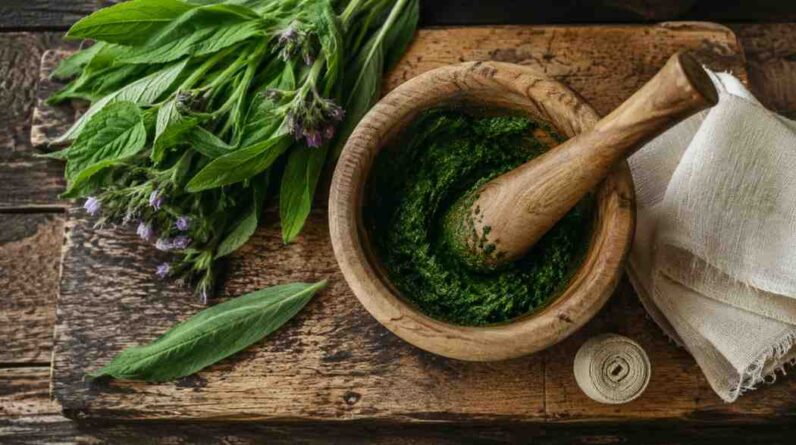
A poultice is simply a soft, moist mass of mashed plant material applied directly to the skin, usually held in place with a cloth or bandage. With comfrey specifically, herbalists reach for it most often for sprains, strains, and bruises, the everyday aches that come with gardening, hiking, or just being clumsy on the stairs.
The “knitbone” reputation
Comfrey’s old folk name, knitbone, comes from centuries of traditional use for soft-tissue injuries and, historically, for bones once they’d already been set. That reputation is worth knowing, but it’s also worth being precise about. A comfrey poultice does not set or heal a fracture. If you suspect a broken bone, that’s an X-ray and a cast, not a home poultice. Comfrey’s traditional role was always as a supportive wrap over intact skin after a bone had already been properly set by someone qualified to do it, never as a substitute for that care.
What’s in the leaf
Comfrey leaf contains allantoin, a compound known for encouraging skin cell turnover, along with rosmarinic acid, which has a long history of use to soothe inflammation and calm irritated tissue. Together they’re the reason this plant became a staple for bruises, sore joints, and everyday aches and pains. But comfrey also contains pyrrolizidine alkaloids (PAs), naturally occurring compounds that can damage the liver if they build up in the body. That single fact shapes almost every safety rule in this guide, so we’ll come back to it in detail.
Fresh Comfrey vs. Dried Comfrey, Which Should You Use?
Fresh or dried, either works, and the method only changes slightly. If you’re new to working with herbal remedies generally, our best herbs to start with for health guide is a good primer on choosing and preparing plants like this one.
- Fresh comfrey leaf gives you the most juice and the loosest, most spreadable paste, which is why most herbalists prefer fresh herbs over dried when the plant is in season. Do a quick patch test before applying the poultice if you’ve never used comfrey on your skin before.
- Dried herb is what you’ll use the rest of the year. It works just as well once it’s rehydrated, you’re just adding the moisture back in with hot water instead of relying on the plant’s own juice.
If you’re harvesting your own, pick young comfrey leaves in the morning, before the heat of the day has wilted them, and use them the same day for the best texture.
How to Make a Comfrey Poultice, Step by Step
Poultice With Fresh Comfrey
- Harvest or buy 4–6 fresh comfrey leaves and rinse them well, using a clean cutting board to remove any tough center stems.
- Tear the leaves into rough pieces and add them to a mortar and pestle, blender, or food processor.
- Mash or pulse until you have a thick, spreadable green paste. Add a few drops of water only if it’s too dry to hold together.
- Spread the paste directly onto a clean cloth, gauze pad, or piece of muslin, thick enough to fully cover the affected area. A spatula makes this step easier if the paste is sticky.
- Place the finished poultice against the skin and secure it with a bandage or wrap, snug but not tight.
- Leave it in place for 20–30 minutes, then remove and rinse the skin.
Poultice With Dried Herbs
- Measure out 2–3 tablespoons of dried comfrey.
- Grind it slightly finer with a mortar and pestle if the pieces are large.
- Moisten the dried herb with just enough hot water to form a thick paste, start with a tablespoon at a time. If the paste ends up too loose, a spoonful of cornmeal is a traditional binder that thickens it back up without diluting the herb’s medicinal properties.
- Let it sit for 2–3 minutes so the herb fully absorbs the water and softens.
- Spread the paste onto a clean cloth or gauze the same way you would with the fresh version.
- Apply to the desired area and cover with a bandage to keep the poultice in place.
- Leave on for 20–30 minutes, then remove and rinse.
Printable recipe note: both methods above are simple to make with common kitchen tools, and if your site has a recipe-card plugin, this is a good candidate for a printable recipe readers can keep by the first-aid kit.
Hot Poultice vs. Cold Poultice, Which One for What
This is less about the comfrey itself and more about basic first-aid logic layered on top of it.
- Cold poultice (comfrey paste made with cool water, or chilled briefly before applying): better in the first 24–48 hours after a fresh sprain or strain, when reducing swelling is the priority.
- Hot poultice (comfrey paste made with warm water, or warmed slightly before applying): more suited to older, stiff aches, a sore lower back after a weekend of yard work, for example, where increasing circulation to the area is the goal rather than controlling fresh swelling.
Either way, the poultice itself is the same paste. The temperature is the only variable you’re adjusting for the type of ache you’re treating.
Tools, Tips & Variations
If you’d rather skip mashing altogether, a comfrey compress, a clean cloth soaked in strong comfrey tea, is a gentler alternative for sensitive skin, though a true poultice made from the mashed leaf itself gives a stronger effect. It’s one of the best methods for anyone getting into homesteading or DIY herbal wellness who wants options beyond store-bought herbal salves.
Making poultices is also a good excuse to get to know the other backyard herbs growing near your comfrey patch. Plantain, the broad-leafed “weed” most people mow right over, is another topical herb herbalists reach for to soothe minor skin irritations; our guide to medicinal herbs for beginners covers how to use it in infused oils and salves of its own.
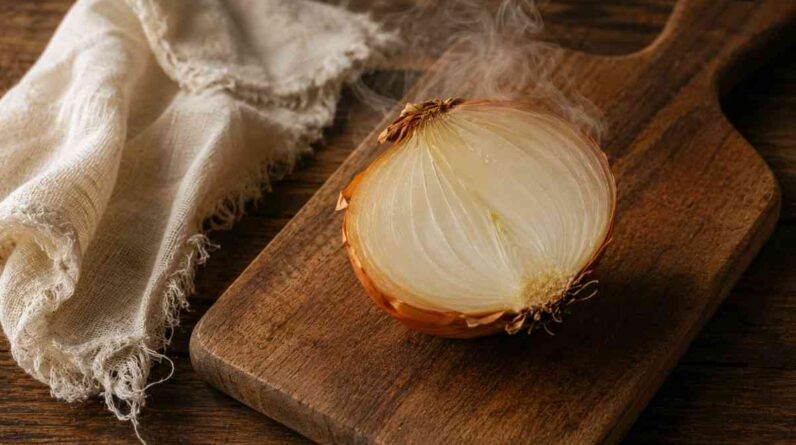
If you’re building out a home herbal first-aid kit, our guide to making an onion poultice for ear infection covers another poultice technique worth knowing, this one for easing earache discomfort rather than sprains and bruises.
Comfrey topically applied is generally well tolerated when the safety rules below are followed. Like most topical applications in herbalism, it’s meant to increase circulation to the area and support the body’s own recovery process, not to replace medical care.
Safety First: Broken Skin, Open Wounds, and When Not to Use Comfrey
This is the section that matters most, so it’s worth being direct.
Why pyrrolizidine alkaloids matter
The pyrrolizidine alkaloids (PAs) in comfrey are hepatotoxic, they can injure the liver, which is why the FDA ordered oral comfrey supplements off the U.S. market in 2001, and why EU regulators restrict comfrey root to external use only, on intact skin, for short stretches of time. Some newer lab research suggests one of the main comfrey alkaloids doesn’t cross intact skin easily, which has reopened debate among herbalists about just how risky short-term topical use really is. But the more cautious, and still current, mainstream guidance is this: keep it external, keep it short-term, and keep it off broken skin.
Broken bones, deep wounds, and puncture wounds, the honest answer
Given comfrey’s “knitbone” history, people naturally ask about using it on more serious injuries. Here’s the straightforward version:
- Broken bones: see a doctor first, full stop. A poultice is never a substitute for setting a fracture. Comfrey’s traditional supportive use was always applied over unbroken skin, after proper medical care.
- Deep wounds and puncture wounds: don’t apply comfrey here. Broken or damaged skin lets the alkaloids absorb into the body far more readily than intact skin does, which is exactly the exposure route health authorities are trying to prevent.
- Cuts, abrasions, or any open skin: same rule, comfrey poultices are for unbroken skin only.
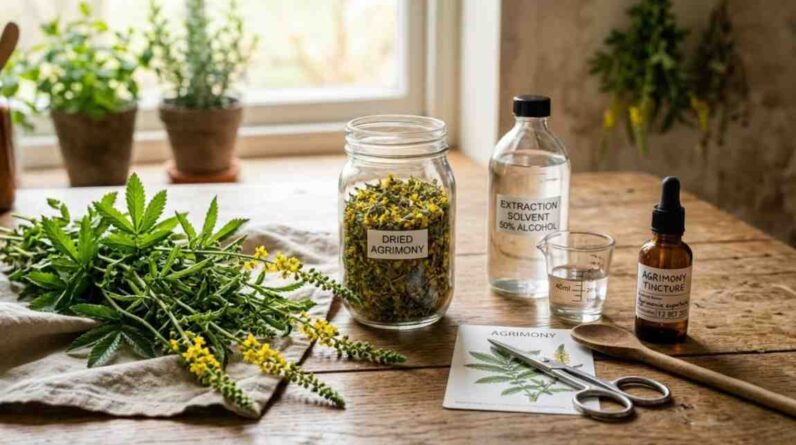
A few more guardrails worth keeping in mind: most herbal safety guidance caps topical comfrey use at no more than 10 consecutive days, or roughly 4–6 weeks total per year. It’s also generally advised against for children, and for anyone who is pregnant, nursing, or living with liver disease. None of this is meant to scare you off comfrey; it’s one of the most useful herbs in a home apothecary when it’s used as it’s meant to be. It just isn’t a wound-care product. If you’re dealing with an actual cut or scrape rather than a bruise, our agrimony salve guide covers a topical option built for broken skin instead. For a broader look at how comfrey compares to other everyday herbs on the safety front, see our guide to what herbs are safe for everyday use.
Comfrey Poultice vs. Comfrey Salve, What’s the Difference?
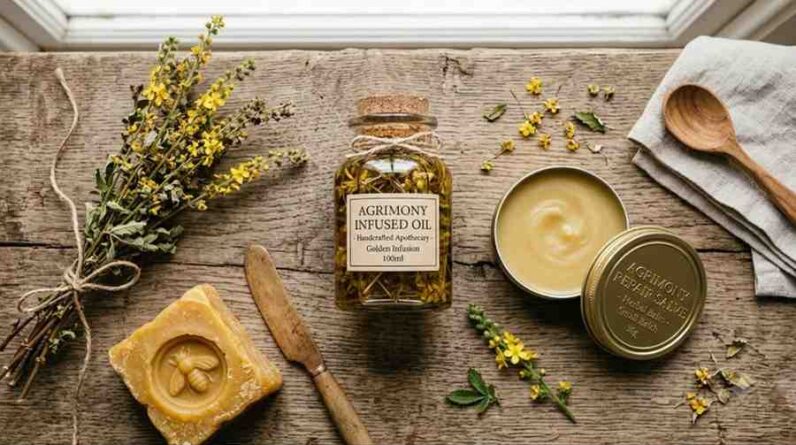
A poultice is fresh (or rehydrated) plant matter applied directly and removed after a short window, think of it as a one-time, intensive application. A comfrey salve, by contrast, is comfrey infused into oil and thickened with beeswax, then jarred and kept on hand to reapply over days or weeks for ongoing minor aches. That infusion step is the same base technique behind our upcoming guide on making herb-infused olive oil, which walks through the process in more depth if you want to build your own salve from scratch. If you bruise or tweak something once in a while, a poultice made fresh for that occasion makes sense. If you’re managing chronic garden-variety soreness, a salve is the more practical option to have ready in the cabinet.
Frequently Asked Questions
Comfrey poultices are traditionally used for sprains, strains, and bruises, external, unbroken-skin applications meant to support soft-tissue recovery, not to treat wounds or fractures directly.
Dried comfrey works fine. Rehydrate it with a small amount of hot water until it forms a thick paste, then use it the same way you would fresh leaf.
No. Comfrey should only be applied to intact, unbroken skin. Its pyrrolizidine alkaloids absorb more readily through damaged skin, which is the exact exposure regulators advise against.
Most herbalists leave a comfrey poultice on for 20–30 minutes at a time, and limit topical comfrey use overall to short stretches, generally no more than about 10 days in a row.
A poultice is fresh plant paste applied once for a short window; a salve is comfrey infused into oil and beeswax, made ahead of time and reapplied over days or weeks.
.
Conclusion
A comfrey poultice is a simple, low-cost remedy for sprains, strains, and bruises once you know the method, fresh or dried, hot or cold, and respect the one hard rule: unbroken skin only, for short stretches at a time. Treat it as a supportive first-aid tool rather than a cure-all, and it earns its place in a home herbalism kit. For a shelf-stable option you can keep ready between injuries, our herb-infused olive oil guide walks through the same infusion method step by step
Disclaimer: This article is for educational purposes only and is not intended as medical advice. Always consult a qualified healthcare professional before using medicinal herbs, especially if you are pregnant, nursing, taking medications, or have a medical condition. Read our full Medical Disclaimer.
References
- WebMD, “Comfrey: Overview, Uses, Side Effects, Precautions, Interactions, Dosing and Reviews” — https://www.webmd.com/vitamins/ai/ingredientmono-295/comfrey
- EBSCO Research Starters, “Comfrey’s Therapeutic Uses” — https://www.ebsco.com/research-starters/complementary-and-alternative-medicine/comfreys-therapeutic-uses
- Cataldo et al., “LC-MS/MS Evaluation of Pyrrolizidine Alkaloids Profile in Relation to Safety of Comfrey Roots and Leaves,” PMC — https://www.ncbi.nlm.nih.gov/pmc/articles/PMC10459857/
- “Safety of medicinal comfrey cream preparations (Symphytum officinale s.l.): The pyrrolizidine alkaloid lycopsamine is poorly absorbed through human skin,” ScienceDirect — https://www.sciencedirect.com/science/article/abs/pii/S0273230020302105

Researches medicinal plants, herbal wellness, and sustainable gardening practices. Through Herbal Daily Care, she helps readers discover the benefits of growing and using herbs at home.