

Plants feel gentle. Many people assume a plant-based pill can’t hurt them, and that belief is risky.
Is it safe to take herbal supplements with medication? Sometimes yes, and sometimes no. It depends on the herb, the drug, and the dose. A few herbs, such as St. John’s wort, clash with many medicines, while others look safe in the best studies.
This guide sorts common herbs by proof strength and ends with a simple five-step check. It’s written for adults who take prescription drugs and are taking herbal supplements, or thinking about it.
Quick Answer
Whether it’s safe to take herbal supplements with medication depends on the herb. St. John’s wort and goldenseal cause the most trouble, and both can weaken many drugs. Ginkgo, garlic, and green tea extract need a check first. Always ask your pharmacist or doctor before you mix any supplement with a prescription.
Key facts
- About half of US adults used a supplement in the past 30 days (Mayo Clinic).
- Roughly 20% to 25% of people on prescription drugs also use a dietary supplement (AFP, 2017).
- Poison Control counts nearly 1,500 documented drug-herb-supplement interactions.
- Only about one-third of supplement users tell their doctor (AFP).
Why It Is Not Always Safe to Take Herbal Supplements With Medication
Herbs come from plants, but their active parts can act like drugs. The National Center for Complementary and Integrative Health (NCCIH) says herbal products carry the same kinds of risks as other active compounds, and the FDA warns that combining supplements and medications can have dangerous, even life-threatening, effects.
How a drug interaction happens
A drug interaction happens when one substance changes what another one does. Your liver breaks down most medicines with enzymes, and six cytochrome P450 enzymes handle about 80% of prescribed drugs (AFP, 2017).
Herbal supplements may speed these enzymes up or slow them down. Either way, the level of your medicine in your blood shifts. You may get too little and lose the benefit, or too much and face side effects, the FDA explains.
St. John’s wort is the classic case. Human studies show it strongly boosts CYP3A4, an enzyme that clears many drugs, so those drugs leave your body faster than normal.
Less often, an herb and a drug do the same job in the body. The FDA notes that warfarin, ginkgo biloba, aspirin, and vitamin E can each thin the blood, so taking them together may raise the bleeding risk.
Why “natural” does not mean tested
Many people assume dietary supplements are safe because they come from plants. MedlinePlus explains that herbal medicines do not have to go through the testing that drugs face, and the FDA does not review them for effectiveness before sale.
Quality can vary too. AFP reports that contaminants, such as pesticides and heavy metals, keep turning up, and some supplements may contain plant material or drugs that are not on the label. Makers must follow current good manufacturing practices, but that doesn’t make every bottle equal. For a broader guide, see our article on safe herbs for everyday use.
Common Herbal Supplements and Prescription Medicines: A Risk Guide
Not every herb carries the same risk. The table below sorts common herbal supplements into three groups, based on the 2017 AFP review of 15 common herbs, plus newer details from Mayo Clinic (April 2026) and NCCIH (December 2024).
| Herb | Risk group | Medicines most often linked | How strong is the proof? |
|---|---|---|---|
| St. John’s wort | Avoid with most drugs | Cyclosporine, warfarin, digoxin, birth control pills, some HIV drugs | Strong: several human studies |
| Goldenseal | Avoid with most drugs | Many prescription and over-the-counter drugs; metformin | Moderate: human enzyme studies |
| Ginkgo biloba | Ask first | Warfarin, aspirin, clopidogrel | Mixed: studies disagree |
| Garlic | Ask first | Blood thinners, digoxin | Limited: a few human studies |
| Asian ginseng | Ask first | Warfarin, calcium channel blockers, statins | Mixed |
| Green tea extract | Ask first | Nadolol, atorvastatin, simvastatin | Limited: small human studies |
| Saw palmetto | Lower concern | Blood thinners (possible bleeding) | Limited |
| Valerian | Lower concern | None found in human enzyme studies | Moderate: several human trials |
Our call: AFP put ginkgo in its low-risk group. We moved it to “Ask first” because Mayo Clinic, the FDA, and NCCIH all flag bleeding with blood thinners. The proof labels are ours, based on the sources named in the text.
Highest concern: St. John’s wort and goldenseal
AFP’s authors say the evidence is strongest for these two, and they advise most people who take any medicine to avoid them. St. John’s wort can weaken cyclosporine, warfarin, digoxin, and birth control pills in human studies, and Mayo Clinic adds statins and calcium channel blockers to that list.
Goldenseal blocks two liver enzymes, CYP2D6 and CYP3A4, that help process more than half of current drugs (AFP). In one NCCIH-funded study, metformin levels fell by about 25% in healthy adults who also took goldenseal, a drop that could hurt blood sugar control in people with type 2 diabetes. Still, AFP notes some goldenseal combinations may turn out safe; the advice to avoid it rests on limited human trials so far.
Ask first: ginkgo, garlic, ginseng, and green tea
These four don’t clash with everything. They clash with a few drugs, and those few matter.
- Ginkgo biloba may raise bleeding risk with warfarin, aspirin, and clopidogrel (Mayo Clinic), though the proof is mixed, as the next section shows.
- Garlic may add to bleeding risk too, and in human studies it lowered levels of drugs that use a body pump called P-gp, such as digoxin (AFP, Mayo Clinic).
- Asian ginseng may lessen how well warfarin works (Mayo Clinic). One study found it boosts CYP3A4, which could reduce the effectiveness of some statins, calcium channel blockers, and antidepressants (AFP).
- Green tea extract lowered blood levels of nadolol, a beta blocker, and atorvastatin in studies (NCCIH).
Lower concern, with a catch
Saw palmetto and valerian showed no clear effect on the main liver enzymes in human trials (AFP). That’s a good sign, but not a green light — Mayo Clinic says saw palmetto might still raise bleeding risk with blood thinners. Low risk is no risk.
Why Experts Sometimes Disagree About Herb-Drug Interactions
Read three trusted pages and you may get three different answers about the same herb. That’s confusing, but it has reasons: herbal supplement–drug interactions are studied unevenly. Here is what each source says about four herbs.
| Herb | AFP review (2017) | Mayo Clinic (Apr 2026) | NCCIH (Dec 2024) |
|---|---|---|---|
| Ginkgo | Low overall risk, but watch warfarin | Bleeding risk with aspirin, clopidogrel, warfarin | More major bleeding with warfarin |
| Saw palmetto | Low risk | May raise bleeding risk with blood thinners | Not listed |
| Asian ginseng | Possible CYP3A4 effect; warfarin results mixed | May weaken warfarin | Unsure about several drugs; warfarin results mixed |
| Green tea extract | Avoid with drugs that rely on certain body pumps | Not listed | Lowers nadolol and atorvastatin levels |
Three reasons explain most of the gaps.
- They look at different things. AFP rated risk mostly from liver-enzyme and drug-pump studies. Bleeding works differently and is less common, per AFP, which is likely why saw palmetto looks fine in one source and flagged in another.
- Many warnings are still theory. NCCIH says most listed herb-drug interactions are hypothetical, drawn from animal or cell studies. A 2003 review by Elizabeth Williamson found many examples were minor or theoretical; the serious ones almost all involved St. John’s wort.
- The dates differ. AFP’s search ended in early 2017, so check the date on any page you use.
Follow the stricter advice when sources disagree, until your pharmacist says otherwise — AFP’s authors suggest the cautious path when data are few, though they note real interactions are uncommon.
Prescription Medicines That Need Extra Care
Some drugs leave little room for error. NCCIH points to cancer drugs, warfarin, and digoxin, since a small blood-level change can matter a lot. Poison Control names warfarin, insulin, aspirin, and digoxin as the medicines most often involved in documented interactions.
- Blood thinners. Warfarin, aspirin, and clopidogrel may mix badly with ginkgo, garlic, evening primrose, saw palmetto, and danshen, each raising bleeding risk (Mayo Clinic).
- Heart and blood pressure drugs. Hawthorn and danshen may interact with beta blockers, calcium channel blockers, and digoxin; danshen can also push blood pressure too low, and licorice can lower potassium, raising digoxin side-effect risk (Mayo Clinic).
- Transplant drugs. St. John’s wort can weaken cyclosporine, an anti-rejection drug (AFP).
- Birth control pills. The FDA says St. John’s wort can make them less effective; early studies suggest chamomile might too, though the evidence is limited (NCCIH).
- Diabetes drugs. Goldenseal lowered metformin levels in one study, and American ginseng may modestly lower blood sugar (AFP).
Some medicines can also affect urinary symptoms or make it harder to urinate. If you take medicines and have a weak urine stream, see our guide to urinary symptoms and medicines.
Surgery adds another layer: tell your surgeon about every supplement. The FDA says you may be asked to stop supplements two or three weeks before a procedure, and AFP adds that kava specifically should stop at least five days before general anesthesia.
If you’re considering a topical weight-management product, see our XenBurn review for its ingredient amounts, patch format, and safety considerations.
Safe to Take Herbal Supplements With Medication? Use This 5-Step Check
You don’t need a lab to lower your risk. If you also take prescription drugs, five habits catch most problems before they start.
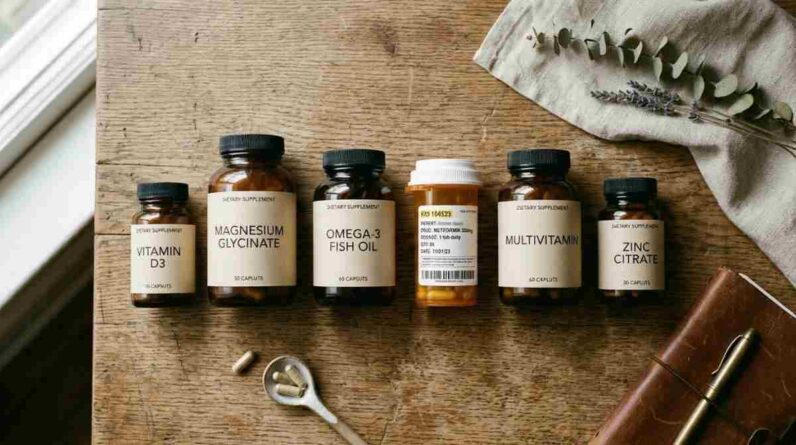
- Make a full list. Write down every prescription, over-the-counter drug, vitamin, and herb, with dosage and how often you take it (FDA).
- Show the list to a pharmacist. Bring the bottles, not just the names. A pharmacist can check the whole list and warn your doctors if two of them prescribe drugs that clash (WebMD).
- Check the product. Ask what the supplement contains and how it was tested. AFP says makers should be able to share a certificate of analysis, and points to USP, NSF International, and ConsumerLab for quality checks.
- Use an online checker as a first look only. A 2017 review by the Alzheimer’s Drug Discovery Foundation found some tools missed interactions that others caught, and supplement data were often incomplete. For deeper reading, AFP names the Natural Medicines database and the NIH Office of Dietary Supplements. You can also read our guide to medicinal herbs for beginners for a broader introduction.
- Change one thing at a time. Add one product, watch for a fast heartbeat or blood pressure changes (Mayo Clinic), and never stop a prescription on your own; check with your doctor first (WebMD).
The dangers of mixing show up in different ways
Poison Control says interactions can cause bleeding, irregular heartbeats, or symptoms like an overdose, or the medicine may simply stop working. Call your pharmacist or doctor the same day if something feels off after you add a supplement, and call your local emergency number for chest pain, trouble breathing, or heavy bleeding.
Frequently Asked Questions
Can you take St. John’s wort with prescription medication?
For most people, no. AFP advises avoiding it with most over-the-counter and prescription drugs, since the FDA says it can make drugs for HIV/AIDS, heart disease, depression, organ transplants, and birth control less effective.
Is ginkgo biloba safe with blood thinners like warfarin?
Studies disagree. An analysis of 18 trials found no rise in bleeding, but one records study linked ginkgo and warfarin to more bleeding, and NCCIH reports the same link. If you take warfarin, ask your doctor first and have your INR (a blood test showing how well warfarin is working) checked closely, or skip ginkgo (AFP).
Should I stop herbal supplements before surgery?
Often yes, but your surgeon decides. The FDA says you may be asked to stop supplements two or three weeks before a procedure. AFP says kava should stop at least five days before general anesthesia.
Can I take herbal supplements with birth control pills?
St. John’s wort can make birth control pills less effective, says the FDA. Early studies suggest chamomile might lower their effect too, but the evidence is limited (NCCIH). Ask your pharmacist what to do if you use either one.
Do I need to tell my doctor about herbal supplements?
Yes. Herbs count as part of your medicine list. Surveys cited by AFP found only about one-third of supplement users tell their doctor, and taking supplements in secret is where many problems start. Bring your list to every visit.
Bottom Line
So, is it safe to take herbal supplements with medication? Natural does not mean risk-free, and it does not mean dangerous either. St. John’s wort and goldenseal deserve the most caution, and a handful of other herbs need a quick check.
Start with the risk guide above, then bring your full list to a pharmacist before you add anything new. If you’re new to herbs, see our guide to the best herbs to start with for health. Talk with your healthcare team about every product, even a simple tea.
Read next: How Long Do Herbal Remedies Take to Work?
References
- Asher GN, Corbett AH, Hawke RL. Common Herbal Dietary Supplement–Drug Interactions. American Family Physician, 2017. https://www.aafp.org/pubs/afp/issues/2017/0715/p101.html
- Mayo Clinic Staff. Herbal supplements and heart medicines may not mix. April 2026. https://www.mayoclinic.org/healthy-lifestyle/consumer-health/in-depth/herbal-supplements/art-20046488
- S. FDA. Mixing Medications and Dietary Supplements Can Endanger Your Health. https://www.fda.gov/consumers/consumer-updates/mixing-medications-and-dietary-supplements-can-endanger-your-health
- Herb-Drug Interactions (Clinical Digest), December 2024. https://www.nccih.nih.gov/health/providers/digest/herb-drug-interactions
- Poison Control. Interactions between medicines, herbs, and dietary supplements. https://www.poison.org/articles/mixing-meds-herbs-and-supplements
- Herbal Medicine. https://medlineplus.gov/herbalmedicine.html
- Hara Y. Is That Supplement Safe to Take With Your Medications? Alzheimer’s Drug Discovery Foundation, 2017. https://www.alzdiscovery.org/cognitive-vitality/blog/is-that-supplement-safe-to-take-with-your-medications
- Williamson EM. Drug interactions between herbal and prescription medicines. Drug Safety, 2003. https://www.ovid.com/journals/drusa/pdf/00002018-200326150-00002~drug-interactions-between-herbal-and-prescription-medicines
- Drug Interaction Checker. https://www.webmd.com/interaction-checker/default.htm

Written by cskoch, who researches medicinal plants and herbal wellness at Herbal Daily Care. This guide is research-based: we reviewed published trials, meta-analyses, and the manufacturer’s own sales page. We did not purchase or test the product, and we do not claim first-hand results.