

Is Tulsi and Holy Basil the Same? Names, Species and Types
Tulsi is the name used in India for holy basil, a mint-family herb whose accepted scientific name is Ocimum tenuiflorum. Ocimum sanctum is an older name for the same plant. So tulsi and holy basil are the same plant. Look-alikes such as sweet basil and Thai basil are different species.[1][2]
Are Tulsi and Holy Basil the Same Plant?
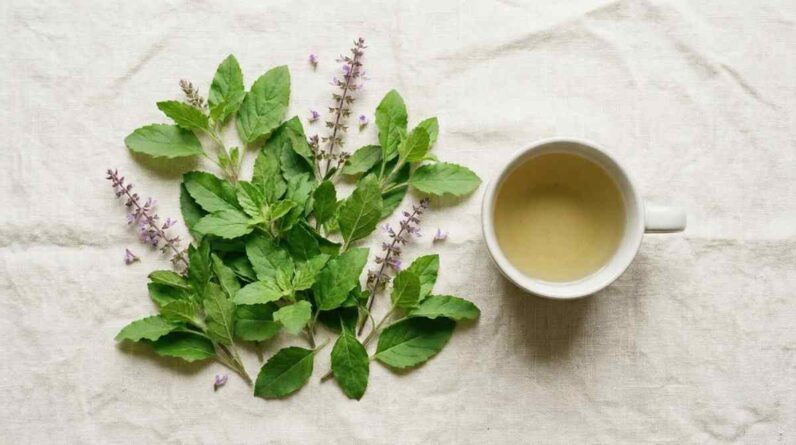
Yes. Tulsi and holy basil are two names for one leafy herb. Tulsi is the name used in India, and holy basil is the usual English name. Both point to Ocimum tenuiflorum, a member of the mint family.[1][3]
The plant is native to India. It also grows in Australia, West Africa and some Middle Eastern countries.[3] Ayurvedic medicine in India has used it for more than 3,000 years.[3] A plant with that long a history gathers many local names, which is part of why the terms blur.
Merck Manuals says tulsi is the Hindu name for holy basil and means “the incomparable one.”[3] It adds that some cookbooks call the herb hot basil because it tastes bitter and spicy.[3] A plant guide from Bangladesh adds sacred basil to the English names, and it gives Ocimum tenuiflorum as the accepted Latin name in the mint family, Lamiaceae.[7] People also group it with adaptogenic herbs, a label for plants thought to help the body handle stress.[3]
So why does the question keep coming up? Tea boxes, shops and research papers use different words for one plant. Other basils also share the word “basil,” which adds to the mix-up.
Ocimum Tenuiflorum or Ocimum Sanctum?
You will see two Latin names. Plants of the World Online, run by Kew, lists Ocimum tenuiflorum as the accepted name.[2] It lists Ocimum sanctum as a synonym, which is an older name for the same species. That older name was published in 1767.[2]
Research still leans on the older name. In a 2017 review of human tulsi studies, only two papers said which type of tulsi they used.[1] All the others called the plant Ocimum sanctum.[1] So a search under either Latin name leads to the same herb.[1][2]
Rama, Krishna and Vana: The Types of Tulsi
Tulsi also comes in types, and their names can sound like separate herbs. Two of them are forms of one species. The third is not.
| Type | Other names | Leaf look | Species in the 2017 review | Same as holy basil? |
|---|---|---|---|---|
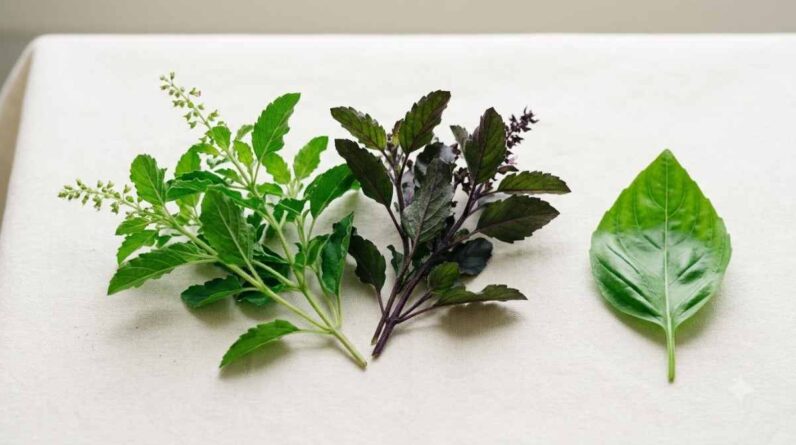
| Rama | Sri tulsi | Green leaves | Ocimum tenuiflorum[1] | Yes |
| Krishna | Shyama tulsi | Purplish leaves | Ocimum tenuiflorum[1] | Yes |
| Vana | Wild or forest tulsi | Not described in the review | Ocimum gratissimum[1] | No. A different species grouped with tulsi by tradition |
Source: the 2017 review. Some sellers also sell Vana as a third tulsi type with a citrus smell.[6] That is a seller description, not research.
Sellers describe more types than the review does. One seed company lists Amrita tulsi as another form of Ocimum tenuiflorum. It also says a plant once sold as Kapoor tulsi is really a different species, Ocimum africanum.[8] That is a seller blog, and I found no independent botanical source for it, so treat it as unconfirmed.
The review calls Rama and Krishna two distinct cultivars of one species, with different plant chemistry.[1] Vana, in its words, is a third type of tulsi, even though it is a different species.[1] That is why a tulsi tea can carry the name and still not be Ocimum tenuiflorum.
Look-Alikes That Are Not Tulsi
The word “basil” covers many plants in the genus Ocimum. Only some of them are tulsi. This table sorts the common ones.
| Name | Latin name | Tulsi? | What to know |
|---|---|---|---|
| Sweet basil | Ocimum basilicum | No | The basil used widely in cooking. WebMD tells readers not to confuse the two.[4] |
| Thai basil | Ocimum basilicum var. thyrsiflora | No | A cooking basil with smooth leaves and a sweet, licorice-like taste.[5] |
| Holy basil in Thai cooking | Ocimum tenuiflorum | Yes | Used in stir-fries such as pad krapow, with a spicy, peppery taste.[5] |
| Vana (wild) tulsi | Ocimum gratissimum | No, per the review | Often grouped with tulsi, but a different species.[1] |
Latin names come from the sources shown. The Thai basil and Thai cooking rows rely on a cooking site, which is a secondary source.
Names get tangled here. Merck lists “Thai basil” among other names for holy basil.[3] A cooking site describes Thai basil as a separate plant instead.[5] When a label says only “basil,” the Latin name settles it.
Most of what is known about safety comes from research on Ocimum tenuiflorum. Do not assume the same holds for other basils.[1][3]
If you are pregnant, nursing, taking medicine or planning surgery, check with a doctor or pharmacist before using any tulsi product. Merck says holy basil might not be safe in pregnancy.[3]
If you are comparing herbs for regular use, our guide to safe herbs for everyday use provides a broader starting point.
How to Check a Label
A product name tells you little. These steps tell you more.
- Find the Latin name. Look for Ocimum tenuiflorum or Ocimum sanctum. Either one means holy basil.[2]
- Watch for plain “basil.” Ocimum basilicum is sweet basil, not tulsi.[4]
- Look for the type. Rama and Krishna are forms of holy basil. Vana is a different species.[1]
- Ask if the label is unclear. A seller who knows the product can name the plant. If no one can, consider another product.
If you are new to using medicinal plants, see our guide to medicinal herbs for beginners for a broader introduction.
Does the Name Matter for Research?
It matters a little. Many tulsi papers say only “Ocimum sanctum,” without the type, the form or the amount.[1] That makes it hard to compare one study with another. It is also a reason to treat results from one product as limited evidence for a different one.[1]
If you are interested in how quickly people may notice effects, see our guide to how long holy basil takes to work.
Our guide to holy basil benefits covers what the studies found. This page only sorts out the names.
The two names point to one plant, with Ocimum tenuiflorum as the accepted Latin name. Ocimum sanctum is an older name for it. Rama and Krishna are types of that plant. Vana, sweet basil and Thai basil are not. Read the Latin name before you buy.
Frequently Asked Questions
Is tulsi the same as holy basil?
Yes. Tulsi is the name used in India, and holy basil is the usual English name. Both mean Ocimum tenuiflorum, a mint-family herb. Sweet basil and Thai basil are different plants, so check the Latin name on a label.
Are Ocimum sanctum and Ocimum tenuiflorum the same?
Yes. Plants of the World Online lists Ocimum tenuiflorum as the accepted name and Ocimum sanctum as a synonym. Many research papers still use the older name, so both names point to holy basil.
Is holy basil the same as sweet basil?
No. Sweet basil is Ocimum basilicum, the basil used widely in cooking. Holy basil is Ocimum tenuiflorum and tastes more bitter and spicy. WebMD tells readers not to confuse the two.
What are Rama, Krishna and Vana tulsi?
Rama has green leaves and Krishna has purplish leaves. A 2017 review treats both as forms of Ocimum tenuiflorum. The review describes Vana, or wild tulsi, as a third type that is a different species, Ocimum gratissimum.
Which Latin name should I look for on a label?
Look for Ocimum tenuiflorum or Ocimum sanctum. Both mean holy basil. If a label says only basil, or names Ocimum basilicum, it is not tulsi.
One plant carries both names. The accepted Latin name is Ocimum tenuiflorum, and Ocimum sanctum is its older name. Rama and Krishna are types of the same species. Vana, sweet basil and Thai basil are different plants. Check the Latin name before you buy, and ask a clinician first if you are pregnant or take medicine.
References
- Jamshidi N, Cohen MM. The Clinical Efficacy and Safety of Tulsi in Humans: A Systematic Review of the Literature. Evid Based Complement Alternat Med. 2017;2017:9217567. https://pmc.ncbi.nlm.nih.gov/articles/PMC5376420/
- Plants of the World Online, Royal Botanic Gardens, Kew. Ocimum tenuiflorum L. https://powo.science.kew.org/taxon/urn:lsid:ipni.org:names:453130-1
- Merck Manual Consumer Version. Holy Basil. Full review July 2025. https://www.merckmanuals.com/home/special-subjects/dietary-supplements-and-vitamins/holy-basil
- WebMD. Holy Basil: Overview, Uses, Side Effects, Precautions, Interactions, Dosing and Reviews. https://www.webmd.com/vitamins/ai/ingredientmono-1101/holy-basil
- Hungry in Thailand. Holy Basil vs Thai Basil. Secondary source, a cooking site. https://hungryinthailand.com/holy-basil-vs-thai-basil/
- Teatulia. What Is Tulsi? Seller page, not research. https://www.teatulia.com/tea-varieties/what-is-tulsi.htm
- Flora of Bangladesh. Tulsi or Sacred Basil, Ocimum tenuiflorum. Plant guide, secondary source. https://www.floraofbangladesh.com/2021/07/tulsi-or-sacred-basil-ocimum-tenuiflorum.html
- Strictly Medicinal Seeds. Tulsi and Holy Basil Type Comparisons. Seed seller blog, not research. https://blog.strictlymedicinalseeds.com/tulsi-holy-basil-type-comparisons/

Written by cskoch, who researches medicinal plants and herbal wellness at Herbal Daily Care. This guide is research-based: we reviewed published trials, meta-analyses, and the manufacturer’s own sales page. We did not purchase or test the product, and we do not claim first-hand results.