

Booster Brew Ingredients: The Formula, the Missing Dosages & What Each Ingredient Does
- What is in Booster Brew?
- How reliable is the ingredient list?
- Booster Brew dosages: disclosed versus tested
- L-citrulline and L-arginine
- Epimedium
- Panax ginseng
- Tongkat ali
- Beet root powder
- Probiotic blend
- Ingredient safety and interactions
- How to check the label yourself
- Final takeaway
- Frequently asked questions
- References
What is in Booster Brew?
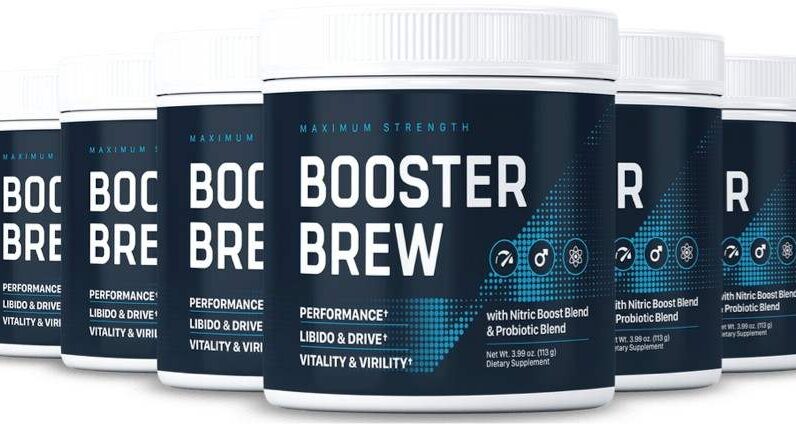
Booster Brew is a dietary supplement drink mix from Prime 2.0 Nutrition, marketed to men who want support for blood flow and sexual confidence. Its sales page describes “six all-natural nutrients” stirred into a morning drink [1].
The named ingredients are a Nitric Boost Blend of L-citrulline and L-arginine, epimedium, Panax ginseng, tongkat ali, beet root powder, and a probiotic blend of L. reuteri, L. paracasei, and S. salivarius [1]. Everything the vendor says about what these do is a manufacturer claim until independent research backs it up.
This guide focuses on the formula itself: what each ingredient is, what is known about doses, and where the evidence stands. For the price, refund terms, and an overall verdict, see our full Booster Brew review.
Booster Brew ingredients fall into three groups: those the vendor ties to nitric oxide (L-citrulline, L-arginine, beet root), botanicals (epimedium, ginseng, tongkat ali), and a probiotic blend. Seeing them this way explains why the vendor expects them to work together, and shows where that expectation runs ahead of the research.
How reliable is the ingredient list?
The ingredient list on the vendor’s own sales page is the only version we treated as authoritative, and it matches the six groups above [1]. That list names ingredients but gives no milligram amounts, no serving size, and no supplement facts panel in the text we read.
Ingredient lists elsewhere on the web disagree with it. Several look-alike sites that describe themselves as the official Booster Brew page add maca root or fenugreek, and some describe capsules or an energy drink instead of a powder [16]. We could not connect any of those pages to the seller, so we ignored their formulas.
The practical lesson: the only trustworthy formula is the one printed on the bottle you receive. Treat any website’s ingredient list, including this one, as a guide to what to look for and not as a substitute for the label.
| Ingredient | Named on vendor page | Amount disclosed | Evidence tier |
|---|---|---|---|
| L-citrulline | Yes (Nitric Boost Blend) | No | Limited evidence |
| L-arginine | Yes (Nitric Boost Blend) | No | Limited evidence |
| Epimedium | Yes | No | Limited evidence |
| Panax ginseng | Yes | No | Limited evidence |
| Tongkat ali | Yes | No | Limited evidence |
| Beet root powder | Yes | No | Manufacturer claim |
| Probiotic blend (3 strains) | Yes (strains named) | No | Unknown / unverified |
Booster Brew dosages: disclosed versus tested
Booster Brew’s sales page says the formula uses “scientifically validated dosages,” which is a manufacturer claim [1]. Because no numbers are printed, a reader cannot tell whether a serving contains anything close to the amounts that trials tested. The table sets the published trial doses beside what the vendor page discloses.
| Ingredient | Booster Brew amount | Dose used in a published human trial | What that trial was |
|---|---|---|---|
| L-citrulline | Not disclosed | 1.5 g per day for one month | 24 men with mild ED, single-blind, placebo month followed by citrulline month [2] |
| L-arginine | Not disclosed | 5 g per day for six weeks | Double-blind, placebo-controlled trial in men with organic ED [4] |
| Panax ginseng | Not disclosed | 900 mg three times daily (2.7 g) for eight weeks | 45 men, double-blind crossover, Korean red ginseng [9] |
| Tongkat ali | Not disclosed | 200 mg per day, or 300 mg per day | Standardized water extract in trials of 12 weeks to six months [12][13] |
| Epimedium | Not disclosed | No standard human ED dose found in the sources we reviewed | Evidence is mostly lab and animal work [7] |
| Beet root powder | Not disclosed | Not reviewed for this article | Not applicable |
| Probiotic blend | Strains named, count not disclosed | No ED trial dose applies | Cited paper covers one strain [14] |
Adding up the citrulline, arginine, and ginseng amounts alone gives roughly 9.2 grams per day, before any tongkat ali, epimedium, or beet root. That figure is our own arithmetic on trial doses, and it is not a claim about Booster Brew. Trials tested these ingredients separately, and the vendor’s blend may use lower amounts or a different ratio. Only the supplement facts panel can settle it.
These trial doses describe what researchers gave study participants. They are not dosing advice, and a product that contains less than a trial used cannot be assumed to work the same way.
L-citrulline and L-arginine
L-arginine is an amino acid the body uses to make nitric oxide, a molecule that relaxes blood vessels. L-citrulline is converted to L-arginine in the body, which is why it is often used as a longer-lasting source [2]. The vendor pairs them in what it calls a “very specific ratio” but does not state the ratio [1].
Clinically, the record is the strongest of any Booster Brew ingredient, but it is narrow. A 2019 meta-analysis of 10 randomized trials covering 540 men found that arginine improved mild to moderate erectile dysfunction compared with placebo or no treatment [3]. In the citrulline trial, 12 of 24 men with mild ED moved from a hardness score of 3 to 4 after a month at 1.5 grams daily, versus 2 of 24 during the placebo month [2].
That trial was small, single-blind, and limited to men with mild ED, so it cannot show the same result for a moderate case or for a blended drink. Limited evidence The vendor’s further claims that nitric oxide “nourishes” a specific tissue are covered in the claim-by-claim check in our review, and we do not repeat them here.
Epimedium
Epimedium, also called horny goat weed, is a traditional Chinese herb whose main active compound is icariin. The vendor says it blocks PDE5, an enzyme that breaks down the signal nitric oxide sends in penile arteries, which would amplify the amino acids [1]. Manufacturer claim
The cited research is a narrative review of icariin and its metabolites, and most of the support comes from molecular studies and animal models [7]. The same review notes that after oral dosing, most icariin is converted by gut bacteria into a related compound called icariside II [7]. That makes the amount of icariin in a powder a poor guide to what reaches the blood.
We found no standardized human dose for erectile dysfunction in the sources reviewed, and no trial of an epimedium product at the amount Booster Brew contains, since the amount is unstated. Epimedium in this formula is best viewed as a plausible but unproven addition. Limited evidence
Panax ginseng
Panax ginseng, often sold as Korean or Asian ginseng, is a root used in traditional medicine for energy and vitality. The vendor credits it with sensitivity, blood flow, and cellular energy [1]. Manufacturer claim
The strongest independent summary is a Cochrane review of nine trials with 587 men who had mild to moderate ED. It found a trivial improvement on the erectile function score (3.52 points, low certainty), although men more often said they felt able to have intercourse [8]. An earlier 45-man crossover trial reported higher scores with 900 mg of Korean red ginseng three times a day for eight weeks [9].
Ginseng differs from L-citrulline in an important way. Its benefit, where seen, took weeks of a relatively large daily amount, and effects were small in the pooled data. Whether a share of one drink-mix serving reaches that level is unknown. Limited evidence
Tongkat ali
Tongkat ali (Eurycoma longifolia) is a Southeast Asian shrub root long used as an energy tonic and aphrodisiac. The vendor says it supports testosterone, libido, and erectile rigidity [1]. Manufacturer claim
A 2015 meta-analysis pooled only two trials with 139 participants and found no significant between-group difference in the five-item erectile function score at week 12. The authors still concluded it may have an effect and called for more trials [10]. A 2012 trial of a standardized extract reported higher erectile function scores than placebo [11], and a six-month trial in 45 men combined 200 mg daily with training and reported improved erectile function [12].
Those trials used specific standardized extracts. One of them was a freeze-dried water extract standardized for a marker compound called eurycomanone, and reviewers advise buyers to look for that information [13]. Booster Brew names the herb but not the extract type or the amount. Limited evidence
Beet root powder
Beet root powder is a ground form of the vegetable. The vendor says multiple clinical studies show it reduces oxidative stress and enhances nitric oxide production, but the page attaches no reference to that statement [1]. Manufacturer claim
We did not review the beetroot literature for this article, so we give it no evidence rating beyond the vendor’s own words. Its dose in the formula is unknown. If the label lists it inside a “proprietary blend,” the amount cannot be separated from the other ingredients.
Probiotic blend
The formula includes three bacterial strains: Lactobacillus reuteri, Lactobacillus paracasei, and Streptococcus salivarius. The vendor says they lower inflammation, improve nutrient uptake, and may support testosterone [1]. Manufacturer claim
The paper cited for this section is a 2014 study of the anti-inflammatory properties of a single S. salivarius strain [14]. Nothing in that title addresses testosterone, erectile function, or the three-strain combination. The number of live organisms per serving, which is what matters for any probiotic, is not disclosed. Unknown / unverified
Ingredient safety and interactions
L-arginine can push blood pressure too low when combined with chest pain medication (nitrates), blood pressure drugs, or sildenafil. It might also lower blood sugar in people using diabetes drugs, and it should not be taken with potassium-sparing diuretics such as spironolactone [5]. Pooled research cited by Mayo Clinic found average drops of about 6.4 mm Hg systolic and 2.6 mm Hg diastolic [6].
Health libraries that reproduce Mayo Clinic guidance advise against arginine after a recent heart attack and say it may worsen asthma or allergies [15]. Ginseng did not raise adverse events versus placebo in the Cochrane review [8]. For epimedium, tongkat ali, beet root, and the probiotic combination, we found no reliable data on long-term use together. That gap is an unknown, not a reassurance.
If you take any prescription medication or have a heart or blood pressure condition, ask your doctor or pharmacist before trying any supplement that contains these ingredients. Persistent erection problems are also worth raising with a clinician, since they can have medical causes a supplement will not address.
How to check the label yourself
Because the doses are missing from the sales page, the bottle is where verification happens. This routine works for Booster Brew and for any similar product.
- Find the supplement facts panel and note the serving size in grams.
- Look for a “proprietary blend” line. If several ingredients share one total weight, individual amounts are hidden.
- Compare each listed amount with the trial doses in the table above, keeping in mind that trials used them separately.
- Check the tongkat ali entry for an extract type or eurycomanone percentage, and the ginseng entry for the type of ginseng.
- Look for a live-organism count (CFU) for the probiotic strains.
- Compare the label with the website. If they differ, trust the label and contact the seller.
Final takeaway
Booster Brew’s formula reads like a sensible stack: two nitric oxide precursors with modest trial support, plus four ingredients ranging from limited evidence to unverified. The missing dosages are the real problem, because every trial result depends on the amount tested. Until a supplement facts panel is in hand, the formula’s effectiveness cannot be judged.
For price, refund mechanics, and our overall assessment, read the complete Booster Brew review. Prices and terms change, so confirm current details on the seller’s page and check the label against this guide when your bottle arrives.
Frequently asked questions
What are the ingredients in Booster Brew?
The vendor page names six ingredient groups: a Nitric Boost Blend of L-citrulline and L-arginine, epimedium, Panax ginseng, tongkat ali, beet root powder, and a probiotic blend of L. reuteri, L. paracasei, and S. salivarius. Confirm the exact list on the bottle label.
What are the dosages in Booster Brew?
The vendor page we reviewed does not publish amounts for any ingredient or a serving size. Only the supplement facts panel on the product can show the doses. Published trials used, for example, 1.5 g per day of L-citrulline and 900 mg of Korean red ginseng three times daily.
Which Booster Brew ingredient has the most evidence?
L-citrulline and L-arginine have the most clinical research, mainly in men with mild to moderate erectile dysfunction. A meta-analysis of 10 trials favored arginine, and a small trial found improved erection hardness with 1.5 g of citrulline daily. Effects in more severe cases are unproven.
Does Booster Brew contain maca or fenugreek?
Not according to the vendor’s own sales page, which lists six ingredient groups without either. Some look-alike websites list maca root or fenugreek, but they could not be tied to the seller. Check the label on the bottle you receive.
Are there interactions with the ingredients in Booster Brew?
Yes. L-arginine can lower blood pressure and may interact with nitrates, blood pressure medications, sildenafil, diabetes drugs, and potassium-sparing diuretics. Anyone taking these should speak with a doctor or pharmacist before use.
Conclusion
The ingredient list is clear, but the amounts are not, and amounts decide whether trial results apply. Read the label, check for hidden blends, and get medical advice if you take any medication.
References
- Booster Brew sales page (manufacturer source, used for product facts only). https://getboosterbrew.com/cb-r-2/
- Cormio L et al. Oral L-citrulline supplementation improves erection hardness in men with mild erectile dysfunction. Urology, 2011. https://pubmed.ncbi.nlm.nih.gov/21195829/
- The Potential Role of Arginine Supplements on Erectile Dysfunction: A Systemic Review and Meta-Analysis, 2019. https://www.sciencedirect.com/science/article/abs/pii/S1743609518313626
- Effect of oral administration of high-dose nitric oxide donor L-arginine in men with organic erectile dysfunction: results of a double-blind, randomized, placebo-controlled study. BJU International (dose as listed on the Semantic Scholar record). https://www.semanticscholar.org/paper/Oral-L-citrulline-supplementation-improves-erection-Cormio-Siati/b718464cae8669a192ac16c3a5e09dbd3b224d1c
- Mayo Clinic. L-arginine (drugs and supplements, interactions). https://www.mayoclinic.org/drugs-supplements-l-arginine/art-20364681
- Mayo Clinic. L-arginine: Does it lower blood pressure? https://www.mayoclinic.org/diseases-conditions/high-blood-pressure/expert-answers/l-arginine/faq-20058052
- Niu Y et al. Deciphering the myth of icariin and synthetic derivatives in improving erectile function from a molecular biology perspective: a narrative review. Translational Andrology and Urology, 2022. https://tau.amegroups.org/article/view/97001/html
- Lee HW et al. Ginseng for erectile dysfunction. Cochrane Database of Systematic Reviews, 2021. https://www.cochranelibrary.com/cdsr/doi/10.1002/14651858.CD012654.pub2/full
- Hong B et al. A double-blind crossover study evaluating the efficacy of Korean red ginseng in patients with erectile dysfunction: a preliminary report. Journal of Urology, 2002. https://www.auajournals.org/doi/10.1016/S0022-5347(05)64298-X
- Kotirum S, Ismail SB, Chaiyakunapruk N. Efficacy of Tongkat Ali (Eurycoma longifolia) on erectile function improvement: systematic review and meta-analysis of randomized controlled trials. Complementary Therapies in Medicine, 2015. https://pubmed.ncbi.nlm.nih.gov/26365449/
- Randomized Clinical Trial on the Use of PHYSTA Freeze-Dried Water Extract of Eurycoma longifolia for the Improvement of Quality of Life and Sexual Well-Being in Men, 2012. https://www.ncbi.nlm.nih.gov/pmc/articles/PMC3518798/
- A 6-month, double-blind, placebo-controlled, randomized trial to evaluate the effect of Eurycoma longifolia (Tongkat Ali) and concurrent training on erectile function and testosterone levels in androgen deficiency of aging males (ADAM). Maturitas, 2020. https://www.maturitas.org/article/S0378-5122(20)30449-7/abstract
- HerbalGram. Summary of the Tongkat Ali meta-analysis, including trial doses and extract standardization. https://www.herbalgram.org/resources/herbclip/issues/2016/bin_544/111564-544/
- Kaci G et al. Anti-inflammatory properties of Streptococcus salivarius, a commensal bacterium of the oral cavity and digestive tract. Applied and Environmental Microbiology, 2014. https://doi.org/10.1128/AEM.03133-13
- Memorial Health System Health Library. L-arginine (reproduces Mayo Clinic content). https://www.mhsystem.org/health-library/art-20364681/
- Unofficial Booster Brew look-alike pages retrieved in September 2026 web searches (deliberately not linked).

Written by cskoch, who researches medicinal plants and herbal wellness at Herbal Daily Care. This guide is research-based: we reviewed published trials, meta-analyses, and the manufacturer’s own sales page. We did not purchase or test the product, and we do not claim first-hand results.