


Disclosure: We may earn a commission if you purchase through links on this page, at no extra cost to you.
This article is for informational purposes only and is not medical advice. Consult a healthcare provider before starting any new supplement, especially if you’re pregnant, nursing, taking medication, or managing a health condition. These statements have not been evaluated by the Food and Drug Administration. This product is not intended to diagnose, treat, cure, or prevent any disease.
Quick Answer
HepatoBurn, a liver-support supplement built around silymarin and berberine, is worth considering only for people without conflicting medications, who go in expecting modest support rather than dramatic results, and who plan to actually use the 60-day refund window if it doesn’t deliver. It’s not worth it for anyone on statins, diabetes medication, or blood thinners without a doctor’s input first.
Key Facts
- Price: $49-$79 per bottle depending on package size, one-time payment
- Guarantee: 60 days, full refund, stated directly by the vendor
- Core ingredients: Silymarin and berberine lead the formula, alongside resveratrol, green tea extract, and others
- Ingredient amounts: Not disclosed on the sales page
- Best fit: Adults without conflicting medications who want a non-stimulant liver-focused supplement
- Full ingredient and safety breakdown: covered in more depth in our HepatoBurn review
What Is HepatoBurn?
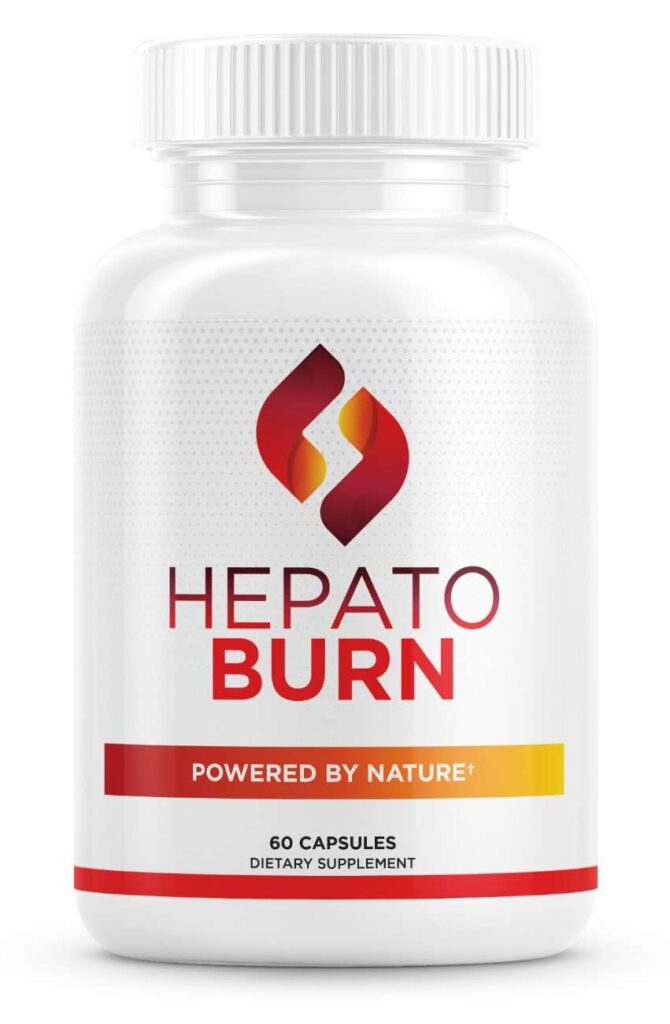

HepatoBurn is a capsule supplement sold directly by its manufacturer and fulfilled through ClickBank, built around a Liver Purification Complex and a Liver Fat-Burning Complex. The core pitch is that liver function, not diet or exercise alone, drives stubborn weight and low energy. That’s the premise worth weighing before the price tag matters.
What Does It Claim to Do?
These are manufacturer claims, not independent findings. The sales page states HepatoBurn detoxifies the body, “optimizes” liver function, and puts the body into what it calls full fat-burning mode, with secondary claims around energy, sleep, hunger, and skin. A specific figure claiming liver cells become “14 times more efficient” at burning fat has no independent source behind it and should be read as marketing language.
Is HepatoBurn Worth Considering? A Decision Framework
This is the question most “HepatoBurn worth it” articles answer with a single upbeat sentence. Here’s an actual framework instead.
It may be worth considering if:
- You’re not taking statins, diabetes medication, insulin, blood thinners, or cyclosporine, since berberine has documented interactions with all of these.
- You’re looking for a non-stimulant option and are comfortable with a formula that doesn’t disclose per-capsule doses.
- You’re realistic that the strongest independent evidence behind its lead ingredients (silymarin, berberine) points to liver-enzyme and blood-sugar support, not guaranteed weight loss.
- You’re willing to actually request the refund within 60 days if it doesn’t deliver, rather than letting the window lapse.
It’s probably not worth it if:
- You’re on any medication berberine interacts with, and haven’t cleared it with a doctor.
- You want to know exactly how much of each ingredient you’re taking before you buy, since that information isn’t published.
- You’re expecting the dramatic, fast transformation the sales page describes rather than modest, unproven support.
- You’d rather start with a single, transparently dosed ingredient (like standalone silymarin) to see how your body responds before committing to a ten-ingredient blend.
If you fall into the first list and none of the second, HepatoBurn is a reasonable, low-financial-risk experiment. If you fall into the second list, the honest answer is to skip it or talk to a doctor first.
Ingredients: The Short Version
HepatoBurn’s ten ingredients are split into two proprietary blends, and none of the per-capsule amounts are published. The two with the most independent human research behind them are silymarin (milk thistle), studied at 140-700 mg/day for liver enzyme improvements in fatty liver disease, and berberine, studied at 400-1,500 mg/day for blood sugar and metabolic markers, though the NIH’s National Center for Complementary and Integrative Health has stated there isn’t enough rigorous evidence to confirm it works for weight loss specifically. Because the label doesn’t disclose doses, this research can’t be used to predict what this specific product delivers. For the full ten-ingredient table with individual evidence ratings, see our complete HepatoBurn review.
Does It Work?
The manufacturer states that fixing liver function unlocks fat loss. Independent research on the finished HepatoBurn product doesn’t exist; what exists is research on some of its ingredients in isolation, at doses this product doesn’t disclose. That gap between “the ingredients have research” and “this product has research” is the honest answer to whether it works.
Side Effects and Safety
Berberine is the ingredient worth the most caution. It inhibits liver enzymes (CYP3A4, CYP2D6) that the body uses to process roughly half of all prescription drugs, with documented interaction risk for statins, diabetes medications, blood thinners, and cyclosporine. Standalone side effects can include digestive upset at higher doses. Silymarin is generally well tolerated in research, though long-term safety data is limited. A full breakdown of who should talk to a doctor first is covered in our HepatoBurn review; the short version is that anyone on the medications above should get medical clearance before trying it.
Who Should Avoid It?
- Anyone on statins, diabetes medication, insulin, blood thinners, or cyclosporine, without medical clearance
- Pregnant or nursing individuals
- Anyone with an existing liver condition not already managed with a physician
- Anyone who needs to know exact ingredient doses before taking a new supplement
Is It Legitimate?
The offer is active, checkout works, and the 60-day refund policy is stated directly by the vendor rather than left vague. On the caution side, ingredient amounts aren’t disclosed, and the site’s “FDA registered and GMP certified facility” language implies more regulatory oversight than actually exists, since the FDA doesn’t approve dietary supplements before sale. Customer-count and rating figures also vary sharply across different marketing sources for this product, from the tens of thousands to numbers in the hundreds of thousands, none independently verifiable.
The decision framework above already covers the real pros and cons in more useful form than a flat list would. For the complete pros-and-cons breakdown, see our full HepatoBurn review.
Price vs. the Refund Window: What’s Your Real Risk?
(Prices vary — confirm current price and terms at checkout.)
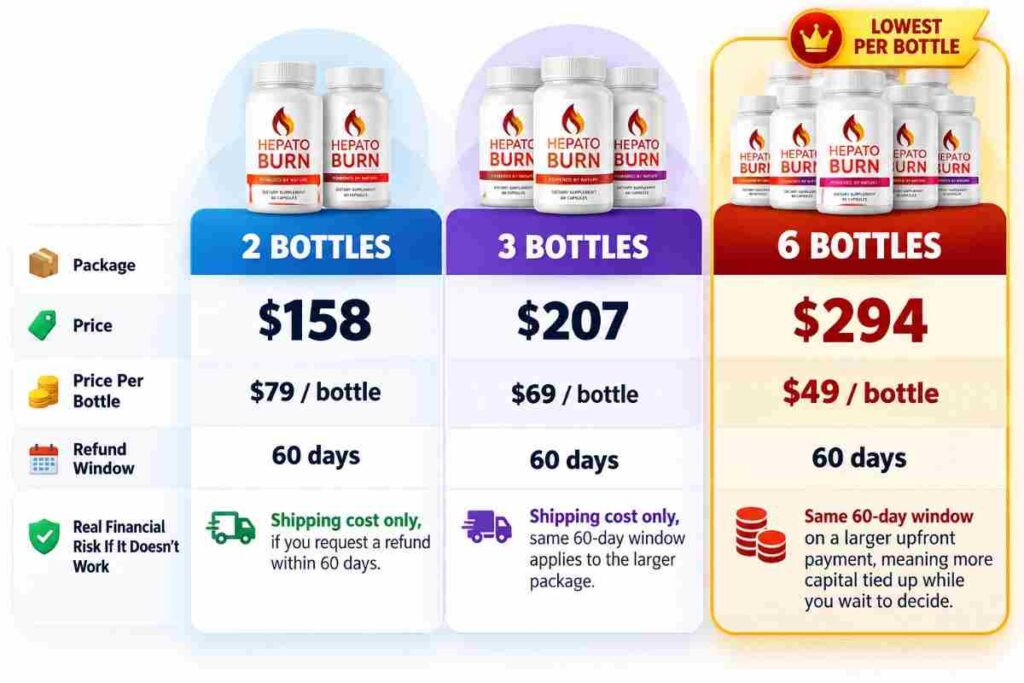
| 📦 Package | 💵 Price | 🏷️ Price / Bottle | 🛡️ Refund Window | ⚠️ Financial Risk If It Doesn’t Work |
|---|---|---|---|---|
| 🔵 2 Bottles | $158 | $79 / bottle | 🗓️ 60 Days | 🚚 Shipping cost only if you request a refund within 60 days |
| 🟣 3 Bottles | $207 | $69 / bottle | 🗓️ 60 Days | 🚚 Shipping cost only — same 60-day window applies |
| 🟠 6 Bottles ✨ | $294 | $49 / bottle | 🗓️ 60 Days | 💰 Larger upfront payment — the same 60-day window applies, meaning more capital is tied up while you decide |
The genuine trade-off isn’t the sticker price, it’s cash flow: the 6-bottle package is the cheapest per bottle, but it ties up $294 for the same 60-day decision window as the $158 option. If you’re unsure whether HepatoBurn is right for you, the 2-bottle package limits how much money is tied up while you find out.
Check the Current HepatoBurn Price and Package Options →
Alternatives
If undisclosed dosing is what’s holding you back, a standalone, transparently labeled ingredient is the main alternative worth weighing, covered in more detail (including specific dose ranges) in our full HepatoBurn review. If you’re comparing HepatoBurn with another liver supplement, see our HepatoBurn vs. Liv Pure comparison for the ingredients, evidence, pricing, and guarantees side by side.
Final Verdict
HepatoBurn is worth considering for a specific, narrower group than the marketing suggests: adults without conflicting medications, who understand the evidence supports liver enzymes and metabolic markers rather than guaranteed weight loss, and who will use the 60-day guarantee if it doesn’t work out. It’s not worth it, at least not without medical guidance first, for anyone on statins, diabetes medication, blood thinners, or cyclosporine. The 2-bottle package is the lower-commitment way to test the “worth it” question for yourself before considering the larger, cheaper-per-bottle packages.
Frequently Asked Questions
Is HepatoBurn worth the money? For someone without conflicting medications who wants to experiment with a liver-focused, non-stimulant supplement, the 60-day refund policy limits the financial downside to shipping costs. For someone expecting guaranteed weight loss, it’s not worth the money, since that outcome isn’t independently established.
Is HepatoBurn worth trying if I’m already on medication? Only after checking with a doctor or pharmacist first, specifically because berberine interacts with statins, diabetes medications, blood thinners, and cyclosporine.
How much does HepatoBurn cost, and does the package size change whether it’s worth it? Per-bottle price drops from $79 down to $49 as package size increases, but the refund window stays the same 60 days regardless of tier, so a bigger package isn’t automatically the better deal if you’re still deciding. Confirm current pricing at checkout since it can change.
What’s the real risk if it doesn’t work for me? Financially, it’s limited to shipping and handling if you request a refund within the stated 60-day window. The larger risk is medical, specifically for anyone on medications that interact with berberine.
Should I buy the bigger package to save money? Only if you’re already confident you’ll use it consistently. The 6-bottle package is cheapest per bottle, but it ties up more money for the same 60-day decision window as the smaller packages.
Is HepatoBurn better than a standalone milk thistle supplement? Not necessarily. A standalone, transparently dosed silymarin supplement lets you match doses used in actual clinical trials, something HepatoBurn’s proprietary blend doesn’t allow, since it doesn’t disclose amounts.
Conclusion
HepatoBurn is worth considering for a narrower group than most reviews admit: people without conflicting medications, realistic expectations, and a plan to use the refund window if needed. For the full ingredient-by-ingredient evidence breakdown and legitimacy deep-dive, see our complete HepatoBurn review.
See the Current Offer and Package Pricing →
References
- PMC — Silymarin as Supportive Treatment in Liver Diseases: A Narrative Review https://pmc.ncbi.nlm.nih.gov/articles/PMC7140758/
- PMC — Hepatoprotective mechanisms and clinical evidence of silymarin in NAFLD/NASH https://pmc.ncbi.nlm.nih.gov/articles/PMC11404857
- PubMed — Silymarin improved diet-induced liver damage and insulin resistance in mice https://pubmed.ncbi.nlm.nih.gov/27387273
- WebMD — Berberine: Uses, Side Effects, Interactions, Warnings & Dosing https://www.webmd.com/vitamins-supplements/berberine
- pillo.care — Berberine Drug Interactions (citing NIH NCCIH) https://pillo.care/blog/berberine-drug-interactions
- HepatoBurn official page (product facts, price, guarantee only)

Written by cskoch, who researches medicinal plants and herbal wellness at Herbal Daily Care. This guide is research-based: we reviewed published trials, meta-analyses, and the manufacturer’s own sales page. We did not purchase or test the product, and we do not claim first-hand results.