

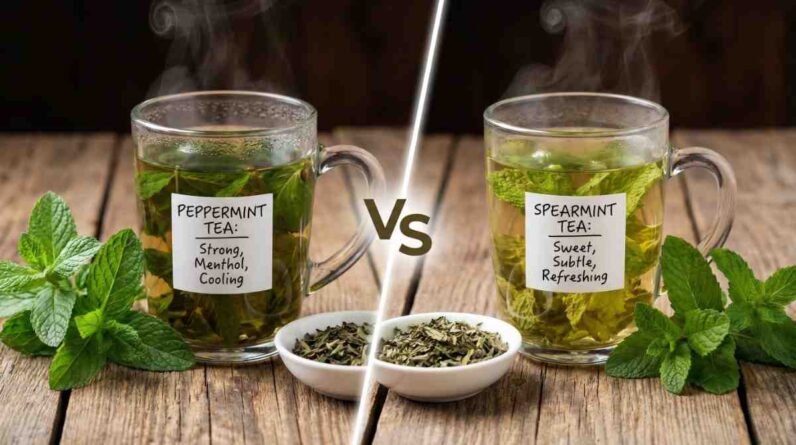
The peppermint vs spearmint debate starts with a simple problem: they look nearly identical growing side by side, same bright green, serrated leaves, same purple flower spikes, same refreshing aroma when you brush past them. But pick the wrong one for your herbal tea, your essential oil diffuser, or your digestive remedy, and you’ll either get an overwhelming blast of cool menthol or a flavor so mild you’ll wonder why you bothered.
The differences between spearmint and peppermint go well beyond intensity. These are two distinct plants with different chemical profiles, different therapeutic strengths, and different best uses. Whether you’re sipping a soothing mint tea, applying a topical oil, or managing a specific health goal. This guide breaks down exactly how they differ in taste, menthol content, health benefits, and everyday applications.
This is for herbalists, wellness enthusiasts, and anyone who wants to get more from the mint family herbs already sitting in their cabinet.
Quick Answer: Peppermint vs Spearmint at a Glance
Peppermint is stronger, sharper, and high in menthol (40–55%), making it better for headaches, IBS, and sinus relief. Spearmint is sweeter, gentler, and richer in carvone, making it better for everyday digestion, hormonal balance, and cooking. Neither is universally “better,” but the right choice depends entirely on your goal.
What’s the Actual Difference Between Peppermint and Spearmint?
Most people assume these are just two versions of the same herb, one stronger, one weaker. The reality is more interesting. They belong to the same mint family (Lamiaceae), share a similar appearance, and both make excellent herbal teas, but their active compounds, origins, and effects on the body are genuinely distinct.
Botanical Background
Peppermint (Mentha piperita) is actually a hybrid of spearmint and water mint (Mentha aquatica). So in botanical terms, it’s the younger of the two plants. It’s actually a hybrid that doesn’t reproduce reliably from seed and spreads mostly by runners. Spearmint (Mentha spicata) is the original parent plant, and the one most commonly found growing wild across Europe and Asia.
Both have been used in herbal medicine for thousands of years. Ancient Egyptians, Greeks, and Romans all documented mint as a digestive and aromatic herb. What’s changed is our understanding of why they work, and that comes down to chemistry.
Growing mint at home? Spearmint is generally easier to manage. Peppermint spreads more aggressively and benefits from container planting to keep it contained.
The Menthol Factor — Why It Matters
The single biggest difference between these two members of the mint family is menthol content. Peppermint contains roughly 40–55% menthol by composition. Spearmint’s menthol content is less than 1%.
That’s not a minor gap; it explains everything. Menthol activates TRPM8 receptors in your skin and mucous membranes (the same receptors that detect cold temperatures), which is why peppermint produces that intense cooling sensation without any actual change in temperature. It’s also what makes peppermint much stronger and more medicinal-tasting than its parent plant.
Spearmint’s dominant compound is carvone (roughly 55–70% of its essential oil), which gives it a sweeter flavor and a lighter, more aromatic character. Carvone also appears in caraway and dill, which is why spearmint has that slightly herby, rounded quality that peppermint simply doesn’t have.
Key insight: If a product tastes intensely cooling or minty, it almost certainly uses peppermint. If it tastes sweet and fresh without the cooling punch like chewing gum, then it’s spearmint.
Peppermint vs Spearmint — Side-by-Side Comparison
| Feature | Peppermint | Spearmint |
|---|---|---|
| Botanical name | Mentha piperita | Mentha spicata |
| Primary compound | Menthol (40–55%) | Carvone (55–70%) |
| Flavor | Strong, cool, sharp | Sweet, mild, aromatic |
| Intensity | High | Low–Medium |
| Best uses (health) | IBS, headaches, congestion, focus | Digestion, PCOS, memory, mild nausea |
| Best uses (cooking) | Chocolate, mojitos, candy canes, dessert | Salads, tabbouleh, savory dishes, tea |
| Essential oil safety | Avoid near young children | Generally gentler |
| Menthol content | ~40–55% | <1% |
| Mint family origin | Hybrid of spearmint + watermint | Original species |
Flavor Profile and Culinary Uses
Taste is the most immediate way most people experience the key differences between spearmint and peppermint. Once you understand the flavor logic, choosing the right one for cooking or tea becomes obvious.
When to Use Peppermint in the Kitchen
Peppermint’s high menthol content and sharp, cooling sensation make it the right choice when you need a dominant, unmistakable mint flavor. It belongs in peppermint bark, chocolate mint brownies, candy canes, peppermint mocha drinks, and classic mojitos. That intensity holds up beautifully against rich, sweet, or bitter ingredients.
It’s also the better mint for dessert recipes where mint needs to be the hero — ice cream, after-dinner chocolate, peppermint creams. A peppermint tea at night has a noticeably sharper, more invigorating flavor than spearmint tea, which tends to feel gentler and easier to drink in the evening.
When Spearmint Works Better
Spearmint’s sweeter flavor and lighter carvone-forward profile make it the right choice for savory cooking. It doesn’t overpower other ingredients the way peppermint can. You’ll find it in tabbouleh, mint chutney, tzatziki, lamb dishes, and fresh summer salads, where you want freshness, not dominance.
In Southeast Asian cuisine, Vietnamese pho garnishes, Thai larb, and Moroccan mint tea, the herb used is almost always spearmint. Its sweeter, more aromatic character integrates rather than competes.
For everyday mint tea drinkers who find peppermint too sharp or too medicinal, spearmint tea is the more enjoyable daily option. It’s milder and sweeter, and pairs naturally with lemon balm, rooibos, or holy basil blends for a more complex cup.
Health Benefits — Where They Overlap and Where They Diverge
Both plants are rich in antioxidants and have genuine, well-studied medicinal applications. Where the difference between peppermint and spearmint becomes most relevant is in their therapeutic strength, mechanisms, and the specific conditions each one suits best.
Peppermint for Digestion, Headaches, and Focus
Peppermint’s high menthol content makes it one of the most clinically researched herbal remedies for irritable bowel syndrome (IBS). Enteric-coated peppermint oil capsules have been shown in multiple clinical trials to reduce abdominal pain, bloating, and indigestion in IBS patients. The National Center for Complementary and Integrative Health (NCCIH) notes that peppermint oil may help relieve IBS symptoms in some people.
For tension headaches, topical peppermint oil (diluted in a carrier oil and applied to the temples) is a well-documented remedy. The cooling effect appears to reduce perceived pain intensity, and a 1996 study in Cephalalgia found it comparable to 1,000mg of paracetamol for tension headache relief.
Peppermint’s aroma is also associated with mental clarity and alertness. Inhaling it has been linked to improved memory and reaction time in small studies, making it a popular choice for aromatherapy in workspaces. It’s also used in toothpaste, mouthwash, and throat lozenges to soothe sore throats, thanks to its cooling and antimicrobial properties.
Practical note: Peppermint tea is far less potent than peppermint oil. For therapeutic IBS relief, you’d typically need an enteric-coated supplement, not just a cup of tea.
Spearmint for Hormones, Memory, and Gentler Relief
This is the area most mint comparisons miss, and it’s genuinely interesting for women’s health.
Spearmint has demonstrated anti-androgenic activity in human studies, meaning it may help reduce elevated androgen levels. A randomized controlled trial published in Phytotherapy Research (2010) found that women with polycystic ovary syndrome (PCOS) who drank two cups of spearmint tea daily for 30 days showed significant reductions in free testosterone compared to a placebo group. For women managing PCOS or androgen-related symptoms, spearmint tea is one of the most practical low-risk herbal additions to a wellness routine.
Spearmint is also the gentler choice for anyone prone to acid reflux. High menthol content can relax the lower esophageal sphincter, worsening reflux. Spearmint, with its minimal menthol, is far less likely to trigger this effect. It can still help soothe an upset stomach, ease bloat, and support general digestion through its antispasmodic carvone content, just more gently than peppermint.
For relaxation and unwinding, spearmint tea is a better evening option. Its milder aroma and lower intensity make it conducive to winding down, while peppermint’s menthol can feel more stimulating than restful.
Essential Oils — Peppermint vs Spearmint Oil
Using these herbs as essential oils amplifies their differences significantly. Always dilute both in a carrier oil before any topical use. Neither should be applied undiluted to skin.
Peppermint Essential Oil Uses
Peppermint oil is one of the most versatile essential oils in herbal and aromatherapy practice. Its refreshing flavor and high menthol content make it effective for:
- Tension headaches: 2–3 drops diluted in fractionated coconut oil, applied to the temples and forehead
- Muscle soreness: Added to a post-exercise massage blend for its cooling effect
- Sinus congestion and sore throats: A few drops in a bowl of hot water for steam inhalation
- Mental clarity and focus: Diffused in a workspace to invigorate and sharpen attention
- Nausea: Inhaled directly from the bottle or a tissue
Important safety note: Peppermint essential oil should not be applied to or near the faces of young children. The high menthol content can cause breathing difficulties, and most herbalists recommend avoiding it with children under six.
Spearmint Essential Oil Uses
Spearmint oil’s gentler, aromatic profile makes it a better everyday oil and a more versatile blending partner. Common uses include:
- Digestive comfort: Diluted and massaged over the abdomen to ease bloat and indigestion
- Fresh breath and oral care: A drop added to DIY mouthwash or toothpaste formulas
- Skin and face care: Its milder character suits face oil blends better than peppermint
- Relaxation and mood: Diffused for its sweet, uplifting aroma — good for unwinding without overstimulation
- Hair and scalp care: Added to shampoo to support scalp health and add a refreshing quality
How to Tell Them Apart
If you grow both or buy fresh mint and lose the labels, here’s how to identify each one.
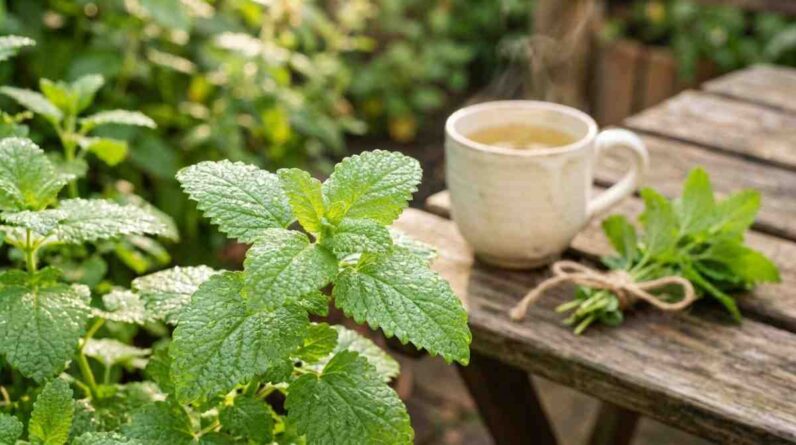
Leaves: Peppermint leaves tend to be darker green with a more pointed tip and prominent purple-tinged stems. Spearmint leaves are lighter, bright green, more wrinkled, and have a softer, crinkled texture. The spearmint leaf typically looks more “ruffled” up close.
Stems: Peppermint stems often show purplish coloring at the base. Spearmint stems stay green throughout.
Smell test: Crush a leaf. Peppermint hits immediately. Sharp, cool, unmistakable menthol. Spearmint smells sweeter and rounder, closer to the aroma of chewing gum than a medicated lozenge.
Flowers: Both produce small spike-shaped flowers in summer, but peppermint’s tend to cluster into a denser, more cylindrical form. Spearmint flowers are more loosely branched.
Can You Substitute One for the Other?
Sometimes — but with adjustments.
Using spearmint instead of peppermint works well in culinary recipes and teas where you want a milder result. Use roughly 1.5x the amount to compensate for lower intensity and the sweeter flavor profile. For medicinal applications like IBS relief or tension headaches, spearmint is generally not a sufficient substitute — the mechanism depends on menthol content that spearmint simply doesn’t have.
Using peppermint instead of spearmint: Proceed carefully. In savory dishes, peppermint can overwhelm other flavors quickly. Start with half the amount and taste as you go. In teas and desserts, it works, but the result is noticeably sharper and more medicinal. In most chewing gum and confectionery recipes that call for spearmint’s milder character, peppermint will taste much stronger than intended.
For essential oil blending, they’re not interchangeable for therapeutic purposes. The cooling sensation of peppermint oil is a direct result of its menthol content — spearmint oil cannot replicate that effect.
Which One Should You Choose?
Rather than declaring a single winner, here’s a practical framework based on what you actually need.
Choose Peppermint If You…
- Have IBS and want evidence-based herbal support via enteric-coated capsules
- Get regular tension headaches and want a topical aromatherapy remedy
- Want a morning focus boost — peppermint’s invigorating aroma supports mental clarity
- Need an intense, classic minty flavor in baked goods, desserts, or candy
- Are dealing with congestion and want a steam inhalation treatment
- Use mint in toothpaste, mouthwash, or products for sore throats
Choose Spearmint If You…
- Prefer a gentler, sweeter mint tea for daily drinking
- Are you a woman managing PCOS or androgen-related symptoms
- Cook savory dishes — tabbouleh, salads, lamb, mezze — where mint adds freshness without overpowering
- Have acid reflux or sensitivity to strong menthol
- Are you using essential oils around young children
- Want a relaxation herb that pairs well with lemon balm, rooibos, or holy basil blends
- Prefer a milder aromatic herb for general wellness and use in teas daily
Both in your cabinet? That’s the best setup. Use peppermint when you need therapeutic strength; reach for spearmint when you want something gentler and more versatile for everyday use.
Frequently Asked Questions
The key difference comes down to menthol content. Peppermint contains 40–55% menthol, giving it a sharp, intensely cooling sensation and a much stronger flavor. Spearmint contains less than 1% menthol. Its dominant compound is carvone, which produces a sweeter, milder, more aromatic taste. Peppermint is also technically a hybrid of spearmint and watermint, making spearmint the older of the two plants.
Both help, but in different ways. Peppermint has the strongest clinical evidence for IBS, thanks to its high menthol content, relaxing smooth muscle in the gut. Spearmint is gentler, better suited to everyday bloating, mild indigestion, and general stomach discomfort, especially for anyone prone to acid reflux, where peppermint can actually make symptoms worse.
There is promising early evidence that it can. A 2010 randomized controlled trial found that women with polycystic ovary syndrome who drank two cups of spearmint tea daily showed significantly reduced free testosterone after 30 days. It’s a low-risk addition to a broader hormonal wellness routine, though it’s not a standalone treatment.
Spearmint. Peppermint essential oil’s high menthol content can cause breathing difficulties in young children and shouldn’t be applied near their faces. Spearmint’s much lower menthol content makes it the safer option. Always consult a healthcare professional before using any essential oil with children.
Most mainstream chewing gum uses spearmint, which has a naturally sweet and mild flavor thanks to a compound called carvone. Products specifically labeled “peppermint” use the stronger variety. Once you know the difference, you’ll notice it everywhere: peppermint toothpaste bites harder, peppermint candy canes are sharper, and spearmint gum is noticeably sweeter and gentler.
The Bottom Line
Peppermint and spearmint aren’t interchangeable. They’re complementary herbs with distinct compounds, distinct strengths, and distinct best uses. Peppermint delivers menthol-driven intensity: the right choice for IBS, tension headaches, sinus congestion, and bold-flavored desserts. Spearmint offers a gentler, carvone-forward profile: better for daily mint tea, PCOS support, savory cooking, and use around children.
If you’re building a home herbal kit, having both gives you far more flexibility than either alone. Start with a quality peppermint tea for therapeutic needs and a spearmint tea for everyday drinking — that covers most situations without overcomplicating your shelf.
Want to go deeper on using these herbs for gut health? Read our guide on the best herbal teas for digestion for more practical recommendations.
Disclosure: This article contains affiliate links. If you purchase through them, we may earn a small commission at no extra cost to you.
Disclaimer: This article is for educational purposes only and is not intended as medical advice. Always consult a qualified healthcare professional before using medicinal herbs, especially if you are pregnant, nursing, taking medications, or have a medical condition. Read our full Medical Disclaimer.

Researches medicinal plants, herbal wellness, and sustainable gardening practices. Through Herbal Daily Care, she helps readers discover the benefits of growing and using herbs at home.