

If you’re new to herbal wellness, starting with the right herbs makes all the difference. Walk into any health store and you’ll find hundreds of herbs claiming to support everything from sleep and digestion to immunity and relaxation. That can feel paralyzing. The good news is that you don’t need dozens of herbs to get started. The best herbs to start with for health are generally those with a long history of traditional use, widely available, easy to prepare, and suitable for most healthy adults when used appropriately.
Herbs such as chamomile, peppermint, lemon balm, tulsi, ginger, lavender, and calendula are often among the first recommendations for beginners. They are versatile, easy to incorporate into daily life, and many double as culinary herbs, meaning you can start small with what’s already in your kitchen. In this guide, you’ll learn about seven beginner-friendly herbs, their traditional uses, and simple ways to start using them as part of your everyday wellness routine. For more information on herbs commonly used as part of a daily wellness routine, read our guide to herbs safe for everyday use.
## Quick Answer: What Are the Best Herbs to Start With for Health?
1. Chamomile
2. Peppermint
3. Lemon Balm
4. Tulsi
5. Ginger
6. Lavender
7. Calendula
These herbs are beginner-friendly, widely available, and easy to incorporate into a daily wellness routine.
Why Start Growing and Using Herbs for Health?
Herbs have been used for thousands of years across virtually every culture on earth, long before supplements came in capsule form. From Ayurvedic traditions in India to Chinese medicine to European folk herbalism, plant-based wellness has a track record that no trend-driven product can match. Many people begin exploring herbs because they want to:
- Support healthy lifestyle habits naturally
- Enjoy herbal teas and infusions at home
- Learn more about the traditional uses of plants for well-being
- Reduce reliance on highly processed products
- Grow a herb garden and harvest the leaves themselves
- Connect with nature through simple daily rituals
For beginners, the key is to start small. Rather than trying multiple herbs at once, focus on a few versatile options and learn how your body responds.
How to Choose Your First Herb for Health
Not every herb is suitable for every person or situation. Before choosing an herb, consider:
What Are Your Personal Wellness Goals?
Ask yourself what you’re hoping to achieve. Are you interested in:
- Relaxation and stress management?
- Digestive support and soothing an upset stomach?
- Better sleep habits?
- Daily wellness support?
- Herbal teas, tinctures, or infused oils?
- Skincare and topical preparations like salves?
Your goals can help determine which herb may be the best starting point.
Which Herbs Are Easiest for Beginners to Grow and Use?
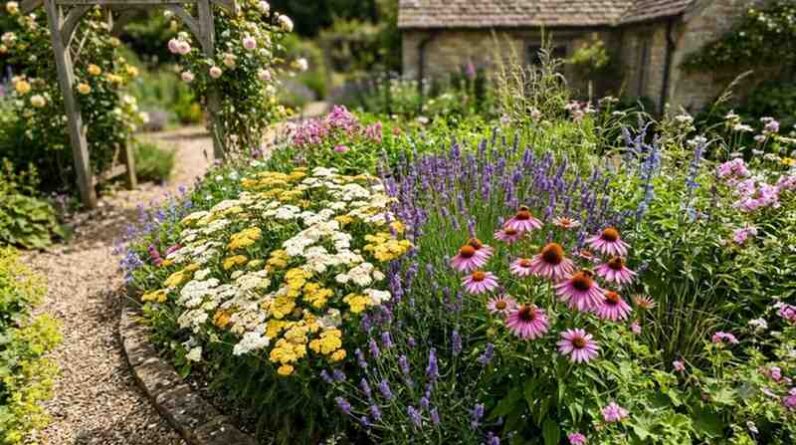
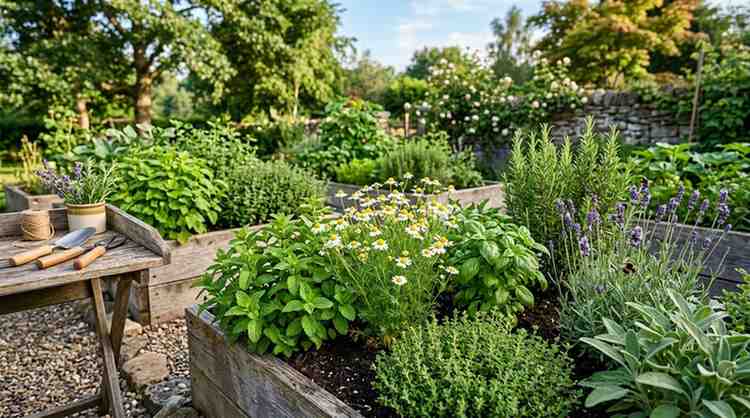
Some herbs are easier for beginners because they can simply be brewed into hot tea, used in cooking, or dried and stored. Herbs that come back year after year like mint, lemon balm, and chamomile are especially practical for anyone building a beginner herb garden. If you’d like to grow your own chamomile, see our guide on growing chamomile at home. Start with herbs that require no special equipment and are available at most grocery stores or health food shops. If you want to grow your own, sow the seeds in spring and most of these will establish quickly.
Is This Herb Safe for My Situation?
Always research herbs carefully and consult a healthcare professional if you’re pregnant, nursing, or taking prescription medicines. Some herbs may cause side effects or interact with medicines you take, so getting informed first is part of using herbs responsibly.
The 7 Best Herbs to Start With for Health
1. Chamomile — The Best Starter Herb for Relaxation and Sleep
Chamomile is consistently ranked as one of the best herbs for beginners because it is gentle, widely available, and easy to use. The small, aromatic dried flowers have been used traditionally for centuries and are most commonly prepared as chamomile tea. According to a 2017 review published in Molecular Medicine Reports, chamomile has been one of the most widely used wellness plants in the world for at least 5,000 years.
It’s a beautiful flower too, daisy-like, low growing and easy to grow from seed. This makes it one of the most satisfying herbs to cultivate in a home garden. Harvest the flowers once the plant is established, dry them, and you’ll have a supply of chamomile for homemade herbal tea.
If chamomile interests you, you may also want to explore the many benefits of chamomile tea, from its traditional use in relaxation and bedtime routines to its popularity as a soothing daily herbal beverage.
Why Beginners Love Chamomile
- Easy to prepare as a hot tea
- Pleasant, slightly apple-like taste
- Widely available in dried flower or tea bag form
- A calming bedtime ritual used across cultures
Chamomile is often recommended as a first herb because it’s easy to prepare, pleasant to drink, and widely available. For more beginner-friendly options, see our complete guide to medicinal herbs for beginners.
What Is Chamomile Traditionally Used For?
Chamomile has traditionally been used to support relaxation, calmness, bedtime routines, and digestive comfort. It also has a long history as a compress for minor skin irritation, and its antioxidant and anti-inflammatory properties are among the most studied of any herbal plant.
How to Use Chamomile Tea
Steep dried chamomile flowers in hot water for several minutes and enjoy. For a compress, brew a strong cup, let it cool, and apply with a clean cloth. If you’re new to herbal tea preparation, follow our step-by-step guide on how to make chamomile tea using fresh or dried flowers. Start with one cup at night and observe how your body responds before making it a regular habit.
2. Peppermint — A Beginner-Friendly Herb for Digestive Comfort
Peppermint is one of the most recognizable herbs in the world. A member of the mint family, its refreshing flavor and cooling sensation make it a favorite among beginners, and its digestive reputation is backed by centuries of traditional use across Europe and the Middle East.
It’s also one of the easiest herbs to grow — almost too easy. Plant it in a container rather than open ground if you don’t want it to take over. Harvest the leaves regularly to keep the plant productive, then use them fresh or dried.
What Is Peppermint Traditionally Used For?
Peppermint has traditionally been used to soothe an upset stomach, ease occasional digestive discomfort, relieve tension headaches when applied topically, and aid refreshment after meals. Some traditional uses also include relief from motion sickness and support for upper respiratory comfort when used aromatically.
Common Ways to Use Peppermint
- Hot tea from fresh or dried leaves
- Infused in cold water as a refreshing drink
- Culinary herb in both sweet and savory dishes
- Homemade herbal blends
Peppermint is affordable, easy to find, and genuinely enjoyable to drink — which matters when you’re building a new habit.
3. Lemon Balm — A Gentle Herb for Calm and Everyday Wellness
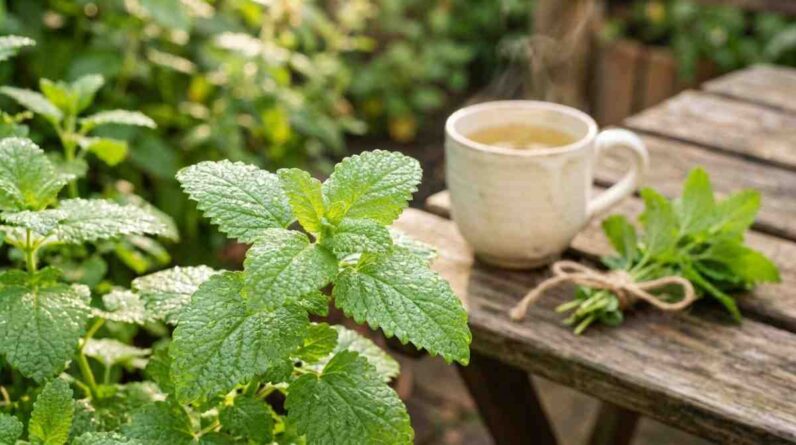
Lemon balm belongs to the mint family and is known for its citrusy, aromatic leaves. This herb has become increasingly popular among those exploring holistic health, and it is one of the most underrated herbs to grow for beginners. Like peppermint, it comes back year after year once established and is nearly impossible to kill.
What Is Lemon Balm Traditionally Used For?
Historically, lemon balm has been associated with relaxation, calm daily routines, support for sleep, and general wellness. Its calming properties make it a natural pairing with chamomile as a bedtime tea or tincture.
How to Use Lemon Balm
- Hot tea from fresh or dried leaves
- Fresh herb infusions in cold water
- Herbal blends with chamomile or lavender
- Tea or tincture for winding down in the evening
Many people appreciate its mild flavor and versatility. It blends well with chamomile or peppermint if you want to build a simple custom blend early on.
4. Tulsi (Holy Basil) — An Ayurvedic Adaptogen for Stress and Vitality
Tulsi, often called Holy Basil, has been revered in Ayurvedic traditions and Chinese medicine for centuries and is considered one of the most sacred plants in Indian culture. Unlike culinary basil, tulsi is an adaptogen, a plant traditionally used to help the body respond to stress more effectively and is primarily valued for its role in traditional wellness practices.
What Is Tulsi Traditionally Used For?
Tulsi has historically been used to support daily wellness routines, stress management practices, general vitality, and upper respiratory health. As a versatile herb with many uses, it’s one of the most rewarding herbs to keep in regular rotation.
How to Use Tulsi
- Herbal tea from dried or fresh leaves
- Powdered in supplements
- Fresh leaves steeped in hot water as a daily infusion
Tulsi tea is widely available in pre-bagged form, making it one of the most accessible Ayurvedic herbs for a Western beginner. It has a slightly spicy, aromatic flavor, different from most herbal teas, which makes people to quickly fall in love as their favorite herb in their daily routine.
5. Ginger — The Most Versatile Herb for Digestive and Warming Support
Although many people think of ginger as a spice to enhance the flavor of Asian dishes. It is also one of the most widely used herbal ingredients worldwide and one of the most researched. Its use in traditional wellness spans ancient Chinese medicine, Indian Ayurveda, and European herbalism simultaneously.
What Is Ginger Traditionally Used For?
Ginger has traditionally been used to soothe an upset stomach, relieve motion sickness, ease digestive discomfort, and warm the body during seasonal illness. Its well-documented anti-inflammatory and antioxidant properties are among the reasons it remains a staple in both culinary and herbal traditions.
Easy Ways to Use Ginger
- Fresh ginger hot tea
- Added to cooking and Asian dishes
- Blended into smoothies
- Infused in herbal oil or vinegar preparations
Fresh ginger root is often the easiest and most affordable way to start. Slice a thumb-sized piece, steep in hot water for 10 minutes, and you have a proper herbal preparation with zero special equipment required.
6. Lavender — The Best Herb for Relaxation and Sleep Support
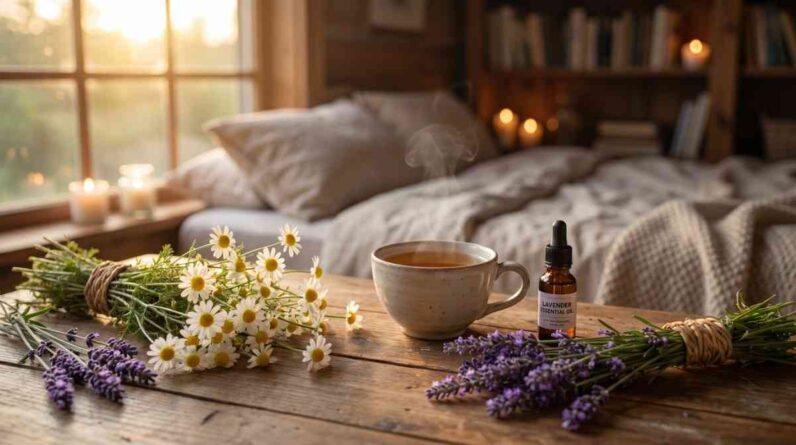
Lavender is famous for its beautiful flower and distinctive aromatic fragrance. While commonly associated with skincare and bath products, lavender has also been used in traditional herbal practices across the Mediterranean for thousands of years. It earns its place in any beginner herb garden as one of the most calming plants available.
What Is Lavender Traditionally Used For?
Lavender has historically been associated with relaxation, sleep aid rituals, bedtime routines, and aromatherapy practices. It’s also been used in compress applications for minor skin discomfort and as a gentle addition to salves and infused oils.
Common Ways to Use Lavender
- Herbal tea blends (pairs well with chamomile)
- Sachets for drawers or pillowcases
- Aromatherapy via dried bunches or essential oil
- Bath preparations with dried flowers
Its calming properties and pleasant scent make lavender one of the easiest herbs to incorporate into everyday life — even people who aren’t “herb people” tend to respond well to it.
7. Calendula — A Beginner-Friendly Herb for Skincare and Topical Preparations
Calendula is known for its vivid orange and yellow flowers and has a long history in traditional herbalism. It’s often the first recommendation for anyone interested in making their own salves, infused oils, or topical preparations. And it’s one of the most beautiful flowers you can grow in a beginner herb garden.
What Is Calendula Traditionally Used For?
Calendula has historically been used in herbal oils, salves, compresses, teas, and skincare preparations. Because of its long history in topical herbal products, it is still one of the most popular herbs for beginners interested in natural skincare.
Calendula is versatile, easy to grow from seed, and simple to use. You can harvest the leaves and flowers throughout the growing season and dry them for year-round use. It’s the natural next step once you’re ready to move beyond teas into infused oils and salves.
Quick Comparison: 7 Best Herbs for Beginners at a Glance
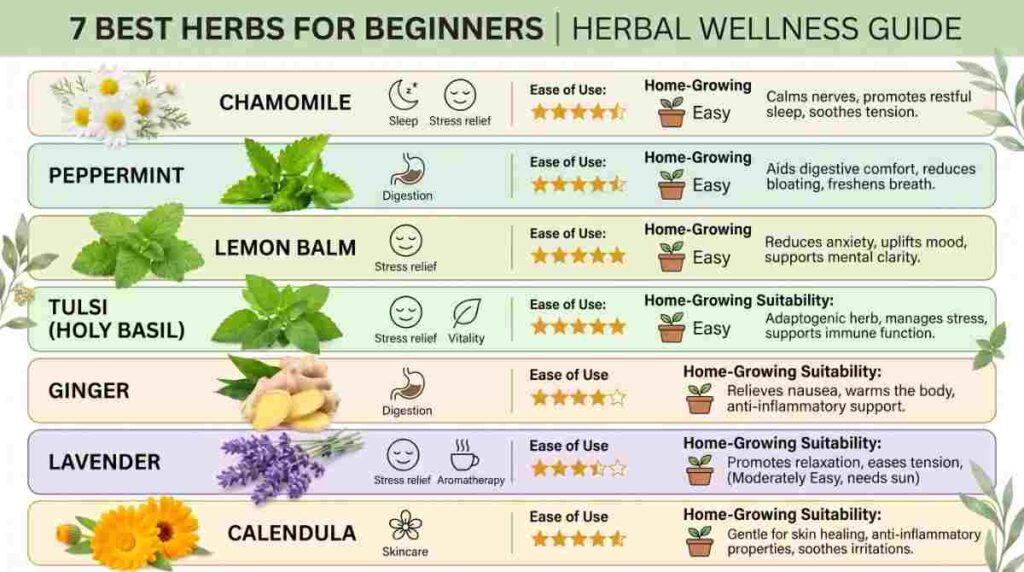
| Herb | Primary Wellness Use | Best Form to Start | Ease of Use | Easy to Grow at Home |
|---|---|---|---|---|
| Chamomile | Relaxation & sleep | Chamomile tea | ⭐⭐⭐⭐⭐ Very Easy | ✅ Yes — annual, grow from seed |
| Peppermint | Digestive comfort | Hot tea or fresh leaves | ⭐⭐⭐⭐⭐ Very Easy | ✅ Yes — grows vigorously in containers |
| Lemon Balm | Calm & stress relief | Hot tea or tincture | ⭐⭐⭐⭐⭐ Very Easy | ✅ Yes — comes back year after year |
| Tulsi (Holy Basil) | Stress & daily vitality | Herbal tea | ⭐⭐⭐⭐ Easy | ✅ Yes — grow from seed in warm conditions |
| Ginger | Digestion & nausea | Fresh root steeped as tea | ⭐⭐⭐⭐ Easy | ⚠️ Possible — needs warmth, indoor pot works |
| Lavender | Relaxation & sleep | Tea blend or aromatherapy | ⭐⭐⭐⭐ Easy | ✅ Yes — perennial, drought-tolerant |
| Calendula | Skincare & topical use | Infused oil or salve | ⭐⭐⭐ Moderate | ✅ Yes — easy annual, prolific bloomer |
Which Herbs Are Considered Safe for Everyday Use?
Some herbs are commonly regarded as suitable for regular use when consumed appropriately by healthy adults. These include chamomile, lemon balm, peppermint, and tulsi. However, individual circumstances vary and some herbs may cause side effects in certain people or interact with medicines you take regularly. Always consider your personal health situation and consult a qualified healthcare professional if you have concerns, are pregnant or nursing, or take any prescription medications.
Simple Ways to Start Using Herbs Daily
Start With Herbal Tea
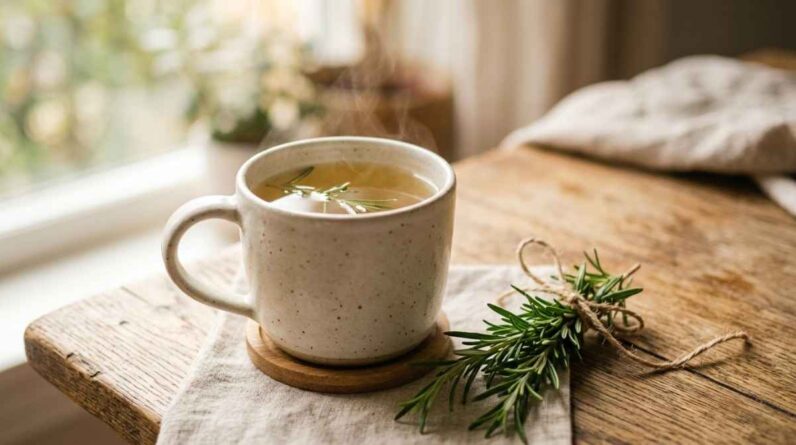
Tea is the easiest entry point. It requires no special tools, no preparation beyond boiling water, and lets you experience an herb’s flavor and aroma immediately. A cup of chamomile tea or fresh peppermint infusion is a complete herbal preparation, nothing more needed.
Build a Simple Daily Herbal Ritual
Choose one herb and use it consistently for a few weeks before adding another. Consistency matters more than variety when you’re starting out.
Try Growing One Herb at Home
Even a single pot of mint or lemon balm on a windowsill connects you to the plant in a way that a tea bag doesn’t. Most herbs for beginners are easy to grow, come back year after year, and give you a steady harvest of fresh leaves throughout the season.
Keep a Basic Wellness Journal
Record which herbs you use, how often, and any observations. You don’t need to track anything formally, even a few notes on your phone create a useful reference over time.
Learn One Herb at a Time
There’s no need to try every herb immediately. Depth of familiarity with one herb is more useful than surface-level knowledge of ten.
Common Mistakes Beginners Make With Herbal Wellness
Starting Too Many Herbs at Once
Begin with one or two herbs rather than several. If you notice any unexpected response, you won’t know which herb caused it if you’re using five at the same time.
Expecting Immediate Results
Herbal wellness is about building long-term habits, not chasing overnight changes. Most traditional herbal practices are designed for consistent, cumulative use and not a one-time fix.
Skipping Safety Research
Always check for potential interactions and contraindications before starting any new herb. Some herbs may cause side effects or interact with medicines you take, especially blood thinners, sedatives, or thyroid medications.
Jumping to Complicated Preparations
Start with simple teas before exploring tinctures, infused oils, or salves. Learn how each herb behaves as a tea or culinary herb first. Advanced preparations are genuinely useful but only once you know the plant.
Frequently Asked Questions About Herbs for Beginners
What is the safest herb for beginners?
Chamomile is widely regarded as the safest herb for beginners. It has one of the longest documented histories of traditional use, is gentle in action, and is well-tolerated by most healthy adults as a tea. Peppermint and lemon balm are similarly considered gentle and beginner-friendly. That said, no herb is completely without risk for every person. Always check for interactions if you take any regular medications.
Which herb should I start with for sleep?
Chamomile is the most established herb for bedtime routines and sleep support among beginners. Lemon balm and lavender are close alternatives. Both have calming properties and are traditionally used in evening teas. A simple blend of chamomile and lemon balm as a hot tea 30 minutes before bed is one of the most common starting points in herbal wellness.
Which herb is best for digestion?
Peppermint and ginger are the two most recommended herbs for digestive comfort. Peppermint is traditionally used to soothe an upset stomach and ease bloating after meals. Ginger has a long history of use for nausea, including motion sickness, and for warming the digestive system. Chamomile also covers digestive comfort gently and works well if you want one herb that handles both relaxation and gut support.
Can I drink herbal tea every day?
Many people drink chamomile, peppermint, lemon balm, or tulsi tea daily without issue. These are among the herbs most commonly used as everyday beverages by healthy adults. However, drinking very large amounts of any herb daily, or using herbs long-term without checking in with a healthcare professional, isn’t advisable, especially if you take medications or have underlying health conditions.
Should beginners start with one herb or several?
Start with one herb. Trying several at once makes it harder to notice what each one does for you individually, and if you have any unexpected reaction, you won’t know which herb caused it. Choose the herb that best matches your primary wellness goal — sleep, digestion, or daily calm — and use it consistently for two to four weeks before adding anything else.
What is the best herb to start with for health?
The best herbs to start with for health are chamomile, peppermint, lemon balm, tulsi, ginger, lavender, and calendula. Chamomile is the most common first recommendation because it is widely available, mild in flavor, and has the longest documented history of traditional use. Here’s a quick overview:
- Chamomile — relaxation and sleep support
- Peppermint — digestive comfort and refreshment
- Lemon balm — calm and everyday wellness
- Tulsi — stress management and vitality
- Ginger — digestion and warming support
- Lavender — relaxation and aromatherapy
- Calendula — skincare and topical preparations
Start with whichever herb aligns most closely with your primary wellness goal.
Which herbs are easiest to grow and use?
Chamomile, peppermint, lemon balm, and tulsi are among the easiest herbs for beginners. All four are available as tea bags at most grocery stores, and all four are easy to grow at home, even in containers. Mint and lemon balm come back year after year once planted and require almost no maintenance.
Should I start with herbal teas or supplements?
Start with teas. They are simpler, more affordable, and let you experience the herb in its most natural form before committing to supplements or tinctures. Tea also gives you a better sense of how your body responds to a plant before you consider more concentrated preparations.
Final Thoughts
Pick one herb from this list that matches your primary wellness goal and use it consistently for two to four weeks. That’s it. You don’t need a curated collection or a wellness regimen. You need one well-chosen plant and enough repetition to actually notice what it does for you. The best herbs to start with for health have been used for thousands of years for a reason: they work gently, they’re easy to find, and they fit into an ordinary life without a learning curve. Start there. Everything else follows.
If you’re completely new to herbs, start with just one. Chamomile is often a good first choice because it’s easy to find, simple to prepare, and widely used as a herbal tea. Once you’re comfortable with one herb, you can gradually explore others based on your wellness goals.
Disclaimer: This article is for educational purposes only and is not intended as medical advice. Always consult a qualified healthcare professional before using medicinal herbs, especially if you are pregnant, nursing, taking medications, or have a medical condition. Read our full Medical Disclaimer.
Researches medicinal plants, herbal wellness, and sustainable gardening practices. Through Herbal Daily Care, she helps readers discover the benefits of growing and using herbs at home.