

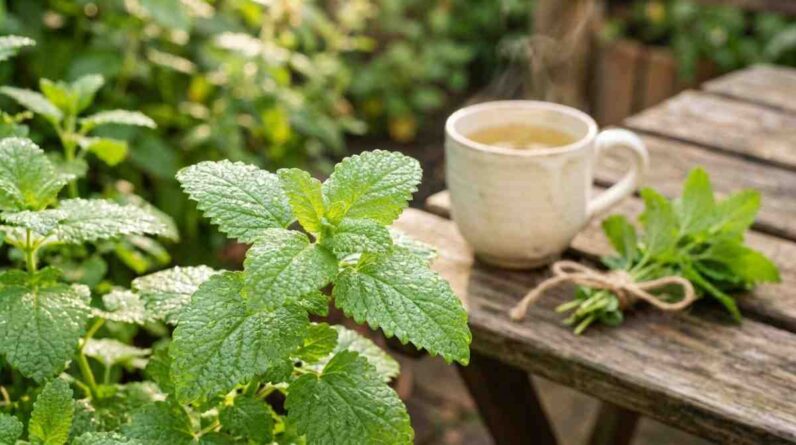
Your evening tea shelf is probably full of promises: calm, sleep, focus, take your pick. Lemon balm is one of the few herbs that actually has decent clinical research behind more than one of those claims. It won’t replace a prescription or fix a chronic health condition, but if you’re after a gentle, food-safe herb to work into your routine, it’s worth a proper look.
This guide walks through what lemon balm herb benefits and uses are actually backed by research, how to brew or dose it correctly, and what to watch for if you’re on medication. It’s written for anyone who already has a bag of dried lemon balm in the cupboard (or a plant in the garden) and wants to use it well, not just sniff it.
Quick Answer: Lemon balm (Melissa officinalis) is a lemon-scented herb from the mint family most often used as a calming tea. Research links it to reduced anxiety and better sleep quality, along with support for mild digestive upset and faster healing of cold sores when applied as a cream. A typical dose is 1–2 cups of tea daily, or 300–600 mg of standardized extract, and topical creams are applied 2–4 times a day at the first sign of a cold sore.
What Is Lemon Balm?
Lemon balm is a perennial herb in the mint family, native to southern Europe, North Africa, and West Asia, though it’s now grown almost everywhere. It’s known by several other names, including bee balm, cure-all, and sweet Mary, and its lemony scent is part of what attracts pollinators to the small white flowers it produces in late summer. People have used it as a folk remedy for centuries, mostly for calming the nerves and settling the stomach.
Beekeepers have relied on the plant for even longer than herbalists have. The genus name Melissa comes from the Greek word for honeybee, and lemon balm was traditionally planted around hives to keep colonies calm and encourage bees to stay put rather than swarm. That same lemony aroma that draws bees is what makes the leaf pleasant enough to sip as tea, rather than just chew as medicine.
The compound doing most of the work is rosmarinic acid, alongside other polyphenols in the leaf. Researchers believe rosmarinic acid works in part by inhibiting an enzyme called GABA transaminase, which in turn increases the availability of GABA. This neurotransmitter has a calming effect on the nervous system. A lab study on lemon balm extract supports this same GABA-related mechanism. That’s the biochemical thread connecting most of the calming effects described below, and it’s also why lemon balm shows up so often alongside valerian and chamomile in sleep and stress formulas: they lean on overlapping pathways.
Lemon Balm Herb Benefits and Uses, By Category
Let’s go through the benefits that actually have research behind them, not just tradition.
Calm, stress, and anxiety
This is lemon balm’s best-documented use. A systematic review and meta-analysis of clinical trials found that lemon balm meaningfully improved both anxiety and depression scores compared with a placebo. Individual trials back this up with real numbers: Kennedy and colleagues found that a 600 mg dose of lemon balm reduced acute stress in a controlled lab setting, and a separate open-label trial using a standardized extract reported significant drops in both anxiety and insomnia over 15 days.
That same 15-day trial noted reductions in agitation, guilt, and feelings of inferiority among participants with mild anxiety and insomnia, and continued use also appeared to lower depression scores and help prevent relapse. None of this means lemon balm will erase clinical anxiety, but for everyday stress, the evidence is more solid than you’ll find for most trendy “calming” herbs.
Sleep quality
Because lemon balm calms the nervous system, better sleep tends to follow. One study followed 80 people recovering from coronary bypass surgery who took 500 mg of lemon balm three times daily for a week, and more than half reported improved sleep, with around half also reporting less anxiety. It’s often paired with valerian root in European sleep formulas, and a review of ten studies found the combination improved both sleep onset and overall sleep quality, with the effect strengthening when lemon balm was combined with valerian.
If you struggle to switch your brain off at night, a warm cup an hour before bed is a reasonable first step. Just don’t expect it to work like a sedative; the effect is gentle, and it builds with consistent use rather than knocking you out on night one. If you’re weighing lemon balm against other calming herbs for this exact purpose, our chamomile vs. lavender comparison is a useful next read.
Cold sores (herpes simplex virus)
This is the one use where lemon balm is applied to skin rather than swallowed. Lemon balm contains antiviral compounds that appear to interfere with the herpes simplex virus type 1 (HSV-1), the virus responsible for cold sores, by blocking its ability to attach to and replicate inside cells. In practice, this means a lemon balm lip cream applied at the very first tingle can shorten a cold sore outbreak and ease the discomfort, though it won’t stop the virus from ever resurfacing. Since HSV-1 stays dormant in the body between outbreaks, think of the cream as a way to manage flare-ups rather than a cure.
Digestion and mild stomach upset
Traditionally, lemon balm tea has been used for nervous stomach complaints: the kind of stomach knot that shows up alongside stress rather than food poisoning. Herbalists have long paired it with other relaxing herbs for exactly this reason, treating stress-related stomach discomfort alongside insomnia and heart palpitations. Some small trials have also looked at lemon balm combined with other carminative herbs, like peppermint or fennel, for bloating and mild indigestion, though the results are more encouraging for the blend than for lemon balm alone. If bloating is your main concern, our roundup of herbal remedies for bloating covers exactly which herb combinations tend to work best. There’s less rigorous clinical trial data here than for anxiety, so treat this as a supporting benefit rather than the headline one. If your stomach upset is severe, frequent, or paired with other symptoms, that’s a conversation for a doctor, not a tea recipe.
Heart health markers
Animal and small human studies suggest lemon balm may help with blood pressure and cholesterol, though this area needs more research in people. One review of seven randomized trials found lemon balm intake modestly reduced total cholesterol and systolic blood pressure. A separate 2021 review pointed to potential improvements in blood pressure and heart rate, though it noted most of that supporting research was done in animals rather than humans. This benefit is plausible partly because lemon balm’s calming effect on the nervous system can indirectly ease the stress response that raises blood pressure and heart rate in the first place. That said, don’t treat lemon balm tea as a substitute for a prescribed blood pressure medication; at most, it’s a reasonable lifestyle add-on to discuss with your doctor.
Focus and mood
Lemon balm has a reputation as a mild cognitive aid, and there’s some evidence to support it in specific groups. A meta-analysis found that most of the studies reviewed showed lemon balm improved mood, cognitive function, or both in people with dementia, though results were less consistent for those with more advanced neurodegenerative conditions. For healthy adults without cognitive decline, think of this less as a nootropic and more as “calm enough to concentrate” rather than a stimulant-style focus boost.
Everyday and culinary uses
Beyond the medicinal uses above, lemon balm earns its keep in the kitchen and garden too. Fresh leaves are good chopped into salads, fruit salads, or fish dishes where you’d otherwise reach for lemon zest, and a few leaves muddled into sparkling water or lemonade add a bright, slightly minty note. Some gardeners also crush the fresh leaves and rub them on skin as a mild, natural mosquito deterrent, since mosquitoes tend to avoid the same citronella-like compounds that give the leaf its scent. None of these everyday uses are as well studied as the anxiety or cold-sore research, but they’re low-risk ways to get more use out of a plant you likely already have on hand.
How to Use Lemon Balm: Step by Step
Here’s exactly how to prepare lemon balm in the forms most people actually use.
Brewing lemon balm tea (fresh or dried leaves):
- If using dried leaves, measure out 1 teaspoon per cup; if using fresh, use about 1 tablespoon and lightly crush the leaves first to release the oils.
- Bring water to a near-boil. Around 90°C (194°F) works better than a full rolling boil, since it protects some of the delicate aromatic compounds.
- Pour over the leaves in a mug, teapot, or infuser and cover to trap the steam.
- Steep for 5–10 minutes. Longer steeping gives a stronger flavor and, likely, a stronger effect.
- Strain, then sweeten with honey or add a splash of lemon juice if you like.
- Drink 1–2 cups a day; many people have a cup in the evening specifically for the calming effect.
If you’d rather have it cold, brew a stronger batch (double the leaves), let it cool, and pour it over ice with a slice of lemon; the flavor holds up well, and it’s an easy way to get a daily cup in during warmer months without heating up the kitchen. The brewing method is nearly identical to how we make chamomile tea, so if you already have a chamomile routine, lemon balm slots right in beside it.
Tincture and capsule dosing: Standardized extracts are how most of the clinical research was actually dosed, so if you want the closest match to the studies above, look for a product with a stated rosmarinic acid or extract percentage. Doses used in research have generally ranged from 300 mg to 600 mg per day, split into one to three doses. Follow the label, since concentrations vary a lot between brands, and start at the lower end of that range for the first week to see how your body responds.
Topical cream for cold sores: Apply a lemon balm lip cream as soon as you feel the tingling that precedes a cold sore, 2–4 times daily, and continue until the sore has fully healed. Starting early matters more than the total dose.
Quick Comparison: Which Form Fits Your Goal
| Form | Best For | Typical Amount | Notes |
|---|---|---|---|
| Tea (dried or fresh leaf) | General calm, mild stomach upset, evening wind-down | 1–2 cups/day | Gentlest option; effect builds with regular use |
| Standardized extract (capsule/tincture) | Anxiety, sleep support, closest match to clinical studies | 300–600 mg/day | Check the label for standardization; potency varies by brand |
| Topical cream | Cold sores | Apply 2–4x/day at first tingle | Only form used for HSV-1; not a substitute for oral use |
What to Look For When Buying or Growing Lemon Balm
Buying dried leaf or extract: Look for a harvest or “best by” date. Dried lemon balm loses its lemony aroma over time, and a stale-smelling bag is a sign the active compounds have faded too. For extracts, a standardized rosmarinic acid content is a genuine trust signal; a label that just says “proprietary blend” with no numbers is harder to compare against the research doses above.
Growing your own: Lemon balm is famously easy to grow but spreads like its mint-family relatives, so most gardeners keep it contained in a pot rather than planting it directly in the ground. It’s worth treating it the same way you would mint, since otherwise it will take over the bed. Harvest in the late morning once any dew has dried, since that’s when the essential oils are most concentrated, then air-dry or oven-dry the leaves on low heat before storing them in an airtight container out of direct light. A healthy pot will keep producing new leaves through most of the growing season, so you can harvest a few sprigs at a time rather than cutting the whole plant back at once. If you’re building out a small home apothecary garden, our guide to herbs that are safe for everyday use is a good companion piece for deciding what else to plant alongside it.
Safety, Side Effects, and Who Should Be Careful
Lemon balm is generally well tolerated, but it isn’t risk-free for everyone. Some people notice mild side effects such as headache, dizziness, or an upset stomach, and there’s currently no research addressing the safety of long-term daily use. If you take thyroid medication, sedatives, or anything with a calming or sleep-related effect, talk to your doctor first, since lemon balm’s own mild sedative action could compound with those drugs. A cautious approach is also wise if a mild issue doesn’t improve within a week or two; that’s a signal to stop the herb and check in with a physician rather than keep experimenting. Pregnant or breastfeeding women should check with a healthcare provider before adding any new herb, since lemon balm hasn’t been well studied in this group. And as with any supplement, more isn’t automatically better: stick to the amounts above rather than assuming a larger dose will work faster.
Frequently Asked Questions
Is lemon balm the same as mint? No, though it’s a close relative. Lemon balm is Melissa officinalis, a separate species in the mint family with a citrus-forward scent rather than a cooling menthol one.
How long does it take for lemon balm to work for anxiety? Some effects on stress show up within hours of a single dose, but the clinical trials showing meaningful anxiety improvement typically ran for at least two weeks of consistent daily use.
Can I drink lemon balm tea every night? Most healthy adults can, and 1–2 cups daily fits within the amounts used in research. If you notice digestive upset or unusual grogginess, cut back and check with your doctor.
Does lemon balm interact with any medications? It may interact with thyroid medication and with other sedatives, including sleep aids and anti-anxiety drugs, due to an additive calming effect. Always check with a healthcare provider if you take prescription medication regularly.
What’s the difference between lemon balm tea and lemon balm extract? Tea is a gentler, lower-dose way to use the herb day to day, while standardized extracts (capsules or tinctures) deliver a measured amount closer to what was used in clinical trials. Extracts are the better choice if you want a more consistent, research-aligned dose.
Can lemon balm be combined with other calming herbs? Yes. It’s commonly paired with valerian root, chamomile, or lavender in sleep blends, and several of the studies on sleep quality specifically tested lemon balm alongside valerian rather than on its own. For more on how lavender specifically compares, see our guide to lavender’s medicinal uses and safe dosing.
The Bottom Line
Lemon balm earns its “cure-all” nickname more than most herbs do, at least for calm, sleep, and cold sores. Start with tea if you just want a gentle nightly habit, or a standardized extract if you want to match what the research actually tested. Either way, give it a couple of weeks before judging whether it’s working, and check with your doctor first if you’re on any sedating medication. If it’s cold sores you’re after relief from, keep a lip cream on hand and apply it the moment you feel that first tingle rather than waiting for the sore to fully form.
Read next: Best Medicinal Herbs to Grow Indoors — a good follow-up if lemon balm is the first herb in what’s about to become a bigger windowsill garden.
References
- Ghazizadeh, J., et al. (2021). The effects of lemon balm (Melissa officinalis L.) on depression and anxiety in clinical trials: A systematic review and meta-analysis. Phytotherapy Research, 35(12), 6690–6705. onlinelibrary.wiley.com
- Examine. Lemon Balm: Research Breakdown. examine.com/supplements/lemon-balm/research
- Cleveland Clinic. 6 Benefits of Lemon Balm. health.clevelandclinic.org/lemon-balm-benefits
- WebMD. Lemon Balm: Health Benefits and Uses. webmd.com/diet/health-benefits-lemon-balm
- Healthline. Lemon Balm Uses. healthline.com/health/lemon-balm-uses
- ClinicalTrials.gov study record referencing ESCOP guidance on Melissa officinalis for mild anxiety symptoms. clinicaltrials.gov/study/NCT05602688
Researches medicinal plants, herbal wellness, and sustainable gardening practices. Through Herbal Daily Care, she helps readers discover the benefits of growing and using herbs at home.