


XenBurn Review 2026: Customer Reviews, Patch Claims and the GLP-1 Weight Loss Patch Question
Quick answer
XenBurn is a once-daily adhesive patch marketed for weight management and energy support. Its label calls it a topical cosmetic patch, and the ingredient amounts are tiny next to studied oral doses. We found no independent clinical trial of the finished patch, so its claims remain unproven. Confirm current terms before ordering.
Contents
- What is XenBurn?
- What XenBurn claims to do
- Ingredients and dose check
- Does XenBurn work?
- Potential benefits
- Side effects and safety
- How to use XenBurn
- XenBurn customer reviews
- Is XenBurn legitimate?
- Pros and cons
- Pricing, subscriptions and guarantee
- Alternatives
- Who it suits
- Final verdict
- FAQ
- References
- eng-en-xenburn.com, XenBurn marketing page containing the published customer testimonials quoted in this review.
What Is XenBurn?
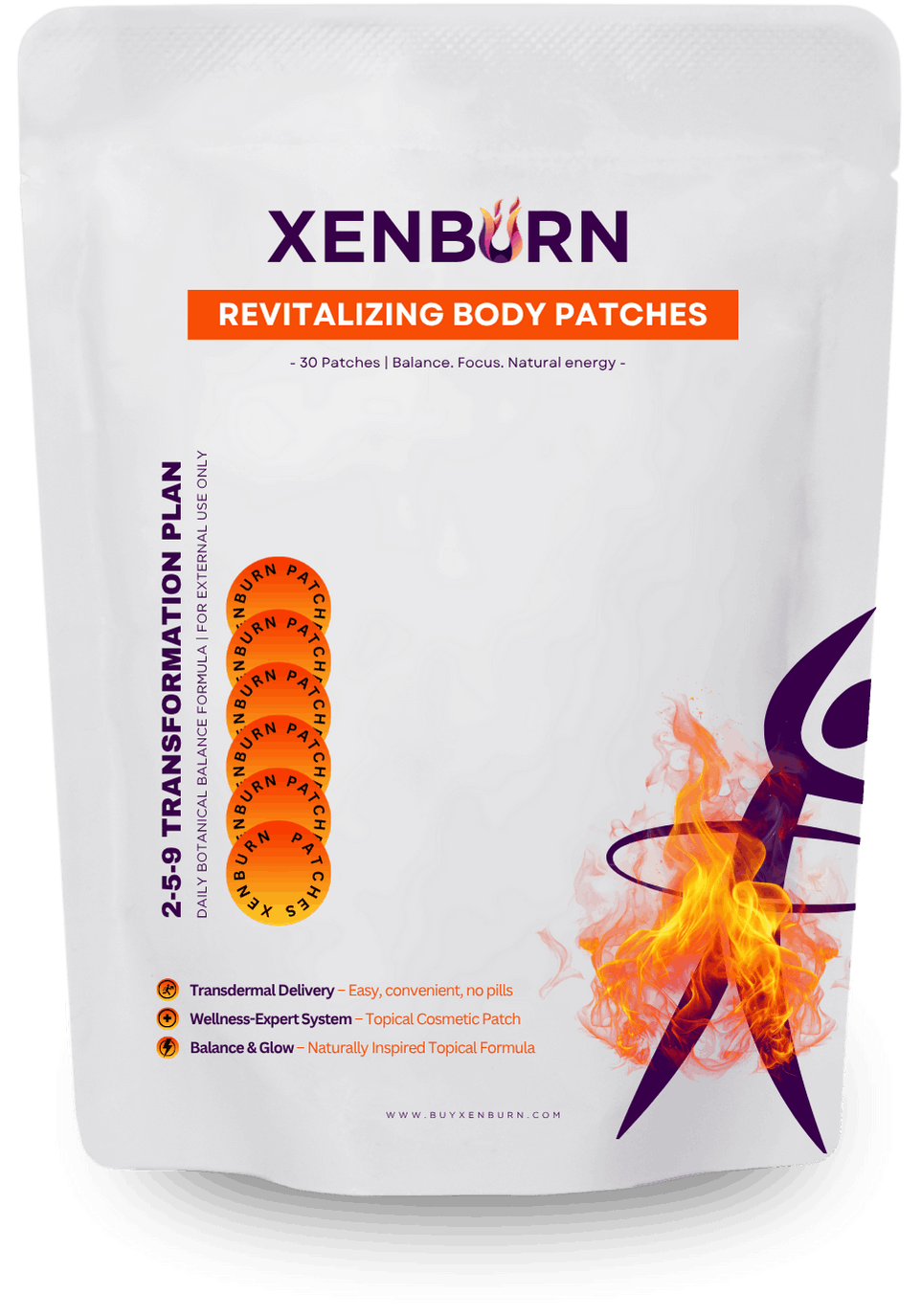
XenBurn is a daily-wear adhesive patch sold as a wellness product for weight management and energy support, and it sits among the many weight loss products that now come in a patch format. You press one onto clean, dry skin, leave it on for up to 24 hours, then replace it. Each pouch holds 30 patches, and each patch measures about 1.875 by 1.875 inches.[1]
According to a published label analysis, the packaging describes it as a “Topical Cosmetic Patch” for external use only.[1] That wording matters more than it looks, and we’ll return to it in the legitimacy section. One caution: that label analysis went out through a press-release service, was tagged as an advertorial, and carried affiliate links.[1] It’s handy for label details, but it isn’t independent testing.
Most product reviews skip a basic point, and it matters here. The product is described differently depending on where you look. A brand-style page calls it a “smart patch for natural fat loss,” while one consumer guide notes that indexed page text uses supplement language and the label says cosmetic.[3][15]
How this review was put together
We haven’t worn the patch, and we haven’t sent it to a lab. This is a research-based look at the available product information, with every manufacturer statement labeled as one. The official page at goxenburn.com returned no readable content when we fetched it, so prices and guarantee terms below come from earlier published copies and need checking at checkout.
Here’s how to read the tags beside each claim. is backed by an independent source. comes from the seller or its label. means research exists but is preliminary, mixed, or about something different. means we couldn’t establish it.
What XenBurn Claims to Do
XenBurn’s marketing falls into four buckets: fat loss, weight management, energy, and appetite control. In this review, every one of them is a manufacturer claim, not a fact.
Fat loss and weight management claims
The brand-style page pitches the patch as a next-generation fat loss product that supports metabolism and energy.[15] On the packaging, the line reportedly reads “Designed by doctors to support healthy weight management for real, lasting results.”[1] The same label analysis found no physician names, credentials, or clinical development documents behind that line.[1]
Boost energy and appetite control claims
Affiliate pages say the patch can boost energy, ease cravings, and support metabolism.[15] Those pages earn money when you buy, so treat them as marketing. The label’s caffeine figure is 2 mg per patch, which is a stimulant dose so small that an energy boost is hard to square with it.
The GLP-1 weight loss patch question
People search for a “GLP-1 weight loss patch” because GLP-1 became a household term through prescription medicines. XenBurn’s ingredient panel lists no GLP-1 medicine, and a 2026 consumer guide title itself refers to the product’s non-GLP-1 status.[1][3] We found nothing showing that XenBurn contains a prescription drug or acts like one. (for the label contents only)
So if you clicked through hoping this patch is a substitute for a prescribed medicine, it isn’t marketed as one. Anyone weighing prescription options should talk with a clinician instead of a patch page.
If you’re also researching non-prescription options for metabolic weight management, our FIMAVYN review examines its ingredients, doses, safety considerations, pricing, and the research behind the formula.
XenBurn Ingredients and Dose Check
XenBurn’s label lists ten ingredients, including a botanical extract, three amino acids, a flavonoid, and a stimulant. The table below compares each label amount with the oral amounts researchers usually test. This is the check most other reviews leave out, and the gap it shows is the single most useful thing to understand before buying.
| Ingredient | Per patch (label) | Type | Typical studied oral amount | Patch as share of that | |
|---|---|---|---|---|---|
| Coleus forskohlii root extract (95%) | 2 mg | Botanical extract | 500 mg per day of a 10% extract, about 50 mg forskolin | About 4% by forskolin content | |
| L-Arginine | 5 mg | Amino acid | 3,000 mg | 0.17% | |
| L-Glutamine | 4 mg | Amino acid | 5,000 mg | 0.08% | |
| L-Methionine | 4 mg | Amino acid | 500 mg | 0.8% | |
| Quercetin | 2 mg (4 mg in some marketing) | Flavonoid | 500 mg | 0.4% | |
| Alpha-lipoic acid | 2 mg | Antioxidant | 300 mg | 0.67% | |
| Caffeine | 2 mg | Stimulant | About 95 mg in a cup of coffee | About 2% | |
| Pterostilbene, CoQ10, calcium | 0.5 mg, 0.5 mg, 2 mg | Antioxidants, mineral | No comparison figure sourced | Not calculated |
Label amounts and the oral comparison figures (lower end of each range) come from the published label analysis.[1] The forskolin comparison uses 500 mg of a 10% extract per day from trial summaries.[1][2] Percentages are our own arithmetic; label amounts are manufacturer claims.
What the table tells you
Each active ingredient sits far below the amounts studied by mouth, most of them under one percent. The forskolin figure looks better only because the patch extract is standardized to 95% while the trial extracts were around 10%. Even so, you’re at roughly four percent of the forskolin dose from those trials, and that’s if the label is accurate.
There’s also a consistency problem. The label analysis lists quercetin at 2 mg, but some marketing materials say 4 mg, and a separate review mentions only six named ingredients.[1] Nobody can say which version is current without lab testing. Check the panel on the pouch that actually arrives.
Does XenBurn Work?
Nobody has shown that XenBurn works, because the finished patch hasn’t been studied in an independent clinical trial that we could find.[1] What exists is research on individual ingredients, mostly taken by mouth at much higher doses.
What the forskolin research says
Forskolin is the compound in Coleus forskohlii, and it’s the ingredient most tied to fat loss marketing. The few randomized trials on weight and body composition have mixed results: one found no effect in women with overweight, one found fat mass reductions in men, and a later one found nothing.[1][2] A 2015 trial of 30 people gave 250 mg of extract twice daily for 12 weeks alongside a reduced-calorie diet. Waist and hip measurements fell in both the extract group and the placebo group, while insulin resistance improved only in the extract group.[2]
Read that carefully. The diet appears to have done much of the work, and the trial doesn’t show weight loss from the extract alone. A medical library summary reviewed in 2026 says current research doesn’t provide strong evidence that forskolin safely or reliably causes weight loss.[3]
The only topical study we found is a 1987 trial of four women on a very-low-calorie diet who applied forskolin cream to one thigh. That thigh measured about 1 cm smaller than the placebo thigh at four weeks.[1][2] It’s tiny, decades old, and used a cream, not a 2 mg patch.
Amino acids, quercetin and the rest
Arginine, glutamine, and methionine are amino acids your body uses in many ways. Oral research on them uses grams or hundreds of milligrams. The published label analysis says research on absorption through cosmetic-grade patches at micro-doses is limited.[1] Nothing we found tests these ingredients at patch amounts on the skin for weight outcomes.
The caffeine reality check
A cup of coffee carries roughly 95 mg of caffeine, and the patch carries 2 mg.[1] Even if all of it were absorbed, which nobody has shown, that’s about two percent of one cup. If you want to boost energy, a patch with this label amount is an unlikely route.
Topical patch versus oral supplement
Topical application through a patch differs from an oral supplement because it delivers a much smaller amount to the skin’s surface, and no one has shown that meaningful amounts reach the bloodstream. It differs from a medicated drug patch, such as those for nicotine replacement, because drug patches go through FDA testing for absorption, dosing, and effect.[1] XenBurn’s patch format is a convenience choice, not a proven delivery system, and the brand’s botanical extracts and amino acids are unstudied at these amounts.
What better proof would look like
A convincing test of XenBurn would compare the real patch against an identical placebo patch in a few dozen adults, with the same diet advice for everyone. Researchers would measure weight, waist size, and appetite at set points, and they would check whether any of the ingredients reach the bloodstream at all. Publishing the results in a peer-reviewed journal would let outsiders check the work.
Until something like that exists, the fair summary is short. The label is transparent, the format is convenient, and the benefits are unproven. If the brand publishes a trial, we’ll update this review.
Potential Benefits
The realistic benefits of XenBurn are about routine and format, not proven body changes. If you use it, here’s what could plausibly help.
- A single daily step with no pills, powders, or meal timing, which suits people who forget multi-dose supplements.
- No swallowing, so people with pill fatigue or a sensitive stomach avoid that friction.
- A very low caffeine amount, which may appeal if stimulants make you jittery.
- A daily cue that can anchor a wellness routine, if you pair it with habits that count.
Realistic expectations if you try it
Set your expectations by the evidence, not the ad. With ingredient amounts this low and no finished-product trial, the most honest prediction is that any effect will be subtle or absent. Some people will notice nothing, some will enjoy the routine, and a few may react to the adhesive.
Give any product a fair trial window while keeping the rest of your life steady. Note your sleep, meals, activity, and stress in a simple log so you can tell what’s changing. If you can’t see a difference after a month or two, that’s useful information, and it’s your cue to check the refund rules before you open more pouches.
Track the things that matter to you, not just the scale. Energy across the day, cravings between meals, and how your clothes fit are all fair measures. Change only one thing at a time where you can, because a patch started in the same week as a new diet and gym plan can’t get credit for either.
Habits that matter more than any patch
Nutrition, movement, sleep, and stress management shape weight far more than micro-doses on your skin. Poor sleep and chronic stress alter appetite and energy regardless of what you wear. If a patch helps you commit to a routine, that’s a real effect, but you can get it from a calendar reminder and a walk.
Side Effects and Safety
The most likely problems with XenBurn are skin-related. Redness, itching, and irritation at the application site can happen with any adhesive patch, and some people develop contact dermatitis or an adhesive reaction over time.[1] If you get blistering, swelling, hives, or trouble breathing, remove the patch and get medical help.
Coleus forskohlii has theoretical interaction concerns when taken orally, including with blood-thinning medicines such as aspirin and with certain bronchodilators.[13] Those concerns haven’t been established for a 2 mg patch, but a pharmacist can check your medication list in minutes.
Who should avoid it
- Anyone under 18, since the label states it is intended for adults.[1]
- People who are pregnant or nursing, unless a healthcare provider says otherwise.
- Anyone with eczema, psoriasis, dermatitis, or a history of adhesive reactions.
- People taking prescription medication or managing a chronic condition, who should ask for medical advice first.
- Anyone with surgery scheduled; the label reportedly advises stopping use at least two weeks beforehand.[1]
How to Use XenBurn
The directions below reflect the label instructions as described in the published label analysis, so confirm them against the pouch you receive.[1] Following the label is the safest way to use XenBurn patches.
- Pick clean, dry skin with little hair, such as the upper arm, shoulder blade area, or lower back.
- Wash the spot with soap and water, dry it fully, and skip lotions or oils.
- Peel off the backing and press the patch on firmly, smoothing out bubbles and wrinkles.
- Wear it up to 24 hours; the label reportedly allows showering with it on.
- Remove it after 24 hours and put a fresh one on a different spot.
- Rotate sites daily, and stop if irritation shows up.
Don’t cut the patch, and don’t put it on broken, sunburned, or irritated skin. Before committing to a subscription, some people test one patch on a small area for a day to check for a reaction.[1]
XenBurn Customer Reviews: What Buyers Say and What We Can Verify
Product reviews of XenBurn and XenBurn customer reviews are almost entirely positive on the pages we found, but we couldn’t trace them to a verifiable review platform. That doesn’t make them false. It does mean they’re marketing material until proven otherwise.
Testimonials published about XenBurn
These customer testimonials are shown in the supplied XenBurn testimonial image and are reproduced here with the names, locations, ages, ratings, and wording visible in that image.
“I finally recognize myself again”
“I didn’t do anything extreme. I just stayed consistent and listened to my body. Over a few months, the weight came off and my clothes started fitting better. My husband keeps noticing the change, which honestly feels really nice.”
Sally K. — New York, NY — 34 years old — Verified purchase — 5 stars
“It helped me push harder at the gym”
“My goal wasn’t weight loss, it was strength. What I noticed most was the energy. I feel more awake during workouts and I can push through heavier lifts without feeling drained halfway through.”
Emily L. — Los Angeles, CA — 37 years old — Verified purchase — 5 stars
“Small changes that really add up”
“I was skeptical at first, but I started feeling better after a few weeks. My energy is more stable during the day and the weight loss followed naturally. It just became part of my routine.”
Marcus S. — Chicago, IL — 58 years old — Verified purchase — 5 stars
These testimonials describe individual experiences and should not be treated as typical results or a guarantee of any outcome.
Rating claims and fake reviews
One affiliate page advertises an average of 4.94 out of 5 from 31,100 reviews.[15] We couldn’t find that count on any checkable platform. A different July 2026 review reported that it located no complaint data naming XenBurn on a platform where complaints can be checked.[2] Silence isn’t approval, and it’s also why a big star rating on an affiliate page deserves suspicion.
Fake reviews are common in the supplement niche, and you can spot many of them. Watch for identical phrasing across different sites, reviewers with no names or dates, dramatic before-and-after claims, and headlines that promise a “hidden truth.” Our page earns a commission too, which is why we point you to primary sources instead of asking you to trust us.
Where complaints usually show up
For patches sold on subscription, complaints tend to cluster around billing, cancellations, returns, and skin reactions.[2] Before ordering, search the exact site name plus “refund” or “cancel,” and read the terms page. Save your order confirmation and the guarantee wording.
Is XenBurn Legitimate?
XenBurn appears to be a real product with a listed company address, but its weight-related claims are unproven and its regulatory positioning is worth understanding. Legitimate can mean several things, so we’ll take them one at a time.
Business and offer status. The label lists a California mailing address and customer support by email.[1] We couldn’t confirm that the vendor page at goxenburn.com is live, because it returned nothing readable. Several near-identical domains show up in search, including buyxenburn.com, xenbburn.com, and eng-en-xenburn.com, so confirm you’re on the official website before entering payment details. The guarantee reportedly covers only purchases made directly from the official site.[1]
Cosmetic label versus weight claims. The FDA says cosmetics don’t need approval before sale but must be safe when used as labeled.[13] It also says products intended to affect the structure or function of the body are drugs, even when they change how you look.[14] A product labeled cosmetic while marketed for fat loss sits in a gray zone. We aren’t lawyers, only the FDA decides how a product is classified, and we found no FDA approval or clearance for XenBurn.[2] (for the FDA rules)
Conflicting details. The refund window is 60 days in one policy and 90 days on other pages, the ingredient count varies, and quercetin appears at two different amounts.[1][14] Inconsistency isn’t proof of bad faith, but it’s a reason to read the label and checkout page yourself.
Our read: the evidence isn’t strong enough to call XenBurn a scam, and it isn’t close to strong enough to call it proven. Think of it as an unproven topical cosmetic product with transparent-looking label amounts and thin support for its marketing.
XenBurn Pros and Cons
XenBurn’s strengths are convenience and disclosure, and its weaknesses are evidence, dose, and refund rules. Here’s the balanced list.
Pros
- Simple once-daily routine with no pills
- Ingredient amounts are listed on the label
- Very low caffeine for people who dislike jitters
- Per-pouch cost drops on longer plans
- A money-back guarantee is offered
Cons
- No independent clinical trial of the finished patch
- Ingredient amounts are a small fraction of studied oral doses
- Refunds reportedly need all pouches unopened, and you pay return shipping
- Subscriptions auto-renew unless canceled
- Cosmetic label sits awkwardly beside fat loss marketing
- Skin irritation is possible with 24-hour adhesive wear
XenBurn Pricing, Subscriptions and the 60-Day Money-Back Guarantee
XenBurn pricing runs from $16 to $55 per pouch depending on plan size and whether you subscribe, with 30 patches per pouch. The figures below come from the December 2025 official-site snapshot in the published label analysis, and a July 2026 review lists the same three package totals of $110, $150, and $180 for one-time purchases.[1] Prices vary, so confirm the current price and terms at checkout.
| Plan | Pouches | Supply | Subscribe (per pouch) | One-time (per pouch) | Cost per patch (subscribe / one-time) |
|---|---|---|---|---|---|
| Jumpstart | 2 | 60 days | $35 ($70 total) | $55 ($110 total) | $1.17 / $1.83 |
| Reset | 5 pouches | 150 days | $24 ($120 total) | $30 ($150 total) | $0.80 / $1.00 |
| Transformation | 9 | 270 days | $16 ($144 total) | $20 ($180 total) | $0.53 / $0.67 |
Cost per patch is our own calculation: pouch price divided by 30 patches. Jumpstart reportedly charges shipping; Reset and Transformation reportedly include it.[1]
XenBurn subscriptions
Subscription deliveries reportedly match the plan length, so Jumpstart ships every two months and Transformation every nine. They auto-renew until you cancel, and the label analysis advises canceling five to seven days before the next shipment.[1] If you plan to try XenBurn, set a calendar reminder the day you order.
We couldn’t confirm whether the checkout adds upsells or order bumps. Read every screen before you pay, since multi-pouch offers can be added quietly.
The 60-day money-back guarantee and return policy
The published return policy describes a 60-day money-back guarantee counted from the day you receive the order.[1] Other pages describe 90 days, and the two figures haven’t been reconciled.[2][14] Until the vendor’s checkout page states one number, treat 60 days as the safer assumption.
The conditions are strict in the December 2025 policy. You must return all unopened pouches in original packaging, email customer support first, and pay return shipping to a designated returns address.[1] Partial returns aren’t accepted, so opening a pouch to try a patch can put your refund at risk. If you’re unsure, contact customer service before you open anything.
A quick checklist before you order
A few minutes of checking can save you money and hassle, whichever product you’re considering. Run through this list before you enter a card number.
- Confirm you’re on the official website and not a lookalike domain.
- Read the refund terms on the checkout page and screenshot them.
- Decide whether you’re choosing a one-time purchase or a subscription, and note the cancellation steps.
- Look for shipping charges, especially on the smallest plan.
- Check every checkout screen for add-ons you didn’t ask for.
- Test your skin’s reaction with a single patch before opening the rest, if the return terms allow it.
- Ask your pharmacist or doctor about interactions if you take medication.
If anything on the page contradicts what you’ve read here, contact customer service before you buy and get the answer in writing. Companies that stand behind their guarantee shouldn’t mind the question.
Alternatives to XenBurn
The main alternatives to XenBurn are oral weight loss supplements, a lifestyle-first plan, and a conversation with a clinician. Each answers a different question, so the right one depends on what you actually want.
| Option | Typical monthly cost | Dose and evidence | Best for |
|---|---|---|---|
| XenBurn patch | $16 to $55 per pouch | Micro-doses on the skin; no finished-product trial | People who want a no-pill routine |
| Oral weight loss supplements | About $15 to $80[1] | Higher doses; evidence varies widely by ingredient | People who want studied amounts and can swallow pills |
| Lifestyle-first plan | Mostly food and time | Best-supported foundation: nutrition, activity, sleep, stress management | Anyone starting out |
| Clinician conversation | Varies by coverage | Individualized medical advice | People with health conditions or larger goals |
XenBurn differs from oral weight loss supplements because it trades dose for convenience. If studied amounts matter to you, pills deliver them. Pills are the barrier for some people, and a patch removes it, though at a much lower ingredient level.
Who Is XenBurn Best Suited For?
XenBurn suits people who value a simple routine over proven results and who accept an unproven format. It’s a poor fit for anyone who needs clinical evidence before buying.
It may fit if pills have been a genuine barrier, if you travel or keep an irregular schedule, or if you dislike caffeine jitters. Sensitive skin, a wish for research-level doses, or a need for flexible dosing all point elsewhere. Nor should the patch replace medical care for weight-related health concerns.
Final Verdict
XenBurn is a convenient, once-daily wellness patch whose weight management and energy claims aren’t backed by independent evidence. The doses are tiny, the refund rules are strict, and the cosmetic label sits oddly beside fat loss marketing. If you want to try it anyway, start with the smallest commitment, verify the guarantee in writing, and test your skin first.
Ready to look at current terms? Use the button below and confirm the price and return policy at checkout.
Frequently Asked Questions
What is XenBurn?
XenBurn is a once-daily adhesive patch marketed for weight management and energy support. Its label calls it a topical cosmetic patch for external use only, and each pouch holds 30 patches. No independent clinical trial of the finished patch was found, so its marketing claims remain unproven.
Is XenBurn a GLP-1 weight loss patch?
No. XenBurn’s ingredient panel lists a botanical extract, amino acids, quercetin, caffeine and a few antioxidants, and no GLP-1 medicine. Prescription GLP-1 drugs are a separate category prescribed by clinicians, and nothing found shows XenBurn contains one or acts the same way.
Does XenBurn work for fat loss?
Nobody has shown that it does. The finished patch has no independent trial, and its ingredient amounts are a small fraction of the oral doses studied. Research on forskolin, its lead ingredient, is mixed, so any fat loss claim is a manufacturer claim rather than an established result.
How much does XenBurn cost?
Published figures from December 2025 range from $16 to $55 per pouch of 30 patches, depending on plan and subscription status. Package totals were $70 to $180. Prices vary, so confirm the current price, shipping and terms at checkout before ordering.
What is the XenBurn return policy?
One published policy describes a 60-day money-back guarantee from the day you receive the order. It reportedly requires returning all unopened pouches, emailing customer support first, and paying return shipping. Some pages say 90 days, so verify the current terms in writing before you buy.
Are XenBurn customer reviews real?
The reviews we found were anonymous and appeared on marketing or affiliate-style pages, so they can’t be verified. One page claims 31,100 reviews averaging 4.94 out of 5, but we couldn’t trace that to a checkable platform. Treat them as marketing, not proof of results.
Does XenBurn have side effects?
The most likely problems are skin reactions such as redness, itching, irritation or contact dermatitis from 24-hour adhesive wear. Rotate application sites and stop using it if a rash appears. Anyone taking medication or managing a health condition should ask a healthcare provider first.
How do I contact customer service or cancel a subscription?
The label lists customer support by email through the official website. For subscriptions, the published advice is to request cancellation with your order number at least five to seven days before the next shipment, and to keep the confirmation. Confirm the current process on the official site.
Conclusion
XenBurn earns points for simplicity and clear label amounts, and it loses them on evidence, dose, and refund flexibility. No independent trial supports the finished patch, and the marketing outruns the science. If you decide to try it, keep expectations modest, protect your refund rights, and put sleep, food, movement, and stress management first.
References
- Henderson S, Magu B, Rasmussen C, et al. Effects of Coleus forskohlii supplementation on body composition and hematological profiles in mildly overweight women. Journal of the International Society of Sports Nutrition, 2005. pmc.ncbi.nlm.nih.gov
- Loftus HL, et al. Coleus forskohlii extract supplementation in conjunction with a hypocaloric diet reduces the risk factors of metabolic syndrome in overweight and obese subjects: a randomized controlled trial. Nutrients, 2015;7(11):9508-22. pubmed.ncbi.nlm.nih.gov
- Acibadem International. Forskolin: what patients need to know (medically reviewed Aug 2, 2026). acibademinternational.com
- University of Michigan Health. Coleus for weight control (interactions). uofmhealth.org
- Kucukgoncu S, Zhou E, Lucas KB, Tek C. Alpha-lipoic acid (ALA) as a supplementation for weight loss: results from a meta-analysis of randomized controlled trials. Obesity Reviews, 2017;18(5):594-601. pmc.ncbi.nlm.nih.gov
- Huang H, Liao D, Dong Y, Pu R. Clinical effectiveness of quercetin supplementation in the management of weight loss: a pooled analysis of randomized controlled trials. Diabetes, Metabolic Syndrome and Obesity, 2019;12:553-563. pmc.ncbi.nlm.nih.gov
- Fatahi S, Ghaedi E, et al. The effect of L-arginine supplementation on obesity-related indices: a systematic review and meta-analysis of randomized clinical trials. International Journal for Vitamin and Nutrition Research, 2021. econtent.hogrefe.com
- Lee A, Lim W, Kim S, et al. Coffee intake and obesity: a meta-analysis. Nutrients, 2019;11(6):1274. pubmed.ncbi.nlm.nih.gov
- Ghavami A, Mohammadi H, Hadi A, et al. Effects of coenzyme Q10 supplementation on anthropometric indices in adults: a systematic review and meta-analysis of randomized controlled trials. International Journal of Preventive Medicine, 2020;11:181. pmc.ncbi.nlm.nih.gov
- Saboori S, et al. Effect of Q10 supplementation on body weight and body mass index: a systematic review and meta-analysis of randomized controlled clinical trials. Diabetes & Metabolic Syndrome, 2019;13(2):1179-1185. pubmed.ncbi.nlm.nih.gov
- Brown MB, Traynor MJ, Martin GP, Akomeah FK. Transdermal drug delivery devices: skin perturbation systems. Humana Press, 2008. uhra.herts.ac.uk
- Transdermal drug delivery systems: methods for enhancing skin permeability and their evaluation. Pharmaceutics, 2025. ncbi.nlm.nih.gov
- U.S. FDA. Wrinkle treatments and other anti-aging products. fda.gov
- U.S. FDA. Is it a cosmetic, a drug, or both? fda.gov

Written by cskoch, who researches medicinal plants and herbal wellness at Herbal Daily Care. This guide is research-based: we reviewed published trials, meta-analyses, and the manufacturer’s own sales page. We did not purchase or test the product, and we do not claim first-hand results.