

Rhodiola gets pitched as the energizing adaptogen. Many supplement marketers pitch it as the one you take instead of a third coffee. That reputation is only partly earned. This guide covers the real rhodiola benefits and side effects, based on actual research rather than marketing copy. You’ll learn what rhodiola may help with, how to take it, and a few real risks that get skipped more often than they should. It’s written for anyone comparing adaptogens and trying to figure out if rhodiola is the right one for them. That includes people weighing it against ashwagandha, or just curious what the herb actually does.
Quick Answer: Rhodiola Rosea Benefits and Side Effects
Rhodiola (Rhodiola rosea) is an adaptogen traditionally used for fatigue, endurance, and mood. Research suggests it may modestly reduce fatigue, support exercise performance, and ease mild depressive symptoms. The NIH notes the evidence overall is still limited, though. Side effects are usually mild, like dizziness or insomnia if taken late in the day. It may not be safe for people with bipolar disorder or those on antidepressants.
Key facts about rhodiola:
- Rhodiola is also called golden root, arctic root, or rose root.
- It’s a stimulating adaptogen, better suited to mornings than evenings.
- Standardized extracts, close to the Rhodiola rosea SHR-5 extract used in early clinical trials (3% rosavins, 1% salidroside), are what most research actually tested.
- The National Institutes of Health says there isn’t yet enough reliable evidence to confirm its benefits.
- Rare case reports link it to manic episodes in people with bipolar disorder.
What Is Rhodiola, Exactly?
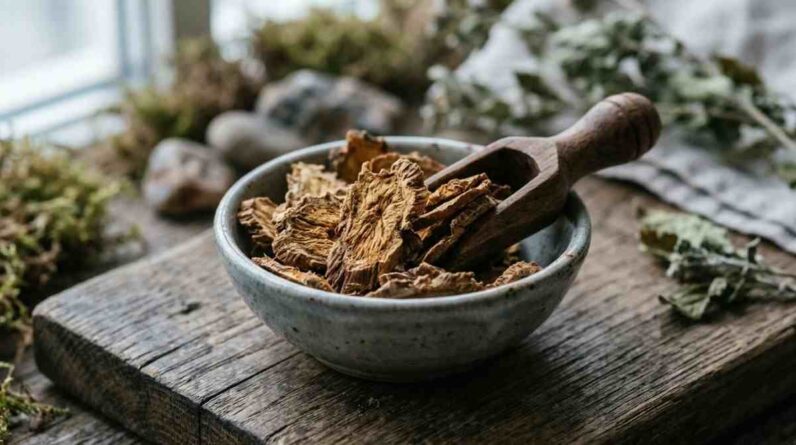
Rhodiola is a plant, specifically a flowering succulent, and Rhodiola rosea is the species this guide focuses on. It grows in cold, high-altitude regions of Europe, Asia, and North America. You’ll also see it called golden root, arctic root, rose root, rosenroot, or king’s crown. The root and rhizome, the underground stem, are the parts used in supplements.
Rhodiola is used and has a long folk history in Russia and Scandinavia. Traditionally, people use rhodiola to help with physical work, endurance, fatigue, mood, and altitude sickness, and roots of Rhodiola rosea specifically are what get harvested for this traditional use. That traditional use lines up closely with how it’s marketed today: for energy, athletic performance, mood, and stress. Like ashwagandha, rhodiola is classified as an adaptogen. That’s a plant substance thought to help the body handle stress more efficiently.
Its two main active compound groups are rosavins and salidroside. Most human trials used extracts standardized to roughly 3% rosavins and 1% salidroside. That ratio matters when you’re comparing products later in this guide. If you’re new to adaptogens generally, our guide on what adaptogenic herbs are is a good starting point before you dig into one specific herb.
It’s worth being upfront about something most rhodiola content skips. The National Center for Complementary and Integrative Health, part of the NIH, states plainly that there isn’t yet enough reliable evidence to say whether rhodiola works for any specific health purpose. Most human research so far is low to moderate quality. That doesn’t mean rhodiola does nothing. It means the evidence is genuinely less settled than it is for an herb like ashwagandha.
Unlike ashwagandha, rhodiola isn’t rooted in Ayurvedic medicine. It comes from a different herbal tradition entirely, and that history shapes how it’s typically used. Ashwagandha’s calming, evening-friendly reputation comes from thousands of years of Ayurvedic use. Siberian rhodiola use by workers, soldiers, and athletes gave the plant its energizing, daytime reputation, since they needed to perform under harsh physical conditions. Soviet-era researchers studied rhodiola extensively during the 20th century. They wanted to understand whether it could help military personnel and athletes withstand physical and mental strain. That’s part of why so much of the earlier research on rhodiola came out of Russia and Scandinavia, rather than Western clinical trials.
Rhodiola Species: Beyond Rhodiola Rosea L.
Almost everything in this guide refers to Rhodiola rosea L., the species used in nearly every human clinical trial and the one you’ll find on most supplement labels. It’s worth knowing that rhodiola is actually a large genus, and other rhodiola species get studied too, usually in lab and animal research rather than in people.
Rhodiola imbricata, a Himalayan species, has been studied mostly for immune and wound-healing effects. One lab study found that an aqueous extract of Rhodiola imbricata rhizome stimulates immune signaling pathways, including toll-like receptor 4 and Th1 cytokines, in cell cultures. Other research on Rhodiola imbricata rhizome extract has looked at wound healing and radioprotection in animal models. Rhodiola algida, a related species used in traditional Chinese medicine, has shown similar immune-stimulating effects on human blood cells in lab studies.
None of this preclinical work on other rhodiola species translates directly to the rhodiola rosea supplements sold commercially. If a product doesn’t specify Rhodiola rosea on the label, it’s worth finding out which species it actually contains, since the research base doesn’t transfer evenly between them.
Benefits of Rhodiola: What the Research Actually Shows
Fatigue and Exercise Performance
This is where rhodiola has the most research behind it, even with the NIH’s caveat in mind, and it lines up with rhodiola’s long history of use for physical and mental performance under demanding conditions. One of the earliest and most cited clinical trials tested a standardized extract called SHR-5 on healthy physicians working night shifts. It was a double-blind cross-over study published in Phytomedicine. Rhodiola rosea in stress-induced fatigue improved mental performance on a repeated low-dose regimen, with better scores on fatigue-related tests than the placebo group.
A systematic review published in Phytotherapy Research covered multiple randomized trials on sports performance. It found rhodiola rosea supplementation was linked to improvements in some exercise measures, including endurance and perceived exertion, though not in every study reviewed. A separate review in the British Journal of Nutrition reached a similar conclusion. Rhodiola shows promise as an adaptogen for exercise performance, but effects vary by study design, dose, and the specific outcome measured.
Smaller trials have looked at acute, single-dose use before exercise. Others tested the effects of short-term daily supplementation instead. Some of the strongest individual results came from time-to-exhaustion tests, where participants taking rhodiola were able to sustain effort slightly longer than those on placebo before reaching fatigue. Results are mixed enough that rhodiola shouldn’t be treated as a guaranteed performance boost. Still, the fatigue-reduction angle shows up consistently enough across studies to be worth trying for some people, particularly those doing endurance-based training rather than short bursts of strength work.
Rhodiola for Depression and Stress
Rhodiola has a long-standing reputation as a mild, antidepressant-adjacent herb. Using rhodiola for depression specifically has real research behind it, though the results are mixed. A 2015 randomized, placebo-controlled trial in Phytomedicine compared rhodiola directly against sertraline, a common antidepressant, for mild to moderate depression. Rhodiola produced a smaller antidepressant effect than sertraline, but caused far fewer side effects: about 30% of the rhodiola group reported adverse events, compared with over 63% on sertraline.
A separate 2020 trial in the Journal of Affective Disorders tested rhodiola as an add-on to sertraline, rather than a replacement. Combining a lower dose of rhodiola with sertraline produced better depression-score improvements than sertraline alone. A separate systematic review of randomized and observational research in Nutritional Neuroscience looked at how plants like rhodiola may affect the hypothalamic-pituitary-adrenal axis, the same stress-response system involved in adaptogens more broadly. It found supportive but still preliminary evidence.
None of this makes rhodiola a substitute for prescribed antidepressant treatment. It’s better understood as something some people use alongside stress management, not a replacement for professional mental health care when that’s genuinely needed. Major psychiatric guideline bodies, including the World Federation of Societies of Biological Psychiatry, currently do not support rhodiola as a standalone or add-on treatment for major depression. That’s true even with these individual trial results in mind.
A separate trial published in Phytotherapy Research looked specifically at rhodiola’s effect on anxiety, stress, and everyday mood symptoms in people dealing with life stress, rather than diagnosed depression. Participants taking rhodiola reported improvements in self-rated stress, anxiety, anger, and confusion after a short course of daily use. This is a smaller, more preliminary study than the depression trials above, but it lines up with rhodiola’s traditional reputation as a stress-support herb rather than strictly an antidepressant substitute.
Cognitive Function
A handful of trials suggest rhodiola may modestly support attention and mental performance. This shows up most during periods of physical or mental fatigue. A systematic review on dietary supplement ingredients for cognitive performance, cited by the NIH, included rhodiola among a small group of herbs with some supporting evidence. It stopped short of calling the case strong, though. Treat this particular benefit as plausible rather than proven.
Preclinical Research: What Lab Studies Show About Salidroside
A quick, important note before this section: everything below comes from lab (in vitro) and animal research, not human clinical trials. None of it means rhodiola treats, prevents, or cures any disease in people, and it shouldn’t be used as a reason to delay or replace medical treatment for a serious condition.
Salidroside, rhodiola’s main active compound, has fairly broad pharmacological properties of rhodiola in lab research. The antioxidant, anti-inflammatory activity of rhodiola, and neuroprotective effects of salidroside show up repeatedly across cell and animal studies, with beneficial effects reported across several organ systems. Researchers have also studied salidroside’s anticancer effects on various cancer cells in test-tube settings, including breast cancer cells. One lab study found that salidroside inhibited the growth of human breast cancer cells in vitro and in vivo in mouse models, slowing tumor growth and triggering cancer cell death through several molecular pathways. Similar lab research has reported that salidroside inhibits the growth of other cancer cell lines, including bladder and lung cancer cells.
This is genuinely interesting early-stage science, and it’s part of why researchers keep studying rhodiola’s compounds. But it’s early-stage science specifically: these are cell-culture and mouse studies, not evidence that taking a rhodiola supplement affects cancer risk or outcomes in humans. No rhodiola product should be treated as a cancer treatment or prevention strategy, and anyone managing a cancer diagnosis should rely on their oncology team, not a supplement label, for treatment decisions.
Researchers have also studied how rhodiola affects brain chemistry, which helps explain both its antidepressant-like reputation and its risk of drug interactions. A lab study found that Rhodiola rosea root extract inhibits monoamine oxidase A and B, enzymes involved in breaking down mood-related brain chemicals like serotonin and dopamine. This monoamine oxidase inhibition by rhodiola rosea is a plausible mechanism. It may explain both rhodiola’s antidepressant-like effects and its interaction risk with antidepressant medications, covered further in the side effects section below.
How to Take Rhodiola
If you decide to try rhodiola, timing and extract quality matter more than they do with most other adaptogens.
- Take it in the morning. Rhodiola is stimulating for a lot of people. Taking it in the afternoon or evening can interfere with sleep. That’s the opposite of ashwagandha, which many people take in the evening. If sleep, not daytime energy, is actually your main goal, our guide to the best herbs for sleep is a better starting point than rhodiola.
- Check the standardization. Look for an extract standardized to roughly 3% rosavins and 1% salidroside. This is the ratio most clinical research actually used.
- Start low. Clinical doses have ranged from about 170 mg to 680 mg per day, often split into two doses. Starting near the lower end and adjusting is a reasonable approach, since higher doses haven’t consistently shown better results.
- Give it a few weeks. Some people report a noticeable effect within days. The clinical trials with meaningful outcomes generally ran for several weeks, though, so don’t judge it too quickly either way.
- Reassess periodically. Current evidence suggests rhodiola is possibly safe for up to about 12 weeks of continuous use, according to the NIH. Longer-term safety data is limited. It’s worth checking in with a doctor if you plan to use it beyond that window.
Choosing a Quality Rhodiola Supplement
Rhodiola supplements and other rhodiola products vary a lot between brands, and this is an herb where quality control matters more than usual. ConsumerLab testing has found that some commercial rhodiola extract products don’t contain the amount of active compounds listed on the label. Others use lower-quality plant material that doesn’t match what was actually studied in trials.
Look for a product that states its rosavin and salidroside percentages clearly, ideally close to the 3% and 1% standard used in most research (prices vary — check current price). A named extract, rather than a vague “rhodiola root powder” listing, is a reasonable signal that the manufacturer is at least trying to match the studied dose. Third-party testing seals add another layer of confidence that what’s on the label matches what’s in the capsule.
Rhodiola is also sometimes sold combined with other stimulating ingredients, like caffeine or other adaptogens, in pre-workout or energy-focused blends. If you’re trying to evaluate whether rhodiola specifically is working for you, a standalone product makes that easier to judge. A multi-ingredient formula makes it hard to isolate which ingredient is doing what.
Rhodiola Side Effects: What to Actually Watch For
Rhodiola is generally considered mild, but it isn’t risk-free. A few specific issues deserve more attention than they usually get.
Common, Mild Side Effects
The most frequently reported side effects are dizziness, headache, dry mouth, and mild stomach upset. Rhodiola tends to be stimulating, so some people also notice jitteriness, irritability, or trouble sleeping. This shows up most at higher doses or when it’s taken later in the day. Most of these effects are mild and tend to ease once you find the right dose and timing for your own body, rather than requiring you to stop taking it altogether.
Mood and Psychiatric Effects: A Real, Rare Risk
This is the side effect most rhodiola content leaves out entirely. A 2022 case report published in Primary Care Companion for CNS Disorders described a patient who developed a manic episode associated with rhodiola use, taken as an exercise supplement. The case authors noted that rhodiola’s antidepressant-like effects on dopamine and serotonin pathways may explain the reaction. Mania has separately been reported with other adaptogens, including ginseng. This appears to be rare, but it’s a real, documented risk. It matters most for anyone with a personal or family history of bipolar disorder.
Drug Interactions With Rhodiola
Rhodiola may amplify the effects and the side effects of antidepressant medications, including SSRIs and tricyclic antidepressants. As covered above, rhodiola’s own monoamine oxidase inhibition is a likely reason why: combining it with a medication that works on the same pathway can compound the effect in unpredictable ways. This can cut both ways. Interactions between rhodiola and prescribed antidepressants are the biggest reason some clinicians use rhodiola cautiously alongside them, and only under close supervision. Others advise against combining them without a doctor’s involvement. Rhodiola should generally be avoided with MAOIs specifically, since combining two monoamine oxidase inhibitors carries a real risk of serotonin syndrome. It may also interact with caffeine, blood pressure medication, diabetes medication, and thyroid medication.
The overall risk of side effects from rhodiola alone is low in short-term use, but interactions of Rhodiola rosea with existing medications are the piece most people overlook. If you’re on any of the medications above, this is worth a specific conversation with your doctor or pharmacist rather than something to figure out through trial and error.
Who Should Avoid Rhodiola, and Drug Interactions to Know
A few groups should be cautious with rhodiola, or avoid it outright:
- Anyone with bipolar disorder should be especially cautious, given the documented case report of mania and rhodiola’s mood-elevating, antidepressant-like activity.
- Anyone taking antidepressants should talk to their prescribing doctor first, especially with MAOIs.
- Pregnant or breastfeeding people should avoid rhodiola, since safety data here is too limited to recommend use.
- People with low blood pressure or hypoglycemia should be cautious, since rhodiola may lower blood pressure or blood sugar further.
- Anyone taking it in the evening should reconsider the timing, given its stimulating, sleep-disrupting potential at that time of day.
If you take any psychiatric medication, have a personal or family history of bipolar disorder, or manage a chronic condition, this is worth flagging to your primary care physician before you start rhodiola. It isn’t just a formality, and it’s a much cheaper conversation than an unexpected reaction.
Real-World Expectations
It helps to go in with realistic expectations here. Rhodiola’s stimulating effect tends to be noticeable faster than ashwagandha’s calming effect, sometimes within the first few days. But the fatigue-reduction and mood benefits shown in trials generally build up over several weeks, not overnight. Most people who find it useful describe an improvement in their overall quality of life: steadier energy than caffeine offers, without the jitteriness or crash. If you’re expecting a dramatic transformation, rhodiola’s actual evidence base doesn’t support that expectation, and the NIH’s own honesty about the limited research is worth taking seriously rather than dismissing as overly cautious.
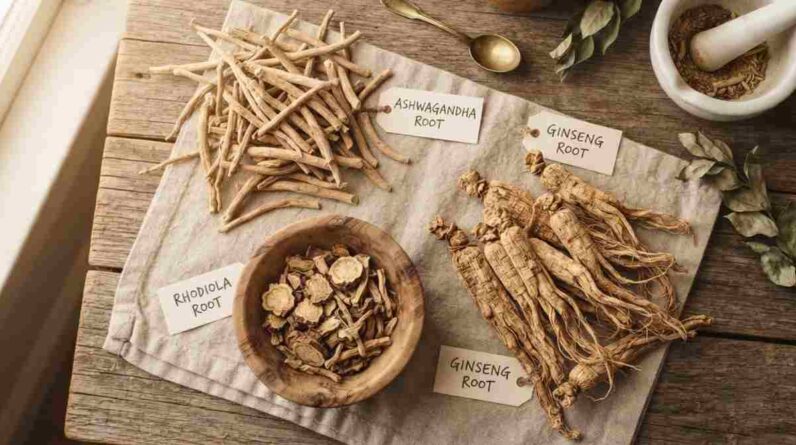
Rhodiola vs. Ashwagandha vs. Asian Ginseng
| Herb | Best For | Effect Type | Typical Dose |
|---|---|---|---|
| Rhodiola | Daytime energy, endurance, mild fatigue | Stimulating | 170–680 mg/day |
| Ashwagandha | Stress, sleep, testosterone in men | Calming | 300–600 mg/day |
| Asian ginseng | General fatigue, immune support | Mildly stimulating | Varies by preparation |
Rhodiola is better than ashwagandha for someone who wants daytime energy without the drowsiness ashwagandha can sometimes cause. That’s because rhodiola’s traditional use and research lean toward stimulation and endurance, rather than calming effects. Ashwagandha, on the other hand, has a deeper evidence base specifically for stress, sleep, and testosterone in men. Our full breakdown of ashwagandha’s benefits and side effects covers that evidence in more depth, if evening stress and sleep are your main concern instead.
Neither herb works well for every goal. If you want steadier energy through the day without caffeine’s crash, rhodiola is the more fitting option of the two. If your main issue is winding down and managing chronic stress, ashwagandha has stronger research behind it.
Frequently Asked Questions
What are the main benefits of rhodiola? Research suggests rhodiola may modestly reduce fatigue, support exercise performance, and ease mild depressive symptoms. The NIH notes the overall evidence is still limited and mostly low to moderate quality.
What are the most common side effects of rhodiola? The most common side effects are dizziness, headache, dry mouth, and mild stomach upset. Because it’s stimulating, some people also experience jitteriness or trouble sleeping.
Is rhodiola safe to take with antidepressants? Rhodiola may interact with antidepressants, particularly MAOIs, and should generally not be combined without talking to your prescribing doctor first. Some clinicians use it cautiously alongside other antidepressant classes under supervision.
Can rhodiola cause mania or mood changes? In rare cases, yes. A published case report linked rhodiola to a manic episode. This risk appears highest for people with bipolar disorder or a family history of it, and it’s a reasonable reason to be cautious even though overall quality of life improvements are the more common outcome reported in trials.
How much rhodiola should I take, and when? Clinical doses have ranged from about 170 mg to 680 mg per day of a standardized extract. It’s best taken in the morning, since it can interfere with sleep if taken later in the day.
Is rhodiola better than ashwagandha? Neither is universally better. Rhodiola tends to suit daytime energy and endurance goals. Ashwagandha has stronger evidence for stress, sleep, and testosterone support.
Can I take rhodiola and ashwagandha together? Some people do combine them, using rhodiola in the morning for energy and ashwagandha in the evening for stress and sleep, since their effects don’t directly conflict. There isn’t dedicated research on this specific combination, though, so it’s worth introducing them one at a time and checking with a doctor if you take any other medication.
How long does it take to feel rhodiola’s effects? Some people notice a stimulating effect within the first few days, but the studies showing benefits for fatigue and mood generally measured results after several weeks of consistent use, not a single dose.
The Bottom Line
The health benefits of rhodiola are genuine, if limited, based on the current research supporting its use for fatigue, exercise performance, and mood. The NIH is honest that the evidence isn’t settled yet, and that honesty is worth carrying into your own expectations. Side effects are usually mild, but the rare mania risk and antidepressant interactions are real considerations, especially if you have a psychiatric history. Research specific brands for standardization before buying, and loop in your doctor if you take other medications. If you’re weighing rhodiola against other options, our guide to herbs safe for everyday use is a good place to compare gentler starting points. Check out our medicinal herbs for beginners guide if you’re just getting started.
References
- National Center for Complementary and Integrative Health (NIH). “Rhodiola.” → https://nccih.nih.gov/health/rhodiola
- Sanz-Barrio PM, Noreen EE, Gilsanz-Estebaranz L, et al. “Rhodiola rosea Supplementation on Sports Performance: A Systematic Review of Randomized Controlled Trials.” Phytotherapy Research, 2023. → https://doi.org/10.1002/ptr.7950
- Tinsley GM, Jagim AR, Potter GDM, et al. “Rhodiola rosea as an Adaptogen to Enhance Exercise Performance: A Review of the Literature.” British Journal of Nutrition, 2024. → https://doi.org/10.1017/S0007114523001988
- Mao JJ, Xie SX, Zee J, et al. “Rhodiola rosea Versus Sertraline for Major Depressive Disorder: A Randomized Placebo-Controlled Trial.” Phytomedicine, 2015. → https://pubmed.ncbi.nlm.nih.gov/25837277/
- Cropley M, Banks AP, Boyle J. “The Effects of Rhodiola rosea L. Extract on Anxiety, Stress, Cognition and Other Mood Symptoms.” Phytotherapy Research, 2015. → https://doi.org/10.1002/ptr.5486
- Gao L, Wu C, Liao Y, et al. “Antidepressant Effects of Rhodiola Capsule Combined With Sertraline for Major Depressive Disorder: A Randomized Double-Blind Placebo-Controlled Clinical Trial.” Journal of Affective Disorders, 2020. → https://pubmed.ncbi.nlm.nih.gov/32090788/

Written by cskoch, who researches medicinal plants and herbal wellness at Herbal Daily Care. This guide is research-based: we reviewed published trials, meta-analyses, and the manufacturer’s own sales page. We did not purchase or test the product, and we do not claim first-hand results.