

Homemade herb-infused olive oil tastes better than anything on a grocery shelf, but it can also grow a dangerous toxin if you make it the wrong way. That’s not fearmongering. It’s the exact reason food-safety researchers at the University of Georgia and Iowa State Extension have spent years studying it. This guide walks you through how to infuse olive oil safely, using either dried herbs at room temperature or fresh herbs in the fridge. You’ll get a clear step-by-step method, the herbs that work best, and the storage rules that actually matter. It’s written for home cooks who want to learn how to make herb-infused olive oil without gambling on food safety. Once you know how to make it safely, swapping in whatever herb of your choice suits your cooking is easy.
Quick Answer
Herb-infused olive oil is made by steeping dried or fresh herbs in oil to transfer their flavor and aroma. The safest home method uses fully dried herbs, which can sit at room temperature; fresh herbs or garlic must be refrigerated and used within about a week. Skipping refrigeration with fresh ingredients risks botulism.
What Is Herb-Infused Olive Oil? {#what-is-herb-infused-olive-oil}
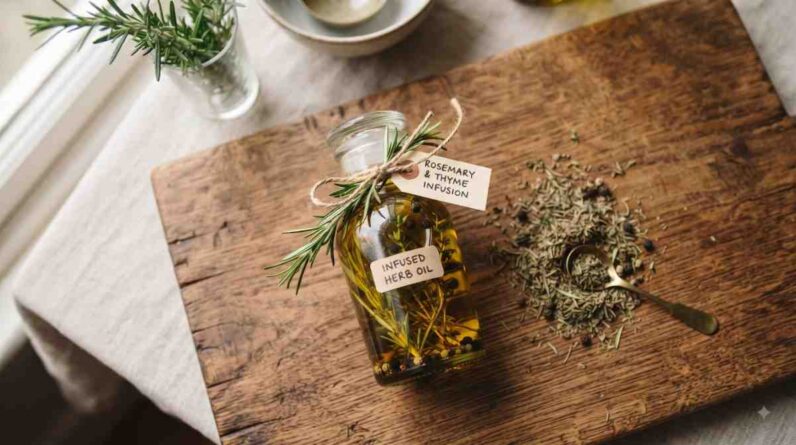
Herb-infused olive oil is olive oil that has had herbs, garlic, or spices steeped in it so the oil absorbs their flavor and fragrance. Cooks use it as a finishing oil, a marinade base, a bread dip, or a gift bottled up with a sprig of rosemary tied to the neck. The idea is simple. The execution is where people get it wrong, mostly because they treat infused oil like a shelf-stable pantry item when fresh ingredients make it more like a perishable food.
The flavor comes from aromatic compounds in the herb that are fat-soluble, meaning they dissolve into oil far more readily than into water. That’s why a quick rinse under running water pulls almost no flavor from rosemary, while a few weeks steeping in oil pulls out its full character. Warmth speeds this process along, which is why many methods call for gently heating the oil before adding herbs rather than relying on a pure cold soak. Making infused oil at home is really just controlling that transfer of flavor on purpose, whether you write it as herb-infused olive oil or the less common herb-infused olive oil without the hyphen. Either way, the oil flavor you end up with depends heavily on how long the herbs steep and whether they were fresh or dried.
If you’re newer to cooking with herbs generally, our guide to the best herbs to start with for health is a good companion read before you start experimenting in the kitchen.
Why Make Your Own {#why-make-your-own}
Store-bought infused oils are convenient, but most are made with dried, shelf-stable herbs specifically because that’s what allows a bottle to sit on a store shelf for months. Making your own gives you control over the exact herb, the ratio, and the base oil quality, plus it costs a fraction of the boutique bottles sold at specialty shops. A homemade batch also makes a genuinely nice gift, especially paired with a handwritten label noting the herb and the date it was made. Your homemade flavored oil ends up tasting fresher than most store versions anyway, since it hasn’t spent months on a shelf before reaching your kitchen.
There’s a tradeoff worth naming honestly: homemade infused oil, done safely, has a shorter shelf life than a commercially produced bottle. Manufacturers use acidification, preservatives, or sterile processing that most home kitchens can’t replicate. That’s not a reason to avoid making your own. It’s a reason to respect the storage rules below instead of assuming your bottle behaves like the one from the store.
Cost is another factor worth mentioning. A small bottle of boutique rosemary or basil oil at a specialty grocer often runs several dollars an ounce, largely for packaging and branding rather than the ingredients themselves. A cup of good extra virgin olive oil and a few sprigs from your own garden or a farmers market stand costs a fraction of that, and you end up with a batch sized for your actual cooking habits instead of a decorative bottle that sits mostly unused. If you already grow culinary herbs, this is also one of the simplest ways to use up a surplus before it wilts, rather than letting fresh sprigs go to waste in the crisper drawer.
What You’ll Need {#equipment}
- A glass jar or bottle with a tight-fitting lid, such as a mason jar, ideally dark or amber glass to slow light exposure
- A small saucepan for gently warming the oil
- A fine-mesh strainer or cheesecloth for straining out spent herbs
- A funnel, if you’re transferring into a narrow-necked bottle
- Extra virgin olive oil, plus your chosen dried or fresh herbs
- A permanent marker or printable label for dating each batch
None of this requires specialty equipment. If you cook at home regularly, you likely already have everything except maybe the dark glass bottle, which is worth picking up specifically for this project.
Is Herb-Infused Olive Oil Safe? The Botulism Risk, Explained {#is-it-safe}
Let’s address this first, because it matters more than flavor.
Oil creates a low-oxygen, moisture-trapping environment. Combining fresh herbs and oil this way is exactly the setup that raises the risk of botulism, since the ingredients can carry spores of Clostridium botulinum, and those spores can’t grow in open air, but submerged in oil at room temperature, they can. The food-borne illness this whole guide is built around avoiding is specifically botulism, not a generic worry about spoilage. Once active, the bacteria produce a toxin that has no smell, no taste, and no visible sign. According to the Centers for Disease Control and Prevention, homemade oils flavored with garlic or herbs should be thrown out after four days unless refrigerated, and any unused portion should always go in the fridge.
The National Center for Home Food Preservation confirmed this through direct testing. Garlic-in-oil mixtures stored at room temperature carry a real botulism risk, while refrigeration at 40°F or below keeps them safe for a short window. Researchers at the University of Idaho later developed a method that acidifies fresh herbs or garlic to a pH of 4.2 or lower, which does allow room-temperature storage, though it requires a tested citric acid solution rather than vinegar or lemon juice substitutes, according to University of Georgia Extension’s food safety publication.
The practical takeaway: dried herbs are the low-effort, room-temperature-safe option. Fresh herbs and garlic need refrigeration and a short use-by window unless you follow a tested acidification method.
The Acidification Method, Briefly
For cooks who want fresh-herb flavor without refrigeration limits, the University of Idaho’s tested method mixes citric acid with water, adds finely chopped garlic, basil, oregano, or rosemary, and lets it sit for 24 hours to bring the mixture’s pH down to 4.2 or below before combining it with oil. This is a precise process with measured ratios, not a rough approximation, so it’s worth reading the full Penn State Extension or University of Georgia publication before attempting it rather than working from memory of the general idea.
Why This Isn’t Just Extra Caution
It’s tempting to assume good olive oil or fresh, clean-looking herbs make this a non-issue. They don’t. Botulism-causing spores don’t announce themselves through smell or appearance, and no amount of oil quality changes the chemistry of a low-oxygen, low-acid environment. This is the one place in this guide where we’d rather you follow the rule exactly than improvise.
Two Safe Ways to Make It {#two-methods}
There are two realistic paths for a home kitchen, depending on how you plan to use the oil.
Method 1: Dried-Herb Infusion (Room Temperature Safe)
Dried herbs have low water activity, which means there isn’t enough moisture for C. botulinum to grow, even at room temperature. This is the method to reach for if you want a bottle sitting on your counter for gifting or everyday cooking. It’s also the lowest-maintenance option since there’s no clock running on when you need to use it.
Method 2: Fresh-Herb Refrigerator Infusion (Short Shelf Life)
Fresh herbs bring a brighter, greener flavor, but they carry moisture and a higher risk profile. Made this way, the oil needs to live in the fridge and get used within roughly a week. Treat it the way you’d treat a fresh pesto: delicious, but not a pantry staple.
Both methods start the same way, so here’s the full process.
Step-by-Step: How to Make Herb-Infused Oil {#step-by-step}
- Sterilize your container. Wash a glass jar or bottle in hot, soapy water, then boil it for 10 minutes or run it through a hot dishwasher cycle. Dry it completely; any leftover moisture works against you later.
- Choose and prep your herbs. For dried herbs, use them as-is. For fresh herbs, wash them and pat them completely dry with a clean towel. Any surface water left on the leaves adds risk and can cloud the oil.
- Heat the oil gently. Transfer your olive oil to a small saucepan and warm it over low heat until it’s warm to the touch, not simmering hard. Gentle heat helps release the herbs’ aromatic compounds faster than a pure cold soak.
- Add herbs to the warm oil. Drop your dried or fresh herbs, or the herb of your choice, straight into the pan. A good starting ratio is about 2 tablespoons of fresh herbs, or 1 tablespoon of dried herbs, per cup of olive oil.
- Allow to cool, then let it infuse. Remove the pan from heat and allow the mixture to cool completely to room temperature, then transfer everything, herbs included, into your sterilized jar. Let it sit in a cool, dark place for the dried-herb method, or in the refrigerator for the fresh-herb method, for 1 to 2 weeks to infuse, shaking gently every few days.
- Strain out the herbs. Pour oil through a fine-mesh strainer or cheesecloth into a clean bottle, so you remove the herbs completely rather than leaving them floating in the final product. Leaving spent herbs sitting in the bottle for the long term adds unnecessary risk and can shorten shelf life.
- Label and store. Write the date you made it directly on the bottle. Refrigerate fresh-herb infusions and use within about a week; dried-herb infusions can be kept in a cool, dark cupboard.
That’s the whole process. It’s less about complicated technique and more about discipline with timing and cleanliness.
Best Herbs for Infusing Olive Oil {#best-herbs}
Some herbs infuse better than others, and each brings a distinct flavor lane. Foraged or wild herbs can work too, provided they’re correctly identified and washed like any other ingredient before they go anywhere near the oil.
Rosemary
Rosemary is the classic choice for a reason, and oil with rosemary is probably the single most recognizable combination in this whole guide. Its woody, piney oils hold up well in oil and pair naturally with roasted vegetables, grilled meats, and crusty bread. Use one full sprig of fresh rosemary or about a tablespoon of dried rosemary per cup of oil. If you want to go deeper on this herb beyond the kitchen, we’ve covered rosemary’s broader health benefits separately. Worth noting: rosemary oil for hair and skin, like the kind covered in our rosemary oil for hair growth piece, is a different preparation from the culinary infusion here and isn’t meant for eating.
Garlic
Garlic infused olive oil, sometimes just called garlic olive oil, is the most talked-about food-safety case for good reason, and it’s also one of the most popular flavors. Because fresh garlic is low-acid and holds moisture, this is the infusion where refrigeration and the 4-day rule matter most. Skip room-temperature storage entirely with garlic cloves unless you’re using a tested, acidified recipe. Roasted garlic, added after it’s already cooked through, carries somewhat less risk than raw cloves, but refrigeration is still the safer default. If you want the flavor without any of the fresh-ingredient risk at all, garlic powder infused into warm oil sidesteps the issue entirely, since dry powder carries none of the moisture that raw garlic does.
Thyme
Thyme is one of the more forgiving herbs to work with. It holds its flavor through both the dried and fresh methods, and its smaller leaves infuse relatively quickly. A few sprigs per cup of oil is plenty; thyme’s flavor is concentrated enough that more isn’t necessarily better.
Basil and Lighter Herbs
Fresh basil brings a sweet, grassy note that works well in a fresh-herb refrigerator infusion, though its color can fade and darken over time as it oxidizes. As with any fresh herb, using fresh ingredients here means committing to the shorter refrigerator timeline rather than the dried-herb pantry approach. Lemon balm is a gentler, citrusy option if you want something lighter for salad dressings; you can read more about that herb in our lemon balm benefits and uses guide. Both are best made fresh and used within a week rather than stored long-term.
Comparison worth knowing: dried rosemary or thyme is better than fresh basil for a long-lasting, room-temperature-safe infused oil, because dried herbs carry the low moisture content that keeps botulism risk down.
Fresh vs. Dried: Quick Comparison {#comparison}
| Factor | Dried Herbs | Fresh Herbs |
|---|---|---|
| Storage | Cool, dark cupboard | Refrigerator only |
| Shelf life | Several weeks to a few months | About 1 week |
| Flavor | Deeper, more concentrated | Brighter, greener |
| Botulism risk | Low (low water activity) | Higher without refrigeration |
| Best for | Gifting, pantry use | Fast, near-term use |
Storage and Shelf Life {#storage}
Storage is where most of the actual risk in this project lives, so it deserves its own section rather than a footnote.
- Fresh-herb or garlic oil: oil made with fresh herbs should be refrigerated immediately and used within about a week. Some extension guidance allows slightly longer under strict refrigeration, but shorter is safer, and how long the oil will last always depends on whether it started fresh or dried.
- Dried-herb oil: can be stored in a cool, dark cupboard at room temperature, typically for a few weeks to a couple of months. For best flavor, use it within the first few weeks, since quality, not just safety, declines over time as the oil oxidizes.
- Freezing: both types can be frozen in ice cube trays or small freezer-safe containers for a longer shelf life, which pauses spoilage and microbial growth alike.
- Never top off an old bottle with fresh oil or herbs. Every batch should be treated as new, dated, and used or discarded on its own timeline.
- When in doubt, throw it out. This is the CDC’s own guidance on garlic and herb oils, and it applies here without exception.
Cloudiness, an off smell, or bubbling inside a sealed bottle are all signs to discard a batch immediately rather than taste-testing it first, since the toxin itself won’t announce its presence through smell or taste. A slightly stronger, more concentrated herb aroma over time is normal and simply means the oil has kept infusing; a sour, musty, or fermented smell is not normal and is a clear signal to stop using that batch.
Common Mistakes to Avoid {#mistakes}
Even careful cooks trip up on a few recurring points.
- Skipping the drying step for fresh herbs. Wet leaves introduce extra moisture right where you don’t want it, and using fresh herbs without drying them first is one of the fastest ways to shorten a batch’s safe window. The combination of oil and herbs that haven’t been properly dried is exactly the moist environment that raises risk.
- Reusing an unsterilized jar. A jar that once held pickles or jam can carry residue that shortens the life of your new batch.
- Storing garlic-infused oil at room temperature “just this once.” This is the single most common way home cooks run into real risk.
- Assuming a fancy, high-quality olive oil cancels out the risk. It doesn’t change the underlying chemistry of low-oxygen, low-acid storage.
- Forgetting to label the date. Without it, there’s no way to know whether a bottle is a week old or three months old.
- Leaving the bottle near the stove or a sunny windowsill. Heat and light both accelerate oxidation, dulling flavor faster, even in a batch that’s otherwise stored safely.
- Mixing multiple herbs without a plan. Combining basil, rosemary, thyme, and garlic all in one jar can muddy the flavor, and it also means the storage rule for the riskiest ingredient in the mix, usually garlic, has to apply to the whole batch. Sticking to one herb per bottle keeps both the flavor and the safety rules simple.
- Choosing to leave the herbs in the bottle indefinitely. It looks pretty on a shelf, but long-term storage of spent herbs in oil carries risks with no real flavor benefit past the first couple of weeks.
Creative Ways to Use This Oil {#uses}
Once you’ve got a safe, delicious oil ready, there’s a lot you can do with it. A jar on hand makes it easy to add flavor to your favorite recipes without extra effort:
- Drizzle it over roasted vegetables or a finished bowl of pasta just before serving
- Use it as the oil base in a quick vinaigrette or marinade
- Serve it in a shallow dish with good bread for dipping, alongside a splash of balsamic
- Brush it over chicken or fish before grilling for a subtle herbal note
- Bottle small portions as homemade gifts for the holidays or a housewarming
Because infused oil has a limited shelf life, favor recipes and gifting occasions where it’ll actually get used soon rather than letting a bottle sit untouched for months.
If you’re gifting a bottle, it helps to include a small card noting which herb was used, the date it was made, and whether it needs refrigeration. A fresh-herb batch handed off without that information can easily end up sitting in someone’s pantry for weeks past its safe window, simply because the recipient had no way of knowing better.
What to Look for When Choosing Your Oil {#buying-guide}
Oil Quality
A high-quality olive oil doesn’t make an unsafe infusion safe, but it does make a safe one taste better. Extra virgin olive oil brings a fuller, fruitier flavor that pairs well with strong herbs like rosemary and garlic. Its smoke point sits roughly between 325°F and 410°F, which is more than enough for the gentle warming step in this recipe; you’re nowhere near frying temperatures.
Container Type
Glass is the standard choice. It doesn’t absorb odors, it’s easy to sterilize, and a dark or amber bottle helps slow light-driven oxidation once the oil is bottled. Avoid plastic containers, which can pick up flavors and don’t sterilize as reliably.
Ingredient Source
Whether you’re using dried herbs and spices from your pantry or fresh sprigs from a garden, treat them the way you would any other fresh produce: clean, fully dry, and free of visible dirt or damage before they go anywhere near the oil. This matters most for infused oils like garlic and fresh basil, where the ingredient itself carries more risk than a dried sprig of rosemary or thyme. Herbs with any sign of mold or spoilage should be discarded, not rinsed and used anyway.
Our Recommendation {#verdict}
If you want the simplest path to a safe, good-tasting infused oil, start with dried herbs. It’s the lower-risk, lower-maintenance route, and it still delivers real flavor for cooking and gifting. Save the fresh-herb refrigerator method for oil you know you’ll use up within a week, like a batch made for a specific meal or short trip. One honest downside either way: infused olive oil never has the indefinite shelf life of plain oil, so don’t treat any batch as a forever pantry item.
Frequently Asked Questions {#faq}
Yes, if you follow safe handling. Dried herbs are room-temperature safe because they lack the moisture that bacteria need. Fresh herbs and garlic need refrigeration and a short use-by window to stay safe.
Fresh-herb or garlic infusions should be refrigerated and used within about a week. Dried-herb infusions can last several weeks to a couple of months in a cool, dark cupboard, though flavor is best within the first few weeks.
Dried herbs are the safer, longer-lasting choice for room-temperature storage. Fresh herbs give a brighter flavor but must be refrigerated and used quickly. Whether you call it herb-infused oil or herb-infused olive oil, the same rule applies: finish fresh-herb batches, use the oil within about a week, and don’t push past that window.
Yes, if fresh, low-acid ingredients like garlic or herbs are left in oil at room temperature. The oil creates a low-oxygen environment where Clostridium botulinum can grow and produce a toxin with no smell or taste.
Gently warming the oil before adding herbs helps release flavor faster than a pure cold soak, without pushing the oil anywhere near its smoke point. Either method works; heating is simply faster.
Herb-infused olive oil rewards a little discipline with a lot of flavor. Stick to dried herbs for anything you’ll store at room temperature, refrigerate fresh-herb batches, and label everything with a date. If you’re building out a home herb collection to pull from, our post on the best herbs to start with for health is a solid next stop.
Disclaimer: This article is for educational purposes only and is not intended as medical advice. Always consult a qualified healthcare professional before using medicinal herbs, especially if you are pregnant, nursing, taking medications, or have a medical condition. Read our full Medical Disclaimer.
References
-
- Centers for Disease Control and Prevention, Home-Canned Foods and Botulism
- National Center for Home Food Preservation, Freezing Garlic-in-Oil
- University of Georgia CAES Field Report, How to Safely Make Infused Oils
- Iowa State University Extension and Outreach, Preserving with Oil
- Penn State Extension, How to Safely Make Infused Oils

Researches medicinal plants, herbal wellness, and sustainable gardening practices. Through Herbal Daily Care, she helps readers discover the benefits of growing and using herbs at home.