

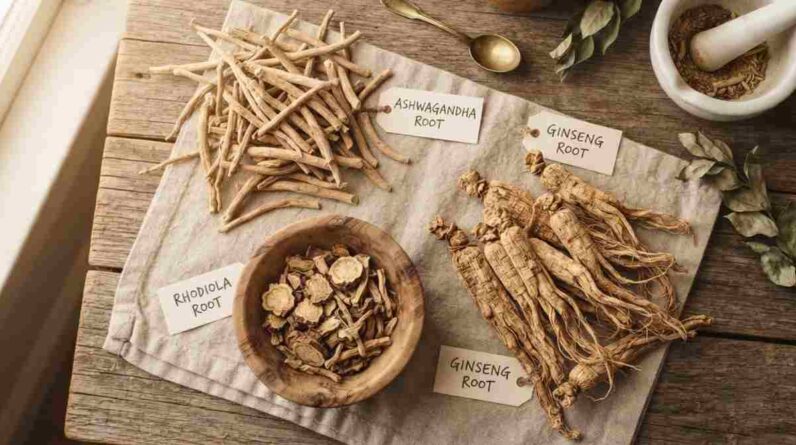
Stress doesn’t knock politely. It piles up at work, at home, and in your own head. Over time, your body starts keeping score. That’s the gap this category of herbs is meant to fill. Adaptogens are plants used for centuries to help the body respond to stress, not just cope with it. This guide breaks down what adaptogens are and how adaptogenic herbs are thought to work. You’ll get an adaptogenic herbs list you’ll actually recognize, plus what the research does and doesn’t support. It’s written for anyone curious about herbal supplements for stress who wants a clear, honest answer before buying anything. That’s true whether you’re comparing dietary supplements or just trying to manage stress with something from your kitchen cabinet.
Quick Answer: What Are Adaptogenic Herbs?
Adaptogenic herbs are plants or plant substances thought to help the body resist and recover from physical and emotional stress. They do this by supporting the stress response system, including the hypothalamic-pituitary-adrenal (HPA) axis. Common examples include ashwagandha, rhodiola, and Asian ginseng. These are herbs used for thousands of years, now studied for their potential to increase energy and ease stress. The evidence is promising but still limited. Treat adaptogens as a possible support, not a guaranteed fix.
Key facts about adaptogens:
- Adaptogens are plant substances, not a single herb or brand.
- The concept targets the body’s stress response broadly, not one symptom.
- Ashwagandha and Asian ginseng have the most human clinical trials.
- Most study benefits appeared after 6 to 8 weeks of daily use, not right away.
- Herbal supplements, including adaptogens, are not regulated the way medications are in the US.
What Is an Adaptogen, Exactly?
An adaptogen is a specific kind of herb or plant substance. It’s not just any calming tea. Russian scientists coined the term in the late 1940s. They used it to describe herbs that seemed to help the body cope with many kinds of stress, without pushing it too far in one direction.
For a plant to earn the label, it’s traditionally expected to meet three loose criteria. It should be non-toxic at normal doses. It should help the body resist stress broadly, rather than treat one specific symptom. And it should help restore balance, or homeostasis, whether the stress is physical, chemical, or emotional. That’s a different job than, say, a sedative that just makes you drowsy. Or a stimulant that just gives you a jolt. Herbs with genuine adaptogenic properties are used to support the body broadly. That’s one reason they’re often described as helping your body cope, rather than treating a single ailment.
You’ll often see adaptogens described as herbs or plants thought to help the body respond to stress more efficiently. That “thought to” matters. Adaptogenic herbs have thousands of years of traditional use behind them. This is especially true in Ayurvedic medicine in parts of Asia and India, and in traditional Chinese medicine. But modern clinical research is still catching up to the traditional claims. If you’re new to herbal wellness in general, our guide on herbs safe for everyday use is a good starting point before you get into a more specialized category like this one.
It also helps to know what does not count as an adaptogen, even though it gets lumped in online. A strong cup of coffee will fight fatigue, but it’s a stimulant, not an adaptogen. It forces energy rather than helping the body regulate its own stress response. Certain mushrooms, like reishi or cordyceps, are sometimes marketed alongside herbs and mushrooms in the same “stress support” product line. But they belong to a different biological kingdom entirely, and they’re studied separately from the plants in this guide. Keeping that distinction in mind makes it easier to read a supplement label. You won’t assume every calming claim describes the same category of ingredient, or that a blended product has actually been tested as a combination.
How Do Adaptogens Work in the Body?
Here’s the short version. Adaptogens are believed to interact with the hypothalamic-pituitary-adrenal axis. That’s the communication loop between your brain and your adrenal glands, and it governs how your body responds to stress. When you’re under chronic stress, this axis can stay switched on longer than it should. That keeps cortisol levels elevated and can leave you wired, tired, or both.
Adaptogens may help the body’s response to stress by moderating that loop, rather than shutting it off entirely. Several trial designs measure whether a given extract can reduce stress hormones over time, rather than after a single dose. A 2025 review in Cureus looked at ashwagandha specifically. It found that the herb’s active compounds appear to influence hypothalamic-pituitary-adrenal axis signaling and GABA-related pathways. The researchers linked this to ashwagandha’s anti-inflammatory, antioxidant, and anxiety-easing effects.
That’s a meaningfully different mechanism than caffeine, which forces alertness. It’s also different from a sedative herb like valerian, which just dials things down. Adaptogens are theorized to work bidirectionally. In theory, they nudge an over-stressed system down, while also giving a depleted one a little more resilience. The honest caveat is that this “bidirectional” model comes mostly from animal and mechanistic studies. Human trials tend to look at one outcome, like stress scores or sleep quality, rather than proving the broader theory.
Chronic stress is the real target here, not the occasional bad day. When cortisol stays elevated for weeks or months, it’s been linked to poor sleep, a weakened immune system, and even higher blood pressure over time. The theory behind adaptogens is that supporting the HPA axis, before it’s chronically overtaxed, may help the body respond to stress and restore balance more efficiently. That beats waiting until symptoms pile up. It’s a reasonable hypothesis, and it’s part of why adaptogens are often framed as a daily habit rather than an emergency remedy. But it’s still a hypothesis, not a settled fact in the research.
Adaptogenic Herbs List: The Most Studied Options
Dozens of plants get called adaptogens online, but a much smaller group actually has clinical research behind it. The most commonly cited examples of adaptogens include ashwagandha, Asian ginseng, and rhodiola, followed by a longer tail of less-studied options. Here’s an adaptogenic herbs list of the ones you’re most likely to see in supplements, teas, and wellness products.
| Herb | Traditional Use | What Research Suggests | Typical Form |
|---|---|---|---|
| Ashwagandha (Withania somnifera) | Ayurvedic tonic for stress and vitality | May reduce self-reported stress and anxiety, and improve sleep in some trials (prices vary — check current price) | Capsule, powder, tea |
| Asian ginseng (Panax ginseng) | Traditional Chinese medicine for energy and immune support | Mixed evidence for fatigue and blood sugar; more research needed | Root, tea, extract |
| Rhodiola (Rhodiola rosea) | Russian and Scandinavian folk remedy for endurance and fatigue | Some evidence for fatigue and mood, though study quality is generally low to moderate | Extract, capsule |
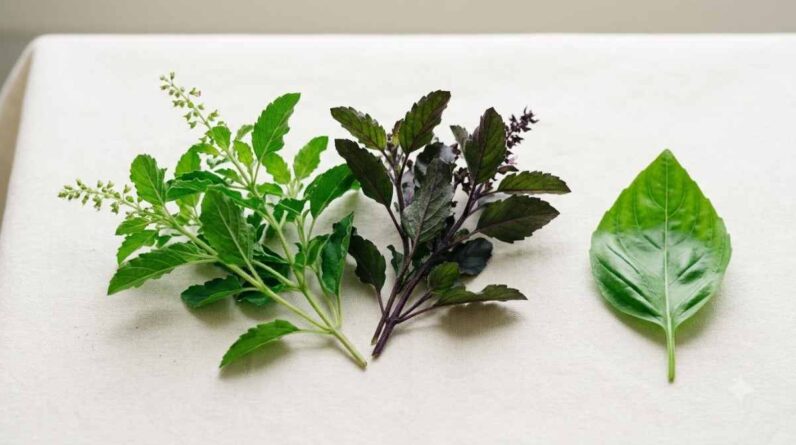
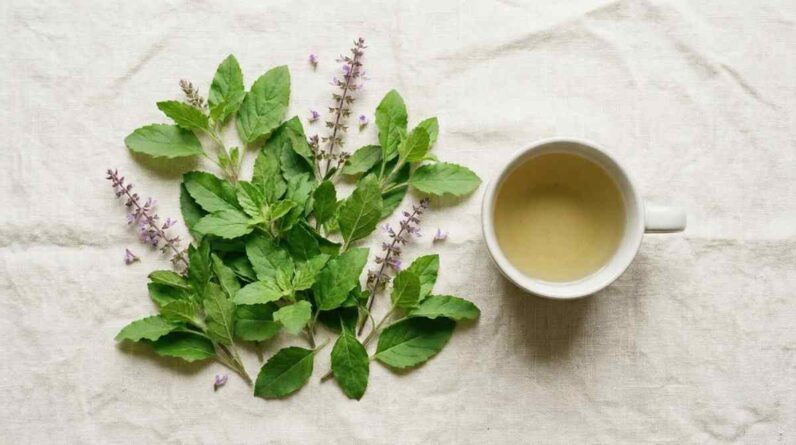
| Holy basil / tulsi (Ocimum tenuiflorum) | Sacred Ayurvedic herb for stress and vitality | Preliminary evidence for stress and blood sugar support | Tea, powder |
| Eleuthero (Siberian ginseng) | Historically used for stamina and immune support | Limited modern trials; often grouped with adaptogens despite not being a true ginseng | Extract, capsule |
Ashwagandha and Asian ginseng are the two adaptogenic herbs with the most published human trials. That’s why they show up first on most credible lists. Want a broader, beginner-friendly rundown that includes several of these alongside more familiar kitchen herbs? Our post on the best herbs to start with for health covers tulsi in more depth as an entry point.
Possible Benefits of Taking Adaptogens
Here’s where it’s worth being direct. No adaptogen is proven to cure stress, and none should replace sleep, movement, or professional mental health support. That said, several potential health benefits show up often enough across small trials to be worth knowing about, especially for people looking for extra help with stress rather than a cure.
Stress and anxiety support. This is the best-studied use case. A randomized, placebo-controlled trial of a full-spectrum ashwagandha root extract found it safely and effectively improved participants’ resistance to stress. Self-reported stress scores were the main measured outcome, not a cure.
Sleep quality. Some people report falling asleep faster and sleeping more soundly. This is likely tied to the same stress-response pathway, rather than a direct sedative effect. For a wider comparison of herbs used specifically for sleep, see our guide to the best herbs for sleep.
Energy and fatigue. Ginseng and rhodiola both have traditional reputations for boosting energy without the jitteriness of caffeine. Some modern trials back a modest effect on general fatigue, though not consistently across every study.
Immune system support. Several adaptogens, ginseng in particular, have research pointing to a role in helping boost the immune system. The effect sizes in human studies are usually small, though.
Mental and physical resilience. The core theory behind adaptogens is that they help the body’s resistance to stress across categories, mental, physical, and environmental, rather than targeting one narrow symptom. Athletes and people under heavy physical training loads are one group where this shows up most in the research. Physical stress and mental stress seem to overlap more than you’d expect.
None of this means adaptogens will neutralize the effects of stress on their own. Sleep, movement, and social support still do most of the heavy lifting. Adaptogenic herbs are better understood as a supporting habit layered on top of those basics, not a replacement for them.
How to Take Adaptogens
There isn’t one correct way to use these plants. The right form depends on your goal and your patience level.
- Herbal tea is the gentlest entry point. Ginseng root and holy basil both work well steeped. You’ll notice the effect, if any, more gradually than with a concentrated extract.
- Capsules or tablets offer a standardized, measurable dose. That matters if you’re tracking whether something is actually helping.
- Powders can be added to smoothies or drinks. Flavor varies a lot; ashwagandha in particular has an earthy, slightly bitter taste.
- Tinctures are concentrated liquid extracts. They’re useful if you want a faster-acting, adjustable dose.
Whichever form you pick, adaptogens are generally taken for a period of weeks, not as a one-time fix. Most clinical trials on ashwagandha ran the herb for six to eight weeks before measuring results. So a single cup of tea isn’t a fair test of whether it works for you.
Are Adaptogens Safe? Why Supplements Are Not Regulated the Way You’d Expect
This is the section most wellness content skips, and it shouldn’t. Even practitioners in integrative health circles who recommend adaptogens generally agree this part deserves more attention than it gets. In the United States, herbal supplements are not regulated the same way medications are. The FDA doesn’t review adaptogenic herb products for safety or effectiveness before they reach a shelf. Manufacturers are responsible for that themselves. That means potency, purity, and even the actual ingredients inside a bottle can vary between brands more than you’d expect from a pharmacy product.
A few practical safety notes:
- Ashwagandha has generally shown a mild side-effect profile in trials lasting up to about three months. Side effects are mostly upset stomach or drowsiness. But it may not be appropriate for people with thyroid conditions, prostate cancer, or those who are pregnant or breastfeeding, and rare cases of liver injury have been reported.
- Asian ginseng may interact with blood thinners and diabetes medications, since it can affect blood glucose and blood pressure.
- Adaptogens may interact with other medications more broadly, including sedatives, antidepressants, and immunosuppressants. This is one supplement category where you should check with your primary care physician first, especially if you’re already managing another condition.
- Because supplements are not regulated the way prescription drugs are, it’s worth researching specific brands and products first. Don’t assume every bottle labeled “ashwagandha” contains a comparable dose.
- Long-term safety data beyond a few months is thin for most adaptogenic herbs. Treat “I’ve used it for years” anecdotes with some skepticism.
If you take any prescription medication, have high blood pressure, or manage a chronic condition, have this conversation with a doctor before you pick up adaptogens at your local pharmacy, not after.
Dosing is another area where “more research needed” is the honest answer, rather than a specific number you can rely on. Clinical trials on ashwagandha have generally used 300 to 600 milligrams of root extract per day. Ginseng studies have varied even more widely depending on the preparation. That range is more useful for understanding what’s been studied than as a personal recommendation. Your ideal dose depends on the specific product, your health history, and what your doctor or pharmacist advises. If a label doesn’t disclose how much active compound is inside, or which part of the plant was used, that’s a reasonable reason to look elsewhere.
Adaptogens vs. Regular Calming Herbs: What’s the Difference?
Ashwagandha is better than a sedative herb like valerian for someone who wants to function normally through a stressful week. That’s because adaptogens are designed to build resilience over time, rather than induce drowsiness in the moment. Valerian and other sedative herbs work more directly and immediately. That makes them better suited to an occasional restless night than to ongoing stress management. Neither category is “better” across the board. They’re just built for different jobs.
Frequently Asked Questions
Adaptogenic herbs are plants traditionally used to help the body resist and recover from physical and emotional stress. They largely work by supporting the body’s stress response and the HPA axis. Ashwagandha, rhodiola, and Asian ginseng are the most commonly cited examples.
Adaptogens are thought to help the body respond to stress by moderating hormone signaling along the hypothalamic-pituitary-adrenal axis, including cortisol release. This is different from simply sedating or stimulating the nervous system.
Many people use adaptogens like ashwagandha or ginseng daily for weeks at a time in clinical trials without major issues. But long-term safety data is limited, and supplements are not regulated the same way medications are. Check with a healthcare provider before daily, long-term use.
Every adaptogen is an herb, but not every herb is an adaptogen. Adaptogens are defined by their theorized ability to help the body resist stress broadly and restore balance. Other herbs may simply calm, stimulate, or treat one specific symptom.
Some clinical trials, particularly on ashwagandha, have measured reduced cortisol levels alongside lower self-reported stress. The effect appears real in several studies, but it isn’t universal. Results vary by herb, dose, and individual.
The Bottom Line
Adaptogenic herbs are plants with a long traditional history and a growing, though still incomplete, body of clinical research. Ashwagandha and Asian ginseng have the strongest evidence for helping the body respond to stress. Other adaptogenic herbs remain promising but underexplored. Because supplements are not regulated the way medications are, research specific brands and products first, and loop in your doctor if you take other medications. Still building your herbal wellness routine from the ground up? Our guide to medicinal herbs for beginners is a solid next stop.
Disclaimer: This article is for educational purposes only and is not intended as medical advice. Always consult a qualified healthcare professional before using medicinal herbs, especially if you are pregnant, nursing, taking medications, or have a medical condition. Read our full Medical Disclaimer.
References
- National Institutes of Health, Office of Dietary Supplements. “Ashwagandha: Is It Helpful for Stress, Anxiety, or Sleep? Fact Sheet for Consumers.” → https://ods.od.nih.gov/factsheets/Ashwagandha-Consumer/
- National Center for Complementary and Integrative Health (NIH). “Asian Ginseng.” → https://www.nccih.nih.gov/health/asian-ginseng
- National Center for Complementary and Integrative Health (NIH). “Rhodiola.” → https://nccih.nih.gov/health/rhodiola
- Chandrasekhar K, Kapoor J, Anishetty S. “A Prospective, Randomized Double-Blind, Placebo-Controlled Study of Safety and Efficacy of a High-Concentration Full-Spectrum Extract of Ashwagandha Root in Reducing Stress and Anxiety in Adults.” Indian Journal of Psychological Medicine, 2012. → https://pmc.ncbi.nlm.nih.gov/articles/PMC3573577
- Jamnekar PP, et al. “Ashwagandha as an Adaptogenic Herb: A Comprehensive Review of Immunological and Neurological Effects.” Cureus, 2025. → https://www.ncbi.nlm.nih.gov/pmc/articles/PMC12680924/

Written by cskoch, who researches medicinal plants and herbal wellness at Herbal Daily Care. This guide is research-based: we reviewed published trials, meta-analyses, and the manufacturer’s own sales page. We did not purchase or test the product, and we do not claim first-hand results.