

Lemon balm is the rare herb that rewards you even when you forget about it. Skip a watering, ignore it for a week, and it’s usually still standing there, bright green and giving off that unmistakable lemon scent the second you brush past it. If you want to learn how to grow lemon balm without a lot of fuss, you’re in luck: it’s super easy to grow, and one of the easiest herbs to start with even if you’ve never grown one before.
This lemon balm growing guide covers everything from choosing a spot to sow lemon balm seeds through harvesting the leaves for tea, with expert advice drawn from university extension sources along the way. It’s written for home gardeners at any experience level, whether you’re planting your first pot on a windowsill or adding lemon balm to an already-established herb garden outdoors.
Quick Answer
To grow lemon balm at home, plant it in full sun to partial shade in well-drained soil with a pH between 6.0 and 7.0, spacing plants 18 to 24 inches apart. Water regularly to keep the soil moist, skip heavy fertilizer, and harvest often to keep the plant bushy and prevent it from going to seed. It’s a hardy perennial herb that returns year after year in most climates.
Key Facts
- Sun needs: full sun to partial shade
- Soil pH: roughly 6.0 to 7.0
- Mature size: 1.5 to 3 feet tall, similar spread
- Spacing: 18 to 24 inches apart
- Hardiness: perennial in USDA zones 4 through 9
- Herb of the Year: named by the International Herb Association in 2007
What Is Lemon Balm?
Lemon balm (Melissa officinalis) is a perennial herb and a member of the mint family, native to the Mediterranean region and parts of central Asia. Its heart-shaped, crinkled leaves look a lot like ordinary mint at first glance, but crush one between your fingers and the difference is obvious: instead of a cool, sharp scent, you get a soft, sweet lemon fragrance that gives the plant its name.
The genus name Melissa comes from the Greek word for bee, and for good reason. Bees are drawn to its small white flowers all summer long, which makes lemon balm a popular border plant even outside the herb garden. In 2007, the International Herb Association named lemon balm its Herb of the Year, an honor that recognizes plants outstanding in at least two of three categories: medicinal, culinary, or decorative. Lemon balm checks all three.
Unlike some mints, lemon balm spreads by seed more than by aggressive underground runners, which makes it a bit easier to keep contained in a home garden bed. It’s still enthusiastic, though, so most gardeners give it its own space rather than letting it compete with less assertive plants.
Where to Plant Lemon Balm in Your Garden
Lemon balm prefers full sun but tolerates partial shade well, and in hot climates, a little afternoon shade actually helps. Too much intense sun can bleach the leaf color and push the plant toward a slightly rougher texture, while some shade tends to produce larger, more tender foliage and a stronger lemon flavor.
Soil matters more than sun exposure here. Lemon balm does best in fertile, well-drained soil with a pH somewhere between 6.0 and 7.0, though it’s forgiving enough to handle a wider range if drainage is good. Heavy clay is the one soil type it genuinely struggles with, since soggy roots lead quickly to root rot. If your garden bed holds water after rain, work in compost to loosen the soil, or consider a raised bed instead.
Pick a spot with room to grow. Utah State University Extension notes lemon balm reaches 2 to 3 feet high, and most home gardens see a similar spread, so give it space rather than tucking it between tightly packed vegetables. Many gardeners plant lemon balm in your garden along a border or path edge, both because bees love visiting it there and because it’s an area where its spreading habit doesn’t crowd out neighboring plants.
How to Sow Lemon Balm Seeds
Lemon balm is easy to grow from seed, though the seeds themselves are slow and a little stubborn to germinate. Patience matters more than technique here.
Starting Seeds Indoors
Sow lemon balm seeds indoors about six to eight weeks before your last expected frost date. The seeds need light to germinate, so press them gently into the surface of moist seed-starting mix rather than burying them. Keep the soil consistently moist and the tray somewhere that stays around 65 to 70°F. Germination is slow, often taking two to three weeks, so don’t assume a bare tray after a week means failure.
Direct Sowing Outdoors
If you’d rather skip the indoor step, lemon balm can also be direct-sown in the garden in spring once the soil has warmed, or in late summer to early fall in milder climates. Space seeds 3 to 6 inches apart and press them into the soil about a quarter-inch deep. Thin seedlings as they grow so the strongest ones end up 18 inches apart, matching the spacing you’d use for transplants.
How to Plant Lemon Balm Seedlings and Transplants
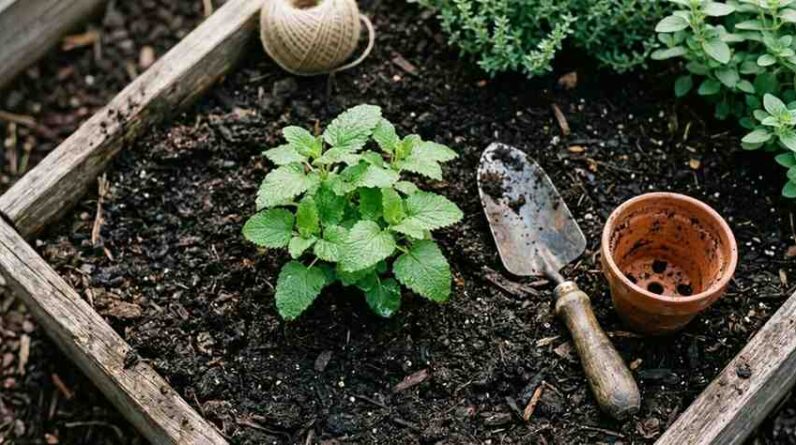
If you’re starting with a nursery seedling rather than seed, planting only takes a few steps. Wait until after your last spring frost, then dig a hole slightly larger than the root ball and set the plant so its crown sits level with the surrounding soil. Backfill, water thoroughly, and add a layer of mulch around the base to help retain moisture.
Give each plant 18 to 24 inches of room in every direction. It’s tempting to plant lemon balm closer together for a fuller look right away, but tight spacing cuts down on airflow, which raises the risk of powdery mildew later in the season. Water the plants deeply right after transplanting to help them settle in, then keep the soil evenly moist while the roots establish over the first couple of weeks.
Growing Tips: Watering, Mulch, and Fertilizer
Once established, lemon balm needs less fussing than most herbs, but a few growing tips make a real difference in how full and flavorful the plant turns out.
Watering: Keep the soil moist but not soggy, especially during the first growing season. Established plants tolerate short dry spells throughout the growing season, but consistent moisture produces the best leaf size and flavor. Water at the base of the plant rather than overhead, which helps keep foliage dry and less prone to fungal problems.
Mulch: A two-to-three-inch layer of organic mulch, such as shredded leaves, straw, or compost, conserves soil moisture, suppresses weeds, and helps regulate soil temperature through the growing season. It also does double duty by burying some of the seed lemon balm drops if you let a few flowers go to seed, which cuts down on unwanted seedlings the following spring.
Fertilizer: This is one area where less is genuinely more. Lemon balm doesn’t need much fertilizer, and heavy feeding can actually dilute the essential oils that give the leaves their lemon flavor. A light application of compost or an all-purpose fertilizer in spring is usually plenty; skip additional feeding unless growth looks noticeably stunted.
Common Pests and Problems
Lemon balm is refreshingly low-maintenance on the pest front. Its strong scent actually repels several common garden insects, and rabbits and deer tend to leave it alone.
That said, it isn’t completely trouble-free. Aphids and whiteflies are the two pests most likely to show up, usually clustering on the undersides of leaves or new growth. A strong spray of water knocks most infestations back, and insecticidal soap handles anything more stubborn. Spider mites occasionally appear in hot, dry conditions, recognizable by fine webbing and stippled leaves.
The bigger risk is disease rather than pests. Powdery mildew, a white, dusty coating on the leaves, shows up when plants are crowded or when air circulation is poor, particularly in humid weather. Proper spacing at planting time is the best prevention, along with thinning stems occasionally to let air move through the plant. Root rot is the other main concern, and it’s almost always tied to soil that stays too wet for too long. If your lemon balm’s foliage yellows and the base feels mushy, check drainage before assuming it’s a pest problem.
How to Propagate Lemon Balm
Once you have one lemon balm plant established, you rarely need to buy another. It’s super easy to propagate through division, stem cuttings, or letting it self-seed.
Division is the fastest way to get new lemon balm plants that match the parent exactly. Divide plants in the spring or fall by digging up an established clump, splitting the root ball into sections with a sharp spade or knife, and replanting each section 18 inches from its neighbors.
Stem cuttings work well during the growing season. Snip a 4 to 6 inch piece of new growth just below a leaf node, strip the lower leaves, and place the cutting in water or moist potting mix. Roots typically form within two to three weeks, at which point the cutting can be potted up or moved to the garden.
Self-seeding happens whether you plan for it or not, since lemon balm goes to seed readily once it flowers. If you want to control where new plants pop up, deadhead flowers before they set seed, or simply thin volunteer seedlings each spring and transplant the ones you want to keep.
Growing Lemon Balm Indoors
Lemon balm adapts well to container life, which makes it a good option if you don’t have garden space or want fresh leaves within easy reach of the kitchen. Choose a pot at least 12 inches across with good drainage holes, since indoor plants are more vulnerable to root rot without anywhere for excess water to escape.
Lemon balm grown indoors needs more direct light than it would outdoors, since even partial shade outside is brighter than most rooms. Place the pot in your sunniest window, ideally one that gets at least six hours of light, and consider supplementing with a grow light in winter if your leaves start looking pale and leggy. Water when the top inch of soil feels dry, and skip fertilizer except for a light feeding once or twice during the growing season.
Lemon Balm Varieties to Know
Straight species Melissa officinalis is what most gardeners grow, but a few lemon balm varieties are worth knowing if you want something a bit different for your herb garden.
- ‘Aurea’ (Golden Lemon Balm): leaves are green splashed with gold, especially vivid in cooler spring weather before summer heat fades the variegation.
- ‘All Gold’: a fully golden-leaved variety that’s more ornamental than culinary, since the color fades in full sun and the leaves scorch more easily.
- ‘Lime’ and ‘Citronella’ types: occasionally sold under related Melissa cultivars with slightly different scent profiles, though straight officinalis remains the standard choice for tea.
Whichever variety you choose, note that lemon balm is sometimes confused with bee balm (Monarda), an unrelated plant with a similar common name. If a tag or listing says “bee balm” instead of “lemon balm” or Melissa officinalis, you’re looking at a different plant entirely.
Harvesting Guide: When and How to Harvest Lemon Balm
The best time to harvest lemon balm is any time after the plant is established and has put on enough new growth to spare, generally once it reaches 6 to 8 inches tall. Morning, after the dew has dried but before the heat of the day, is when the essential oils are most concentrated, which means the strongest lemon flavor.
Use scissors or garden snips to cut individual stems just above a leaf pair, then strip the leaves from the stems once you’re back in the kitchen, rather than pulling leaves off in the garden by hand, which can damage the plant. As a general harvesting guide, avoid taking more than a third of the plant at once, so it has enough foliage left to keep photosynthesizing and bounce back quickly. Regular harvesting through the growing season actually benefits the plant, encouraging bushier new growth and helping delay flowering, which in turn slows down self-seeding.
If you notice flower buds forming, pinching them off keeps the plant productive longer and prevents it from putting energy into seed production instead of leaf growth. Come fall, cut the plant back to a few inches above the base once frost threatens, and add a fresh layer of mulch to protect the roots through winter dormancy.
How to Use Lemon Balm From Your Garden
Fresh lemon balm leaves are good for far more than steeping. The leaves can be used in salads, muddled into lemonade or cocktails, or chopped into a soft cheese spread for a bright, herbal note. Lemon balm and mint pair naturally in a summer pitcher of iced tea if you’re growing both. The fresh leaves lose potency quickly once cut, though, so most gardeners preserve at least part of their harvest as dried lemon balm for use through the off-season.
For lemon balm tea specifically, a small handful of fresh leaves steeped in hot water for five to ten minutes makes a simple, calming cup. If you’d rather stock a pantry jar for months rather than days, our companion guide on drying lemon balm walks through the exact process step by step, since this tender, high-moisture herb needs a slightly different approach than sturdier herbs like rosemary or thyme. For more on lemon balm’s traditional uses beyond the tea cup, see our lemon balm herb benefits and uses guide.
Frequently Asked Questions
Yes. Lemon balm is one of the easiest herbs for beginners, tolerating a range of soil conditions, needing little fertilizer, and shrugging off occasional neglect better than most garden plants.
Yes, lemon balm is a true perennial in USDA zones 4 through 9. In colder zones, the top growth dies back in winter, but the roots survive and send up new shoots in spring.
Lemon balm grows well in full sun or partial shade. Full sun tends to produce a more compact plant, while partial shade often results in larger, more tender leaves and a stronger lemon flavor.
Harvest regularly and pinch off flower buds before they go to seed, since self-seeding is the main way lemon balm spreads in a home garden. Growing it in a container also keeps it fully contained.
Yes. Lemon balm does well in a pot with good drainage, placed in your sunniest window. Indoor plants need more direct light than outdoor ones, since even a partially shaded outdoor spot gets more total light than an average room.
Lemon balm earns its reputation as one of the easiest plants to grow, whether it’s tucked into a mixed herb garden bed or living on a sunny windowsill in a pot. Give it decent soil, room to spread, and a regular trim, and it will reward you with fresh, lemon-scented leaves from spring through the first hard frost. Once you’ve got a thriving plant of your own, our guide to drying lemon balm for tea is the natural next step for turning that harvest into a pantry staple, and our roundup of medicinal herbs for beginners is worth a look if you’re planning out the rest of your herb garden this season.
Disclaimer: This article is for educational purposes only and is not intended as medical advice. Always consult a qualified healthcare professional before using medicinal herbs, especially if you are pregnant, nursing, taking medications, or have a medical condition. Read our full Medical Disclaimer.
References
- Utah State University Extension, “How to Grow Lemon Balm in Your Garden” → https://extension.usu.edu/yardandgarden/research/lemon-balm-in-the-garden
- Almanac.com, “Lemon Balm: Planting, Growing, and Harvesting Guide” → https://www.almanac.com/plant/lemon-balm
- International Herb Association, “Herb of the Year” archive → https://www.iherb.org/herb-of-the-year/
- Northern Gardener, “Plant Profile: Lovely Lemon Balm” → https://northerngardener.org/lemon-balm/
- Harvest to Table, “How to Plant, Grow, and Harvest Lemon Balm” → https://harvesttotable.com/how_to_grow_lemon_balm/
Researches medicinal plants, herbal wellness, and sustainable gardening practices. Through Herbal Daily Care, she helps readers discover the benefits of growing and using herbs at home.