

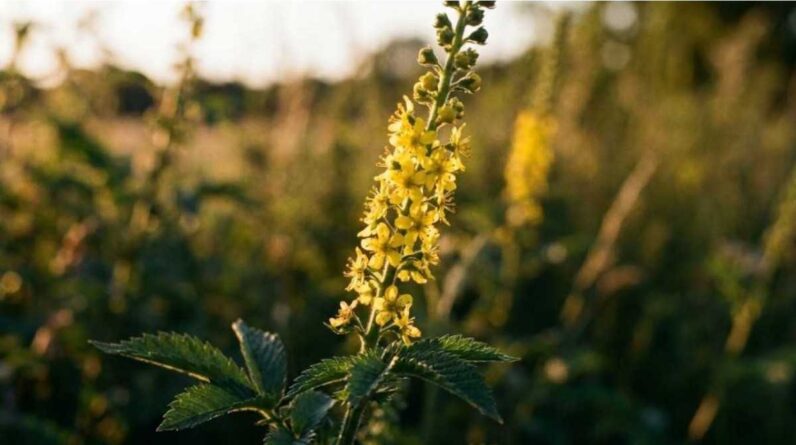
Walk down an old English hedgerow in July, and you’ll probably brush past agrimony without noticing it, until you look closer at those tall, narrow spikes of yellow flowers standing up like tiny towers. That’s exactly why one of its oldest nicknames, church steeples, stuck. Agrimonia eupatoria has been drying in kitchen cupboards and apothecary jars for hundreds of years, long before “herbal remedy” was a marketing term. This guide covers what agrimony actually is, what’s really in it, what the research supports, and how people use the dried herb today. It’s written for anyone curious about trying a gentle, traditional herb, not for anyone looking to replace prescribed treatment.
Quick Answer
Agrimonia eupatoria, commonly called agrimony or church steeples, is a perennial herb in the rose family used for its astringent, tannin-rich leaves and flowers. People take it as tea, decoction, or tincture to soothe mild diarrhea, sore throats, and minor skin irritation. Early clinical research also links it to liver enzyme support. It’s generally well tolerated in normal culinary-style doses, but isn’t a substitute for medical care.
What Is Agrimonia Eupatoria?
Agrimonia eupatoria is a perennial herbaceous plant in the Rosaceae family, the same family as roses, apples, and strawberries. It grows 30 to 100 centimeters tall from a woody rootstock, sending up a single reddish, hairy stem lined with deeply toothed, dark green leaves. Between June and September, the plant sends up narrow flower spikes covered in small, five-petaled yellow blooms with a faint apricot scent.
Those spikes are the whole reason for the church steeples’ nickname. The name references how the flower spikes stand up straight and tall, and once the flowers fade, the seed pods develop hooked bristles that cling to fur and clothing, a hitchhiking trick that spread the plant along roadsides and field edges across Europe, western Asia, and North Africa, where it now grows wild.
Agrimony isn’t just a medicine cabinet plant, either. Its yellow spikes attract bees, flies, and butterflies through the summer, and the whole plant serves as a food source for the caterpillars of certain moth species. Gardeners who let a patch of agrimony establish along a fence line or hedgerow often notice more pollinator traffic in that corner of the yard than almost anywhere else.
Herbalists work almost exclusively with the aerial parts of the plant: the stems, leaves, and flowering tops, harvested and dried at the peak of bloom. The root isn’t typically used. Once dried, the whole plant keeps its color and mild, slightly bitter, tea-like aroma for months if it’s stored away from light and moisture, which is why you’ll usually find it sold as a loose dried herb rather than fresh.
Agrimony shouldn’t be confused with hemp agrimony (Eupatorium cannabinum), a different genus entirely despite the overlapping species name. When a label just says “agrimony,” it’s almost always Agrimonia eupatoria, the common agrimony this guide is about.
If you’re building out a home apothecary shelf, this is a good herb to add alongside other everyday staples covered in our guide to herbs safe for everyday use.
Common Names of Agrimony
Few herbs collect as many regional nicknames as this one, and each name tends to point at a different feature of the plant.
- Church steeples: from the tall, upright flower spikes
- Sticklewort: from the bristly, sticky seed pods that cling to clothing and fur
- Common agrimony: the standard name distinguishing it from other Agrimonia species
- Cocklebur: another nod to the burr-like fruit
- Agrimony: the everyday shorthand used almost everywhere
The genus name Agrimonia is thought to trace back to the Greek word argemone, once used for plants believed to soothe eye irritation, though modern agrimony isn’t typically used that way. The species name eupatoria honors Mithridates VI Eupator, an ancient king remembered for his knowledge of medicinal plants and antidotes. So the full scientific name is really a small history lesson: a plant named for a king, nicknamed for its shape, and remembered for its stickiness.
You’ll sometimes see it listed under a synonym, Agrimonia odorata, on older seed packets or in older herbal texts. This refers to the same plant or a very close regional variant, not a different species you need to source separately. In the language of flowers, a Victorian tradition where different plants carried symbolic meaning, agrimony was said to represent thankfulness and gratitude, a gentler association than most of its folk names suggest.
What’s Inside the Plant
Agrimony’s reputation as a medicinal plant comes down to a fairly rich phytochemical profile, and modern lab analysis backs up what old herbals described in vaguer terms.
Tannins. The dried herb contains a meaningful concentration of tannins, roughly 5 percent by traditional estimates, the compounds responsible for its astringent, drying effect on tissue. Tannins are why a strong agrimony infusion feels slightly puckering on the tongue, and they’re the main reason this herb has been used for centuries on wounds, sore gums, and loose stools.
Flavonoids. Analysis of agrimony extract has identified quercetin-3-D-glucoside, neohesperidin, naringenin, and luteolin among its flavonoid content, along with related compounds like apigenin and kaempferol reported in other phytochemical surveys of the species. These flavonoids are the antioxidant workhorses most researchers point to when explaining agrimony’s free-radical-scavenging activity. Lab work has specifically found that agrimony extract can stimulate the expression and activity of the antioxidant enzymes superoxide dismutase, catalase, and glutathione while helping scavenge free radicals, which is a fairly detailed mechanism for a garden-variety herb.
Volatile oils and glycosides. The plant also contains a small amount of volatile oil along with triterpene glycosides, which contribute to its mild bitter, apricot-like scent, plus a spread of organic acids, including ursolic acid and tormentic acid, that show up repeatedly in phytochemical write-ups of the genus.
Amino acids and organic acids. A 2022 phytochemical survey of agrimony herb extract identified a dominant profile of aspartic acid, glycine, alanine, valine, and lysine, alongside gallic and ellagic acid and a range of hydroxycinnamic acids like caffeic and ferulic acid.
None of this makes agrimony a “superfood” or a cure-all. It makes it a tannin-forward, flavonoid-rich astringent herb, which is a fairly specific and useful lane. The overlap with better-known antioxidant herbs like rosemary is worth a look too, if you’re comparing profiles; our rosemary herb health benefits guide covers a similarly polyphenol-rich plant from a completely different family.
Traditional and Modern Uses
Agrimony’s use cases haven’t changed much in 300 years. Modern herbalists still reach for it in largely the same situations traditional healers did.
Digestive Support
This is agrimony’s oldest and most consistent use. A cold infusion taken several times a day has long been recommended for looseness of the bowels and for mild internal bleeding. The astringent tannins tighten and tone the gut lining, which is why agrimony shows up in home remedies for mild, non-infectious diarrhea and general digestive “tone.” If bloating rather than looseness is your main issue, our herbal remedies for bloating roundup covers a wider set of options worth comparing.
Throat and Mouth Care
Ask any practicing herbalist about agrimony, and gargling comes up almost immediately. It’s one of the most popular uses for this herb, easing inflammations of the oral and pharyngeal mucosa such as laryngitis, pharyngitis, and tonsillitis. The astringent action tightens irritated throat tissue and can temporarily ease the raw feeling that comes with a sore throat or mild laryngitis.
Wound Care and Skin Support
Externally, agrimony has a long vulnerary, or wound-healing, reputation. A strong decoction applied as a wash may be used on affected areas up to three times a day, with its tannin content toning tissue and forming a protective film that supports repair underneath. Lab studies have also found bactericidal action against Staphylococcus aureus, which lines up with its traditional use on minor cuts, weepy eczema, and slow-healing sores.
Diuretic and Women’s Health Use
Agrimony carries a secondary, less-discussed reputation as a gentle diuretic and uterine tonic. Its astringent properties have made it a traditional choice as a gentle uterine tonic, often used to help with heavy menstrual bleeding and period pain, while its diuretic action has traditionally been used to help with fluid retention around menstruation. These uses are older and less studied than agrimony’s digestive and throat applications, so they’re worth treating as traditional folk use rather than settled science.
What the Research Actually Shows
Agrimony hasn’t attracted the volume of clinical research that chamomile or ginger have, but the studies that do exist are more specific than most people expect.
Liver enzyme support. The most rigorous human study on agrimony is a randomized, double-blind, placebo-controlled trial run at a hospital in South Korea. Researchers gave 80 adults with mildly to moderately elevated ALT levels, between 45 and 135 IU/L, either two capsules of agrimony aqueous extract or a placebo, twice daily, for 8 weeks. By the end of the trial, the agrimony group showed a marked decrease in serum ALT, AST, and triglyceride levels compared to placebo, with no adverse effects reported. That’s a real, published result, but it’s one trial, in a specific population with mildly elevated enzymes, not a green light to self-treat any liver condition with tea.
Antiviral activity in cell studies. Separate lab research measured agrimony’s effect on hepatitis B surface antigen secretion using HepG2.2.15 cells, a standard cell model for hepatitis B research. The inhibitory effect against hepatitis B virus was temperature-dependent, with the optimal result seen when the material was heated in water to 60°C, a useful, practical detail suggesting a hot infusion or decoction, not a cold extract, may be the more biologically active preparation for this specific effect. This is cell-culture data, though, not a human treatment outcome, so it shouldn’t be read as evidence agrimony treats hepatitis B in people.
Antioxidant, anti-diabetic, and clotting research. Reviews of agrimony’s broader pharmacology describe an extract that inhibits TLR-4 signaling in the liver and helps alleviate liver injury, working alongside its lipid-lowering and antioxidant activity. Separately, agrimony extracts have been shown to inhibit alpha-glucosidase activity in the intestines, which slows glucose absorption, and to inhibit blood clot formation via the intrinsic clotting pathway, along with early, preliminary reports of selective effects on tumor cells in vitro and in vivo. These last two areas, anti-diabetic and anti-cancer actions, are the least developed parts of agrimony’s research base. They come almost entirely from laboratory and animal models rather than human trials, so they should be read as an interesting research direction, not a reason to substitute agrimony for diabetes or cancer treatment.
Taken together, this is a genuinely promising but early evidence base, strong enough to explain centuries of traditional liver use, not strong enough to call agrimony a treatment for any diagnosed liver disease. Anyone with abnormal liver enzymes belongs under a doctor’s care first, herb second.
How to Use Agrimony: Tea, Decoction, Tincture, and Dosage
Agrimony is almost always used as a home preparation rather than a standardized pharmaceutical dose, which means “dosage” here means a traditional range rather than a precise clinical figure.
- Infusion (tea). A typical range is 1.5 to 4 grams of dried herb per 250 ml of hot water, taken 2 to 4 times daily. Steep covered for 10 to 15 minutes so the volatile oils don’t escape, then strain.
- Decoction. For a stronger preparation, often used for gargles or wound washes rather than drinking, 3 to 4 tablespoons of dried herb per 2 cups of water are simmered for 15 to 20 minutes before straining and cooling.
- Tincture. A standard 1:5 tincture in 45% alcohol is typically dosed at 5 to 10 ml in a little water, up to three times a day. For the full step-by-step process, our agrimony tincture guide walks through the ratio, maceration time, and how to bottle it.
- Gargle. Use a cooled infusion or diluted tincture, swished for 30 to 60 seconds and spat out, up to 3 times a day for a sore throat.
- Topical wash or compress. Apply a cooled, strained decoction to the skin with clean gauze, up to 3 times daily, for minor wounds or irritated skin.
A quick note on quality: look for organic, whole-plant dried herb rather than a powder of unknown origin. Agrimony’s tannin and flavonoid content can vary a fair amount depending on harvest timing and drying method. Whole, dark green pieces with visible flower fragments are usually a sign of a fresher, better-handled batch than a fine, pale powder. If you already dry other herbs at home, the technique carries over well; agrimony behaves a lot like the lemon balm and chamomile many home herbalists dry first.
Safety, Side Effects, and Who Should Avoid It
Agrimony has a long track record of being generally safe, including for children, when used in normal culinary-style amounts. That said, a few real precautions matter, and they’re worth reading in full before you start using it regularly.
- Constipation. Because it’s astringent, agrimony’s tannins can worsen constipation in people who already deal with it. This is the main documented contraindication in traditional practitioner references, and it’s the single most common reason herbalists suggest limiting use or switching herbs.
- Medication timing. Tannins can bind to certain compounds in the gut and reduce how well they’re absorbed, so it’s sensible to separate agrimony tea from medications by a couple of hours rather than taking them together.
- Blood-thinning and blood-sugar medication. Some sources recommend avoiding agrimony alongside conventional drugs that share similar blood-affecting properties, so anyone on anticoagulants or diabetes medication should check with a pharmacist or doctor first, especially given agrimony’s laboratory-documented effects on clotting and glucose absorption discussed above.
- Pregnancy and breastfeeding. Standard guidance is to avoid agrimony during pregnancy and breastfeeding, since there isn’t enough safety data in these groups.
- Rosaceae allergy. If you have a known sensitivity to roses, apples, strawberries, or almonds, patch-test any topical agrimony preparation before wider use, since it belongs to the same plant family.
- Not a diagnosis substitute. Elevated liver enzymes, chronic diarrhea, inflammation of the gallbladder, or a wound that isn’t healing all warrant a medical evaluation. Agrimony can be a supportive home remedy alongside that care, but it isn’t a replacement for it.
Growing and Sourcing the Dried Herb
Agrimony is an easy, low-maintenance perennial for anyone wanting to grow their own supply rather than buy it dried. It prefers full sun, tolerates average soil, and self-seeds readily once established, flowering reliably from June to September in most temperate climates.
Harvest the aerial parts, meaning the stems, leaves, and flower spikes, right as the lower flowers on each spike open, then hang-dry in small bundles out of direct light. Once fully dry and crumbly, strip the leaves and flowers from the woody stem and store in an airtight jar away from heat. Properly dried and stored agrimony will hold most of its color, aroma, and tannin content for a year or more, though like most dried herbs it’s best used within that window rather than kept indefinitely. If you’re setting up a wider medicinal herb bed rather than a single plant, our guide to medicinal herbs for beginners is a good next stop for companion plants that share agrimony’s easygoing growing habits.
If you’d rather buy it ready-made, look for certified organic dried agrimony from a supplier that states harvest date and origin. This matters more for agrimony than for many herbs, since its tannin content is sensitive to how and when it was dried (prices vary, check current price). Loose leaf and flower blends tend to preserve more of the plant’s natural volatile oil than pre-ground powders, which is worth factoring in if aroma and flavor matter to you as much as the astringent effect.
Our Verdict
Agrimony earns its long history. It’s a mild, tannin-rich astringent with real supporting evidence for gut, throat, and skin use, and a genuinely interesting, if early-stage, hepatoprotective research trail. It isn’t flashy, and it won’t outperform a dedicated liver supplement or a prescribed antidiarrheal in a head-to-head test, but for someone wanting a gentle, traditional herb to keep on hand for minor, everyday complaints, agrimony is a stronger pick than most trendier alternatives, given the price and the depth of traditional use behind it. The one real downside: its astringency makes it a poor choice for anyone already prone to constipation, and its research base, while promising, is still thinner than herbs like chamomile or ginger.
Frequently Asked Questions
Agrimony is traditionally used as a mild digestive astringent for loose stools, a gargle for sore throats, and a topical wash for minor wounds and skin irritation. Early clinical research also links it to improved liver enzyme markers in people with mildly elevated ALT.
Yes. Sticklewort is simply a traditional English common name for Agrimonia eupatoria, referring to the sticky, bristled seed pods that cling to clothing and animal fur.
A typical range used in herbal practice is 1.5 to 4 grams of dried herb per cup, taken 2 to 4 times daily. Start at the lower end and see how your body responds before increasing.
At normal tea-strength amounts, agrimony is generally considered safe for regular short-term use, including for children. People prone to constipation, pregnant or breastfeeding, or on blood-thinning or blood-sugar medication should check with a doctor first.
An 8-week clinical trial found agrimony extract reduced ALT, AST, and triglyceride levels in adults with mildly elevated liver enzymes. It’s a genuinely promising early result, but it’s one trial in a specific population, not a treatment for diagnosed liver disease.
Conclusion
Agrimonia eupatoria has stayed in herbal use for centuries for a simple reason: it works within its lane, and that lane is well documented, from old English gargle recipes to a modern randomized trial on liver enzymes. Used sensibly, as a tea, a gargle, or a wash rather than a cure-all, it’s one of the more grounded traditional herbs you can add to a home apothecary. If you’re still building out that shelf, our guide to herbs safe for everyday use is a solid next read.
Disclaimer: This article is for educational purposes only and is not intended as medical advice. Always consult a qualified healthcare professional before using medicinal herbs, especially if you are pregnant, nursing, taking medications, or have a medical condition. Read our full Medical Disclaimer.
References
-
- Cho, Y.M., Kwon, J.E., Lee, M., Lea, Y., Jeon, D.-Y., Kim, H.J., Kang, S.C. “Agrimonia eupatoria L. (Agrimony) Extract Alters Liver Health in Subjects with Elevated Alanine Transaminase Levels: A Controlled, Randomized, and Double-Blind Trial.” Journal of Medicinal Food, 2018. → PubMed
- Huzio, N., Grytsyk, A., Raal, A., Grytsyk, L., Koshovyi, O. “Phytochemical and Pharmacological Research in Agrimonia eupatoria L. Herb Extract with Anti-Inflammatory and Hepatoprotective Properties.” Plants (MDPI), 2022. → MDPI
- Herbal Reality. “Agrimony (Agrimonia eupatoria): Benefits, Uses, Safety.” → herbalreality.com
- Yorkshire Herbalist. “Agrimony Medicinal Herb Information.” → yorkshireherbalist.co.uk
- Grieve, M. A Modern Herbal. “Agrimony.” → botanical.com
- Wikipedia. “Agrimonia eupatoria.” → en.wikipedia.org

Written by cskoch, who researches medicinal plants and herbal wellness at Herbal Daily Care. This guide is research-based: we reviewed published trials, meta-analyses, and the manufacturer’s own sales page. We did not purchase or test the product, and we do not claim first-hand results.