

If you want one perennial that pulls double duty as a pollinator magnet and a medicine-cabinet herb, yarrow earns the spot. This grow guide covers everything from planting yarrow from seed to harvesting the flat-topped blooms once they’re ready. You’ll find the growing conditions yarrow actually needs, how to keep it healthy through a humid summer, which plants make good neighbors, and what to do with the harvest once it’s dry. Whether you’re planting a single clump in a border or filling a whole bed of Achillea millefolium for cutting, this guide walks through the full life cycle, from start to harvest.
Quick Answer
Yarrow (Achillea millefolium) is a hardy, drought-tolerant perennial that grows in USDA hardiness zones 3 through 9. It wants full sun, well-drained soil, and almost no fertilizer to thrive. Plant it from seed, nursery starts, or divisions in spring; once established, it needs little water, blooms from early summer into fall, and can be harvested for tea, salves, or cut-flower bouquets.
What Is Yarrow? (Achillea Millefolium)
Yarrow, botanically Achillea millefolium, is a herbaceous perennial in the daisy family, Asteraceae. The genus name nods to Achilles, who legend says carried yarrow into battle to treat wounded soldiers. The species name millefolium means “thousand leaves,” a reference to the plant’s finely divided, feathery foliage.
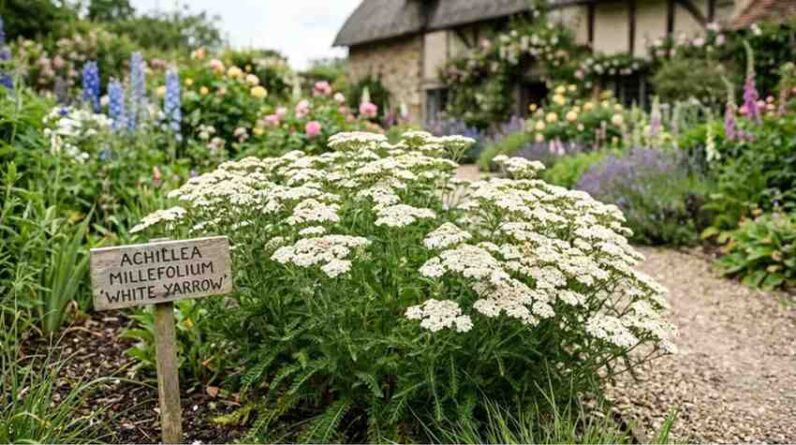
Wild yarrow is native across much of North America, Europe, and Asia, and it grows wild along roadsides, in meadows, and in disturbed soil almost everywhere in temperate climates. In the garden, common yarrow produces flat-topped clusters of tiny white flowers, though modern cultivars come in pink, yellow, red, and salmon. Mature plants typically reach 1 to 3 feet tall and spread by both rhizomes and self-seeding, so give it room. It’s also known by older folk names like milfoil, soldier’s woundwort, and thousandleaf, all pointing to its long history as a first-aid herb.
Because it’s such a widespread native North American plant, you’ll sometimes see two versions sold at nurseries: the true wild species, straight white-flowered Achillea millefolium, and the many hybrid cultivars bred for bigger blooms and a wider color range. Both grow the same way, but if supporting local pollinators and native plant communities matters to you, look for straight-species or regionally sourced wild yarrow rather than a heavily bred cultivar.
For readers newer to growing herbs generally, our guide to the best herbs to start with for health is a good companion read alongside this one.
Common Yarrow vs. Other Achillea Species
The genus Achillea includes nearly 100 species, but two show up most often in home gardens. Achillea millefolium, common yarrow, is the low-growing, feathery-leaved species covered throughout this guide, and it’s the one most closely tied to herbal medicine. Achillea filipendulina, fernleaf yarrow, is a taller relative, often reaching 3 to 4 feet, with larger golden-yellow flower heads and coarser foliage; it’s grown mainly as an ornamental and cut flower rather than for medicinal use. Most named cultivars sold at nurseries are hybrids bred from common yarrow, fernleaf yarrow, and a handful of other Achillea species, which is why cultivar colors and heights vary as widely as they do. If a plant tag just says “Achillea” without a species name, it’s almost always one of these hybrid crosses rather than the straight wild species.
Growing Conditions: Sun, Well-Drained Soil, and Hardiness Zones
Yarrow is forgiving, but it does have preferences. Get these right and it more or less takes care of itself.
Sun: Full sun, at least 6 hours a day. In partial shade, plants stretch and flop instead of forming a compact clump.
Soil: Well-drained soil is non-negotiable. Yarrow tolerates poor, sandy, and even clay soil, but it struggles in anything that stays soggy. If your soil holds water, work in compost or plant on a slight mound to improve drainage.
Hardiness zones: Yarrow is hardy in USDA hardiness zones 3 through 9, with some sources reporting success as far north as zone 2 given good snow cover and drainage. In the hottest parts of zone 9, plants may struggle through the peak of summer, so afternoon shade can help there.
Fertility: Skip the fertilizer, or use it sparingly. Rich soil produces tall, weak, floppy stems and can dilute the plant’s aromatic compounds. Yarrow actually performs best, and smells strongest, in lean conditions.
Size and spacing: Expect a mature clump around 1 to 3 feet tall and roughly as wide, depending on the cultivar and growing conditions. Give each plant 12 to 24 inches of space so air can move freely between clumps, which helps prevent the fungal issues covered below.
How to Grow Yarrow From Seed
Growing yarrow from seed is inexpensive and easy, but the seeds have a few quirks worth knowing before you sow.
Starting Seeds Indoors
Sow yarrow seeds 8 to 10 weeks before your last frost date. Because the seeds need light to germinate, press them lightly into the surface of moist seed-starting mix rather than burying them. A depth of no more than 1/8 inch, if you cover them at all, is plenty. Keep the soil at 65 to 75°F and consistently moist. Germination usually takes 10 to 14 days.
Direct Sowing and Cold Stratification
You can also direct sow outdoors in early spring once soil temperatures reach around 60°F, or sow in late fall and let winter handle the cold stratification naturally. While pre-treatment isn’t strictly required for yarrow to germinate, a period of cold, moist stratification, roughly 2 to 4 weeks in a damp paper towel in the refrigerator, tends to improve germination rates and evenness for fresher seed. As with indoor sowing, scatter the tiny seeds on the surface and press them in rather than covering them, since burying them cuts germination sharply.
If your seeds are slow to sprout, the most common culprits are planting too deep, letting the surface dry out between waterings, or soil that’s too cold. Bottom-watering trays instead of overhead watering helps keep the fine seed in place and the surface consistently damp without washing seeds away.
Thinning and Transplanting Seedlings
Once seedlings have a couple sets of true leaves, thin them to prevent overcrowding, and keep the soil evenly moist until they’re established. Harden off indoor-started seedlings for a week or two before transplanting outside, and wait until all danger of frost has passed. Space plants 12 to 18 inches apart to allow for the clump’s natural spread.
Planting Yarrow From Starts or Divisions
If you’d rather skip the seed stage, nursery starts, root divisions, or tip cuttings all work well and get you to a blooming plant faster. Plant in spring or early summer, once frost danger has passed. Loosen the planting site 12 to 15 inches deep and mix in a couple of inches of compost if your soil is heavy, then set the plant at the same depth it was growing in its container. Water in well and keep the soil consistently moist for the first few weeks while roots establish. After that, yarrow shifts into low-maintenance mode.
Growing Yarrow in Containers
Yarrow adapts well to a pot, provided the container has generous drainage holes and you use a well-draining potting soil rather than a moisture-retentive mix. Choose a pot at least 12 inches across for a mature clump, and set it somewhere it gets a full day of sun. Container-grown yarrow dries out faster than plants in the ground, so expect to water more often, especially in hot weather, even though the plant is drought-tolerant once established in open soil. In cold-winter climates, move potted yarrow somewhere sheltered, or mulch heavily around the pot, since roots in containers are more exposed to freezing temperatures than roots in the ground.
Popular Yarrow Cultivars and Colors
Straight species yarrow blooms white, but breeders have expanded the color range considerably, which is part of why the plant is such a favorite with flower farmers and cut-flower gardeners. A few widely available cultivars:
- ‘Coronation Gold’: mustard-yellow flower heads with silvery, ferny foliage
- ‘Cerise Queen’: bright pink flowers that hold their color well
- ‘Paprika’: brick-red blooms that fade to a soft salmon as they age
- ‘Moonshine’: pale yellow flowers paired with striking silver-gray leaves
- ‘Fanal’ (also sold as ‘The Beacon’): rich red flowers with yellow centers
All of them share the same growing needs outlined above. If you’re planning yarrow blossoms specifically for cutting and drying, choosing two or three colors gives you more to work with in a bouquet without changing anything about how you grow them. For an every-season staple that a working flower farmer would recognize, plain white yarrow is still the workhorse: it’s the most vigorous, the most true-to-seed, and the variety most herbalists reach for when a recipe simply calls for yarrow.
Caring for Yarrow: Watering, Fertilizer, and Deadheading
Once established, yarrow is genuinely low-maintenance. Water during the first growing season to help roots settle in, then taper off. Mature plants are drought-tolerant and only need supplemental water during extended dry spells.
Skip regular fertilizing. If your soil is very poor, a light topdressing of compost in early spring is plenty; anything more encourages weak, leggy growth.
Deadheading, snipping off spent flower heads, encourages more blooms and helps control self-seeding, since yarrow spreads readily if you let the flowers go to seed. Yes, it’s worth deadheading regularly through the growing season if you want the longest possible bloom window; many gardeners then leave the last flush of blooms standing over winter for visual interest and to support overwintering insects, cutting plants back to the ground in late winter or very early spring before new growth starts.
If your yarrow keeps flopping over, the cause is almost always too much shade, soil that’s too rich, or overcrowded plants leaning on each other for light. Moving plants to full sun, cutting back on fertilizer, and thinning crowded clumps usually solves it within a season. Yellow or browning foliage midseason is often just older growth dying back naturally as the plant redirects energy to blooming, but if it’s widespread and accompanied by wilting, check the soil for drainage problems first, since soggy roots are the more likely culprit than a pest or disease.
Divide clumps every two to three years in spring or fall. Division keeps plants vigorous, controls spread, and gives you free plants for other parts of the garden. It’s also the easiest way to propagate yarrow if you’d rather skip seeds and cuttings altogether.
Common Pests and Diseases
Yarrow is generally pest-resistant and, if anything, more useful for repelling problems elsewhere in the garden than for attracting them. Still, a few issues show up under the wrong conditions:
- Powdery mildew: The most common issue, especially in humid weather or crowded plantings. A white, powdery coating appears on foliage. Prevent it with good spacing for airflow and by watering at the base rather than overhead.
- Aphids: Occasionally cluster on new growth in spring. Because yarrow attracts ladybugs and other predatory insects, infestations are usually minor and self-correct; a strong spray of water handles anything more stubborn.
- Root or stem rot: Shows up in poorly drained soil, especially during wet stretches. Improve drainage rather than treating with fungicide, since rot rarely responds to it once established.
- Rust: Occasionally appears as orange or brown spotting on foliage; remove and dispose of affected leaves.
What to Plant With Yarrow (and What Not To)
Because it attracts ladybugs, hoverflies, and other predatory insects, yarrow is one of the better companion plants for a vegetable or cut-flower garden. It helps keep aphids and other pests in check on nearby plants without any spraying involved. The short version: pair it with drought-tolerant, full-sun plants like lavender, coneflower, and salvia, and keep it away from moisture-loving or aggressive spreaders like hydrangea, hosta, and mint.
For the full breakdown of which plants work, which to avoid, and why, see our complete companion planting guide for yarrow.
Harvesting Yarrow
Harvest yarrow flowers once they’re fully open and you can see pollen on the blooms, typically from early summer through fall depending on your climate. Cut in the cooler part of the day, ideally after the morning dew has evaporated, using clean shears. Take the flower heads with a few inches of stem attached for easy handling, and as a general rule of ethical harvesting, don’t take more than a third of the plant at any one time so it can keep growing.
Both the flowers and the aromatic, feathery leaves are usable. If you’re harvesting for tea or other herbal remedies, white-flowered yarrow is the traditional choice among herbalists, though colored cultivars share the same basic properties.
If you’re foraging wild yarrow rather than harvesting from your own garden, be selective about location. Avoid plants growing along heavily trafficked roadsides, near treated lawns, or downstream from farmland, since yarrow readily takes up whatever is in the soil and water around it. It’s also worth double-checking your identification before harvesting anything from the wild; yarrow’s feathery, almost fern-like leaves are one of its more distinctive features, but a few lookalikes exist in the same growing areas, so cross-reference with a regional plant guide if you’re not already confident.
How to Dry Yarrow
To dry yarrow, bundle stems loosely, no more than a handful per bunch, and secure them with a rubber band before hanging upside down in a warm, dark space with good airflow. This keeps the color and fragrance better than drying in direct light. For a faster batch, strip flowers and leaves from the stems and dry them in a dehydrator on the lowest setting, checking frequently so nothing scorches.
Once fully dry and crisp to the touch, store flowers and leaves separately in labeled, airtight jars in a cool, dark cupboard. When properly dried and stored, yarrow keeps its potency for about a year. If you want to put dried yarrow to work right away, it pairs naturally with other first-aid herbs. Our comfrey poultice guide shows another simple way to turn a home-dried herb into a usable remedy.
Yarrow as a Cut Flower
Beyond the garden bed, yarrow is a staple in the cut-flower world. Its flat, umbel-shaped flower heads and sturdy stems hold up well in a bouquet, and the feathery foliage adds texture without overwhelming softer blooms.
Bloom Time and Vase Life
Yarrow blooms from late spring into fall, often starting in May or June and continuing especially if you deadhead regularly. Cut stems for a vase once the flower heads are fully open, and get them into water quickly. Fresh-cut yarrow typically lasts four to seven days in a vase, depending on the variety and how it was harvested. It’s also one of the best flowers for drying, since bunches hung upside down retain their shape and color for use in dried arrangements long after the growing season ends.
Medicinal and Other Uses for Yarrow
Yarrow’s reputation as “soldier’s woundwort” isn’t just a colorful old name. Herbalists have long used dried yarrow, especially the white-flowered form, in teas, tinctures, and topical preparations for minor cuts, scrapes, and skin irritation. The leaves and flowers are typically infused into oil for salves and balms, brewed as tea, or used in a cooled infusion as a skin rinse. Each flat-topped umbel is made up of dozens of individual florets, and it’s this dense flower head, along with the aromatic foliage, that herbalists typically harvest and dry for medicinal use rather than the stems.
If you already make your own herbal salves, dried yarrow is a natural addition to a wound-care blend, whether on its own or infused alongside other first-aid herbs. The most common way to use it, though, is a simple cup of yarrow tea — see our guide for the full benefits, side effects, and brewing method.
Beyond herbal remedies, yarrow’s aromatic foliage is thought to help repel some insect pests in the garden, and its nectar-rich flowers are a reliable draw for bees, butterflies, and other pollinators throughout the growing season, from the first flush of seed heads in early summer through the last blooms of fall.
Frequently Asked Questions
Is yarrow deer and rabbit resistant? Yes. Yarrow’s aromatic foliage makes it unappealing to most deer and rabbits, which is part of why it holds up so well in unfenced gardens.
Do butterflies and hummingbirds like yarrow? Butterflies, bees, and other pollinators are drawn to yarrow’s nectar-rich flower heads throughout the bloom season. Hummingbirds visit less often than they do tubular flowers, but yarrow still earns a place in a pollinator-friendly bed.
What does yarrow smell like? Yarrow has a sharp, herbal, slightly medicinal scent, often compared to a mix of sage and chrysanthemum. The aroma is strongest in the foliage, especially when crushed.
What part of yarrow is used for tea? Both the dried flowers and leaves can be steeped for tea; the flower heads are generally considered the most potent and traditional choice.
Is yarrow native to my area? Common yarrow is native across most of North America, including states like Illinois, Michigan, and Ohio, though some regional native-plant sources distinguish native strains from widely naturalized cultivars. Check a regional native plant database if you want a locally native strain specifically.
Can yarrow grow in shade? It tolerates partial shade but blooms less and tends to get leggy. For a compact, floriferous plant, full sun is worth prioritizing.
How big does yarrow get? Most garden yarrow reaches 1 to 3 feet tall and spreads to a similar width once established, though exact size varies by cultivar and growing conditions.
Does yarrow need cold stratification to germinate? Not strictly. Yarrow seeds will germinate without it, but 2 to 4 weeks of cold, moist stratification typically improves both germination rate and consistency, especially with older seed.
Is yarrow easy to grow from seed? Yes. It’s considered one of the easier perennials to start from seed, provided you remember not to bury the tiny seeds, since they need light to germinate.
When should I cut back or prune yarrow? Deadhead through the growing season to extend blooming, then cut the whole plant back to the ground in late winter or very early spring, before new growth emerges.
Should I cut yarrow back in the fall? It’s optional. Cutting back in fall tidies the bed, but leaving the last seed heads standing over winter provides food and habitat for birds and beneficial insects, and many gardeners prefer that look through the colder months.
Can I propagate yarrow from cuttings or division? Yes, both work well. Tip cuttings root readily in a light, well-drained potting mix, and division of an established clump every two to three years is the fastest, most reliable way to get new plants that match the parent exactly.
Final Thoughts
Yarrow rewards very little effort with a long bloom season, drought tolerance, pollinator traffic, and a genuinely useful harvest, whether your goal is a cutting garden, a wildlife-friendly border, or a stocked home apothecary. Start it from seed if you’re patient, or from a nursery start if you want blooms sooner, then let it do what it does best: thrive in lean soil, shrug off dry spells, and come back reliably year after year.
Once you’ve got a clump established, the plant more or less runs itself. The bulk of the work is really in the first season, getting the drainage right, choosing a sunny spot, and resisting the urge to fertilize, and after that, yarrow settles into the kind of low-maintenance perennial most gardeners wish more of their beds were made of. If you’re building out a home-grown medicine cabinet, our guide to medicinal herbs to grow indoors is a good next stop for herbs that pair well alongside yarrow.
Disclaimer: This article is for educational purposes only and is not intended as medical advice. Always consult a qualified healthcare professional before using medicinal herbs, especially if you are pregnant, nursing, taking medications, or have a medical condition. Read our full Medical Disclaimer.
References
- How to Grow and Care for Yarrow, Gardener’s Path
- Achillea millefolium (Common Yarrow), NC State Extension Gardener Plant Toolbox
- Rain Garden Plants: Achillea millefolium – Yarrow, Clemson HGIC
- Common Yarrow (Achillea millefolium L.) Plant Guide, USDA NRCS
- How to Grow Yarrow (Achillea millefolium), The Old Farmer’s Almanac

Written by cskoch, who researches medicinal plants and herbal wellness at Herbal Daily Care. This guide is research-based: we reviewed published trials, meta-analyses, and the manufacturer’s own sales page. We did not purchase or test the product, and we do not claim first-hand results.