

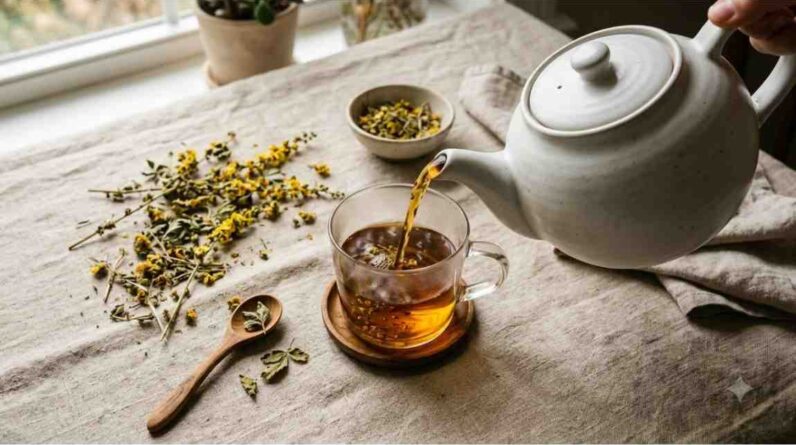
A cup of agrimony tea won’t win any beauty contests — it’s the color of weak black tea, and it bites a little on the way down. But brew it right, and that bite is exactly what makes it useful. Agrimony herb has been dried, cut, and sifted into English kitchen cupboards for centuries, mostly because it’s one of the easier astringent herbs to get right on the first try. This guide covers the actual steps: ratios, steep time, a cold-brew option, and what to do if your first cup tastes more like tannin than tea. For the full picture on the plant itself, including its clinical research, see our Agrimonia Eupatoria guide.
Quick Answer
Agrimony tea is a mild, tannin-rich herbal infusion made by steeping 1.5 to 4 grams of dried agrimony (Agrimonia eupatoria) in hot water for 10 to 15 minutes. It has a bitter, slightly apricot-scented flavor and is traditionally used to settle mild diarrhea, soothe sore throats, and support skin healing.
What Is Agrimony Tea?
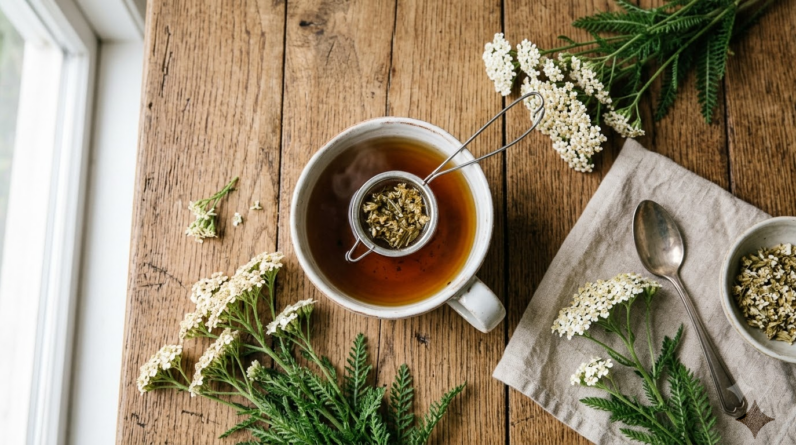
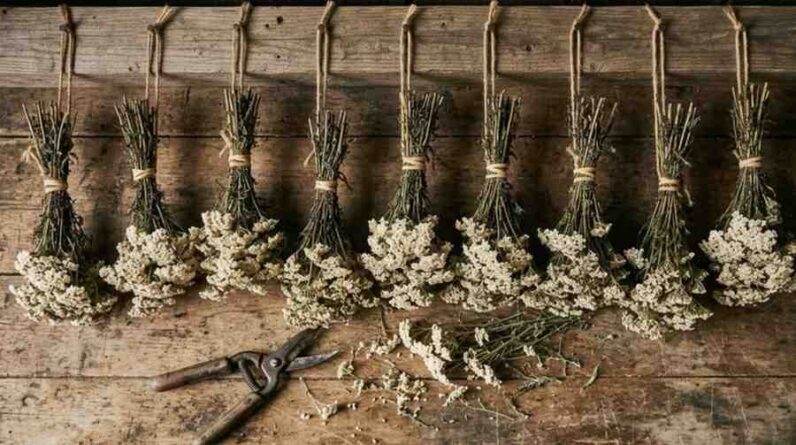
Agrimony tea is a herbal infusion brewed from the dried aerial parts, meaning the stems, leaves, and small yellow star-shaped flowers, of Agrimonia eupatoria L., a perennial herbaceous plant in the rose family also known as church steeples or sticklewort. Herbalists work with the cut and sifted dried herb rather than fresh material, since drying concentrates the tannins that give the tea its astringent character.
The flavor sits somewhere between black tea and green apple skin: earthy, slightly bitter, with a faint apricot note that shows up more in the aroma than the taste. It’s not a tea most people fall in love with on the first sip. It’s one people keep around for what it does, not how it tastes.
What You’ll Need
- 1.5 to 4 grams of dried, cut, and sifted agrimony herb (roughly 1 to 2 teaspoons)
- 250 ml (about 1 cup) of freshly boiled water
- A teapot, infuser, or tea ball
- A fine strainer
- Honey, lemon, ginger, or mint, if you want to soften the flavor
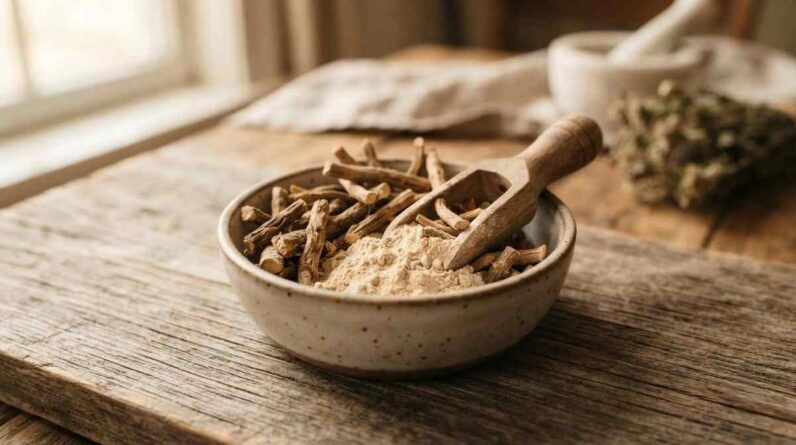
Buy organic dried agrimony from a supplier that lists a harvest date, since tannin content drops as the herb ages. Whole, dark green pieces with visible flower fragments generally hold more of their volatile oils than a fine, pre-ground powder.
How to Make Hot Agrimony Tea
This is the standard method used in most traditional and modern herbal preparations, and it’s the one to start with if you’re new to agrimony.
- Measure your herb. Use 1.5 to 4 grams of dried agrimony per 250 ml of water. Start at the lower end of that range for your first cup.
- Boil your water, then let it rest. Bring water to a full boil, then let it sit for about 30 seconds. Pouring water that’s slightly off the boil helps keep the tea from turning overly harsh.
- Pour and cover. Pour the hot water over the herb and cover the cup or teapot right away. Covering the vessel traps the volatile oils that would otherwise escape as steam.
- Steep for 10 to 15 minutes. This is longer than most black or green teas need, but agrimony’s tannins release slowly. Shorter steeps under 10 minutes tend to taste thin and miss most of the astringent effect.
- Strain thoroughly. Small leaf fragments slip through loose infusers easily, so strain twice if your first pass looks cloudy.
- Drink warm. Sip slowly rather than drinking it down fast; agrimony’s astringency is easier to tolerate in smaller mouthfuls.
A typical routine is 2 to 4 cups spread across the day rather than one large cup, which matches how it’s traditionally been used for digestive support and general tone.
How to Make a Cold-Brew (Iced) Version
Cold-brewing pulls out less of the harshest tannins while still capturing the herb’s flavonoid content, making it a gentler option if the hot version feels too astringent for your stomach.
- Add 2 to 3 grams of dried agrimony to 300 ml of cold or room-temperature water.
- Cover and refrigerate for 6 to 8 hours, or overnight.
- Strain well and serve over ice.
- Store any extra in a sealed jar in the fridge and use within 24 hours.
One caveat worth knowing: lab research measuring agrimony’s effect on hepatitis B surface antigen secretion found the plant’s antiviral activity was temperature-dependent, strongest when the material was heated to around 60°C. That doesn’t mean cold-brew agrimony has no beneficial effects, but if you’re specifically after the herb’s most-studied properties, a hot infusion is the better-supported choice.
How to Fix a Bitter-Tasting Cup
If your first cup tasted more like chewing on bark than drinking tea, one of these is almost always the reason.
- You steeped too long. More than 15 minutes pulls tannins out faster than flavor develops. Pull the herb at 10 to 12 minutes next time and taste before adding more time.
- The water was too hot. A rolling boil poured straight onto the herb extracts tannins aggressively. Let boiled water rest 30 to 60 seconds first.
- You used too much herb. Cutting back from 4 grams to 2 grams per cup often solves bitterness without losing the effect.
- Add something to round it out. A slice of fresh ginger, a spoon of honey, or a squeeze of lemon all soften agrimony’s edge without canceling its astringent properties. Mint pairs well too, echoing the light apricot note in the aroma.
- Try it iced instead. Cold-brewing, described above, is the single most effective fix if hot agrimony tea consistently tastes too sharp for you.
Why People Drink This Herb
Agrimony’s beneficial effects trace back to its phytochemical profile: roughly 5 percent tannins by traditional estimate, plus flavonoids including quercetin-3-D-glucoside and luteolin. That combination is why the tea shows up in a fairly specific set of traditional uses.
Digestive support. The astringent tannins tone the gut lining, which is the herb’s oldest and most consistent traditional use for mild, non-infectious looseness of the bowels. Some older herbal texts also list agrimony among remedies traditionally used to support gallbladder function.
Throat and mouth care. A cooled cup makes an effective gargle for a scratchy throat. The tannins tighten irritated mucous membranes, which is why agrimony shows up so often in traditional gargle recipes for laryngitis.
Skin support. Applied topically as a cooled, strained wash rather than drunk, agrimony extract has shown bactericidal activity against Staphylococcus aureus in lab studies, which lines up with its long use on minor cuts, weepy skin conditions, and slow wound healing.
Liver enzyme research. An 8-week, randomized, double-blind trial published in the Journal of Medicinal Food found agrimony extract reduced elevated ALT, AST, and triglyceride levels in adults with mildly raised liver enzymes. It’s a promising, hepatoprotective result, though from a concentrated extract rather than everyday tea strength. For the full research breakdown, see our complete Agrimonia Eupatoria guide.
How Much to Drink (and Safety Notes)
Most herbal references land on 2 to 4 cups daily, using 1.5 to 4 grams of dried herb per cup. A few precautions are worth knowing before you make it a habit:
- Constipation. Agrimony’s astringency can make constipation worse in people who already deal with it.
- Medication timing. Tannins can bind to certain compounds in the gut, so it’s sensible to separate agrimony tea from medications by a couple of hours.
- Blood-thinning or blood-sugar medication. Check with a pharmacist or doctor first if you’re on anticoagulants or diabetes medication.
- Pregnancy and breastfeeding. Standard guidance is to avoid agrimony in both cases, since safety data is limited.
- Rosaceae allergy. If roses, apples, strawberries, or almonds bother you, patch-test any topical use first.
Reported adverse effects at normal tea-strength amounts are minimal, but agrimony still isn’t a substitute for medical evaluation of chronic diarrhea, elevated liver enzymes, or a wound that isn’t healing.
Storing Dried Agrimony
Keep dried, cut and sifted agrimony in an airtight glass jar, away from direct light and heat. Stored this way, it holds most of its color, aroma, and tannin content for about a year. A powdery texture, faded color, or flat smell are signs it’s past its prime and won’t brew as strong a cup.
Frequently Asked Questions
Steep 1.5 to 4 grams of dried agrimony in 250 ml of hot water, covered, for 10 to 15 minutes, then strain. Start at the lower end of the herb amount and adjust to taste.
Earthy and mildly bitter, with an astringent, tannin-driven finish and a faint apricot note in the aroma more than the flavor itself.
A typical range is 2 to 4 cups daily, using 1.5 to 4 grams of dried herb per cup. People new to agrimony should start with one cup and see how they respond.
Yes. Cold-brewing 2 to 3 grams of herb in cold water for 6 to 8 hours produces a gentler, less tannic cup, though a hot infusion draws out more of the herb’s studied antiviral and astringent properties.
In an airtight jar, out of direct light and away from heat. Properly stored, it stays potent for about a year.
Conclusion
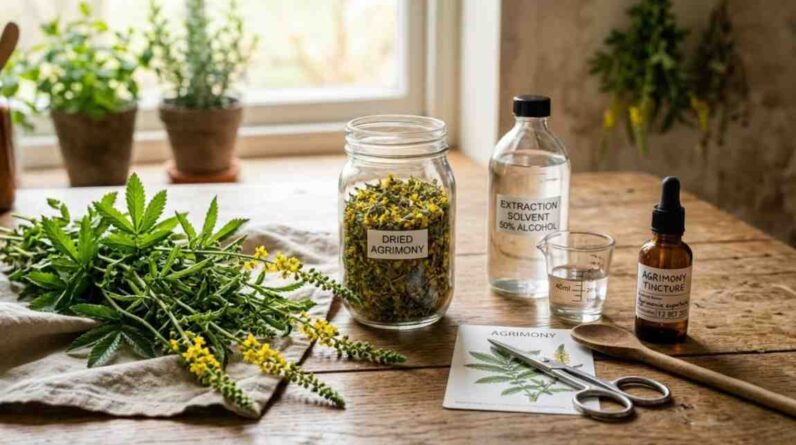
Getting a good cup of agrimony tea mostly comes down to two variables: how much herb you use, and how long you let it sit in hot water. Start light, taste as you go, and switch to a cold-brew if the astringency is too much. If you want the deeper research behind why this herb has stuck around for centuries, from its liver enzyme trial to its full safety profile, our Agrimonia Eupatoria guide covers that ground. For a stronger, longer-lasting preparation, our agrimony tincture guide covers the alcohol-based method. Want another mellow, easy-to-source herbal tea to rotate in? Rosemary tea is worth a look too.
Disclaimer: This article is for educational purposes only and is not intended as medical advice. Always consult a qualified healthcare professional before using medicinal herbs, especially if you are pregnant, nursing, taking medications, or have a medical condition. Read our full Medical Disclaimer.
References
- Cho, Y.M., Kwon, J.E., Lee, M., Lea, Y., Jeon, D.-Y., Kim, H.J., Kang, S.C. “Agrimonia eupatoria L. (Agrimony) Extract Alters Liver Health in Subjects with Elevated Alanine Transaminase Levels: A Controlled, Randomized, and Double-Blind Trial.” Journal of Medicinal Food, 2018. → PubMed
- Huzio, N., Grytsyk, A., Raal, A., Grytsyk, L., Koshovyi, O. “Phytochemical and Pharmacological Research in Agrimonia eupatoria L. Herb Extract with Anti-Inflammatory and Hepatoprotective Properties.” Plants (MDPI), 2022. → MDPI
- Grieve, M. A Modern Herbal. “Agrimony.” → botanical.com
- Herbal Reality. “Agrimony (Agrimonia eupatoria): Benefits, Uses, Safety.” → herbalreality.com

Written by cskoch, who researches medicinal plants and herbal wellness at Herbal Daily Care. This guide is research-based: we reviewed published trials, meta-analyses, and the manufacturer’s own sales page. We did not purchase or test the product, and we do not claim first-hand results.